2-character-creation
Character Creation
Source: Fizban's Treasury of Dragons, p. 9
From the folk hero dreaming of liberating their people from a tyrannical blue dragon's reign to the idealistic acolyte who imagines purging the world of Tiamat's corruption, many adventurers aspire to be dragonslayers. In time, some have their dreams realized—or shattered in spectacular fashion, as they discover they are woefully unprepared for the threat a dragon poses.
This chapter is for any D&D character who hopes or fears that they might one day face a dragon. But this chapter is also for the bard who has made a lifelong study of dragonsong, the cleric devoted to Bahamut, and the warlock who made an eldritch pact with a moonstone dragon. For dragons are not always adversaries. They can be patrons, allies, and benefactors; they can scheme in the shadows; and they can dramatically shape adventurers' lives.
The following sections present a variety of options for creating characters with a tie to dragons:
"Draconic Races" presents variant dragonborn race options to give characters a draconic heritage strongly linked to the three great dragon families.
"Subclass Options" allows monk and ranger characters to explore deeper ties with dragonkind.
"Heroes of the Dragon" includes inspiration for characters of any class to portray their training or magic as derived from a connection to dragons.
"Draconic Feats" provides feats to forge connections to the chromatic, gem, and metallic dragon families.
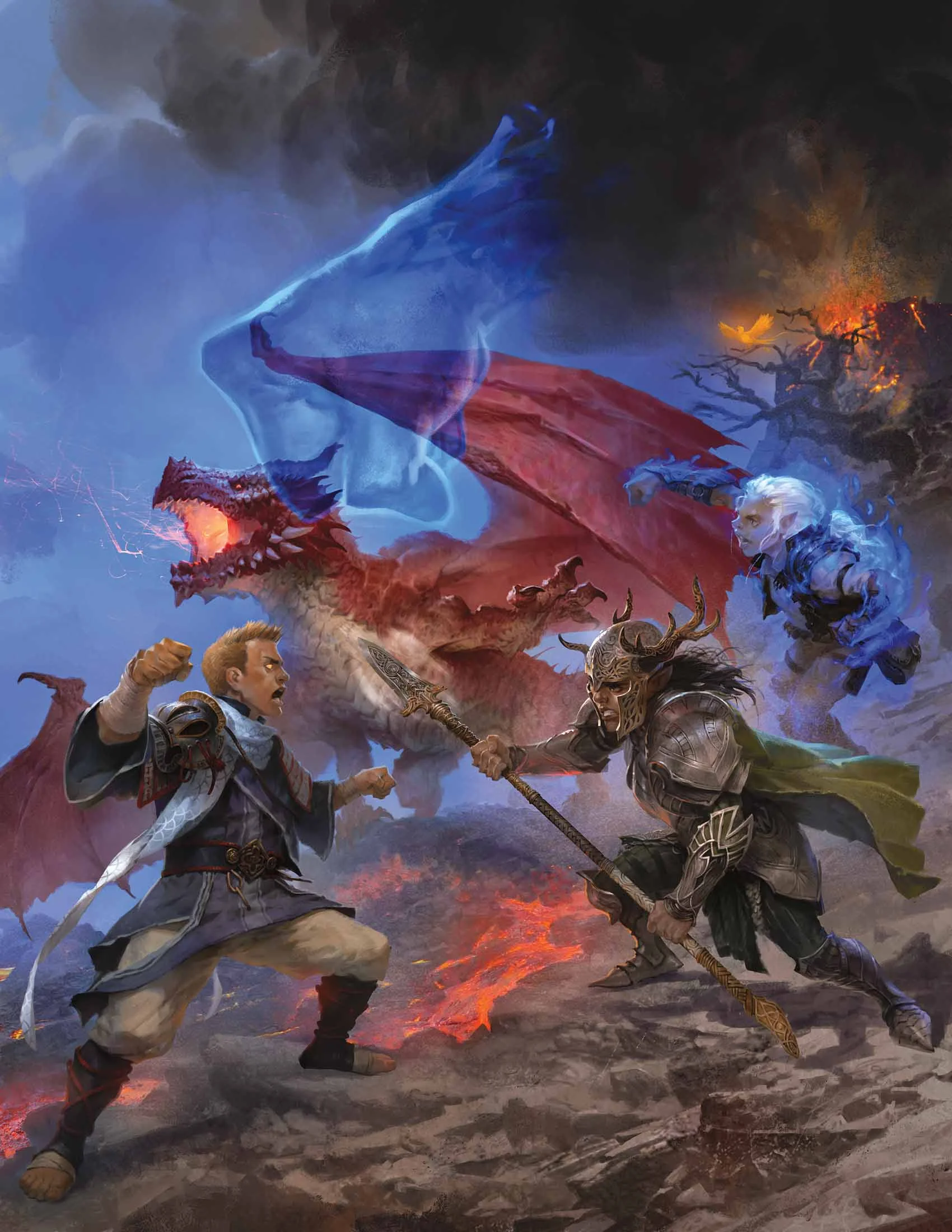
Draconic Races
It's all too easy to prefer a certain color of dragonborn, but what's inside is what really matters—which is to say, the sort of damage their breath can do to you.
The "dragonborn" race in the "Player's Handbook" is the most direct way to reflect a character with dragons somewhere far back in their ancestry. But for players who want to try a more nuanced approach, this section offers three variant dragonborn race options that can be used to create a character with clear connections to a specific draconic ancestry. When you're making a new character using one of these races, use the rules under "Creating Your Character" to fill out the details.
Creating Your Character
When you create your D&D character, you decide whether your character is a member of the human race or one of the game's fantastical races. If you select one of the dragonborn races in this chapter, follow these additional rules during character creation.
Ability Score Increases
When determining your character's ability scores, increase one of those scores by 2 and increase a different score by 1, or increase three different scores by 1. Follow this rule regardless of the method you use to determine the scores, such as rolling or point buy.
The "Quick Build" section for your character's class offers suggestions on which scores to increase. You're free to follow those suggestions or to ignore them. Whichever scores you decide to increase, none of the scores can be raised above 20.
Languages
Your character can speak, read, and write Common and one other language that you and your DM agree is appropriate for the character. The "Player's Handbook" offers a list of widespread languages to choose from. The DM is free to add or remove languages from that list for a particular campaign.
Creature Type
Every creature in D&D, including every player character, has a special tag in the rules that identifies the type of creature they are. Most player characters are of the Humanoid type. A race option presented here tells you what your character's creature type is.
Here's a list of the game's creature types in alphabetical order: Aberration, Beast, Celestial, Construct, Dragon, Elemental, Fey, Fiend, Giant, Humanoid, Monstrosity, Ooze, Plant, Undead. These types don't have rules themselves, but some rules in the game affect creatures of certain types in different ways. For example, the cure wounds spell doesn't work on a Construct or an Undead.
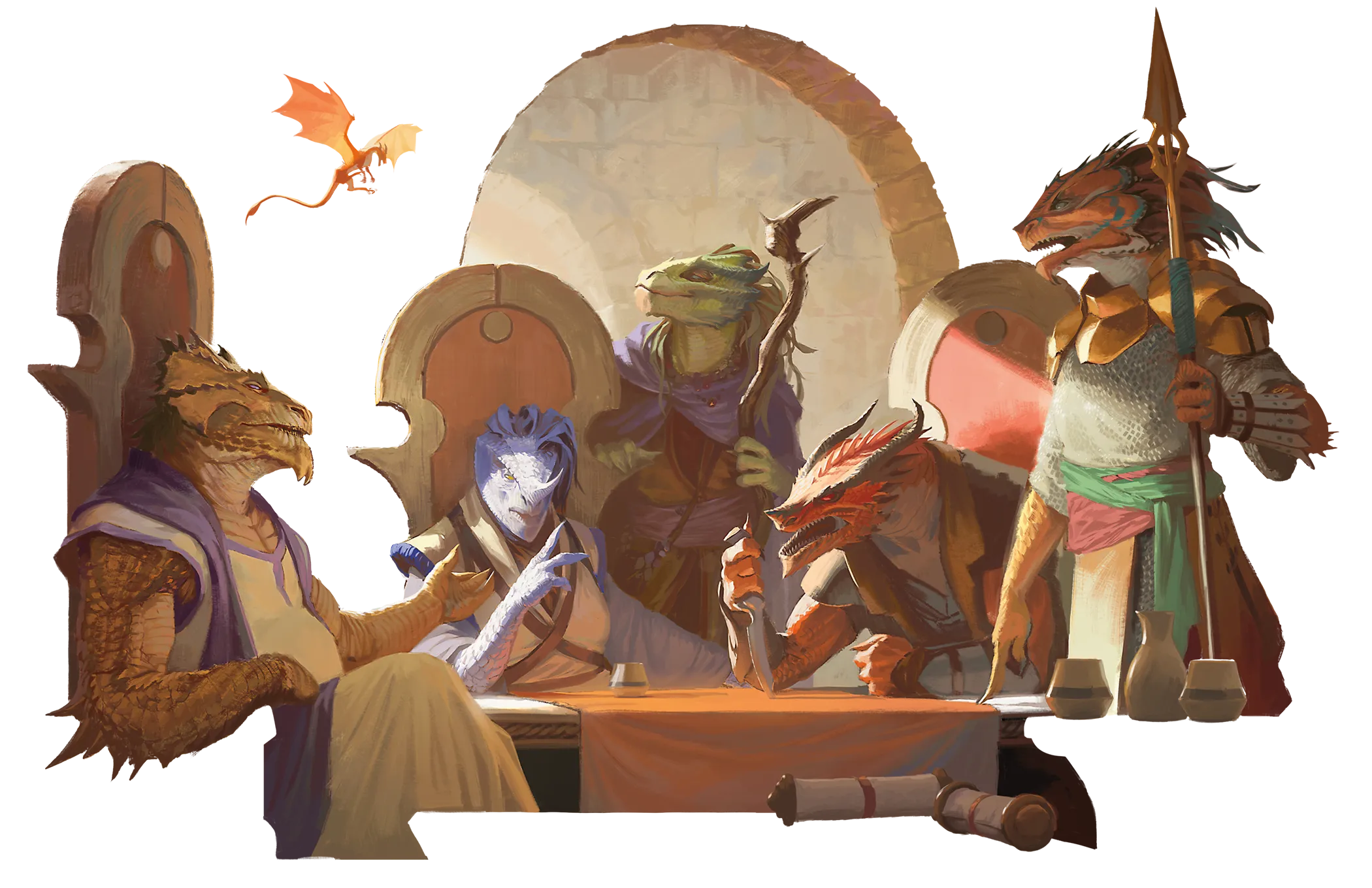
Dragonborn
Source: Player's Handbook (2024) p. 187. Available in the SRD and the Free Rules (2024)
- Ability Scores: None
- Type: humanoid
- Size: Medium
- Speed: 30 ft.
Traits
Draconic Ancestry
Your lineage stems from a dragon progenitor. Choose the kind of dragon from the Draconic Ancestors table. Your choice affects your Breath Weapon and Damage Resistance traits as well as your appearance.
Draconic Ancestors
| Dragon | Damage Type |
|---|---|
| Black | Acid |
| Blue | Lightning |
| Brass | Fire |
| Bronze | Lightning |
| Copper | Acid |
| Gold | Fire |
| Green | Poison |
| Red | Fire |
| Silver | Cold |
| White | Cold |
Breath Weapon
When you take the Attack action on your turn, you can replace one of your attacks with an exhalation of magical energy in either a 15-foot Cone or a 30-foot Line that is 5 feet wide (choose the shape each time). Each creature in that area must make a Dexterity saving throw (DC 8 plus your Constitution modifier and Proficiency Bonus). On a failed save, a creature takes 1d10 damage of the type determined by your Draconic Ancestry trait. On a successful save, a creature takes half as much damage. This damage increases by 1d10 when you reach character levels 5 (2d10), 11 (3d10), and 17 (4d10).
You can use this Breath Weapon a number of times equal to your Proficiency Bonus, and you regain all expended uses when you finish a Long Rest.
Damage Resistance
You have Resistance to the damage type determined by your Draconic Ancestry trait.
Darkvision
You have Darkvision with a range of 60 feet.
Draconic Flight
When you reach character level 5, you can channel draconic magic to give yourself temporary flight. As a Bonus Action, you sprout spectral wings on your back that last for 10 minutes or until you retract the wings (no action required) or have the Incapacitated condition. During that time, you have a Fly Speed equal to your Speed. Your wings appear to be made of the same energy as your Breath Weapon. Once you use this trait, you can't use it again until you finish a Long Rest.
Description
The ancestors of dragonborn hatched from the eggs of chromatic and metallic dragons. One story holds that these eggs were blessed by the dragon gods Bahamut and Tiamat, who wanted to populate the multiverse with people created in their image. Another story claims that dragons created the first dragonborn without the gods' blessings. Whatever their origin, dragonborn have made homes for themselves on the Material Plane.
Dragonborn look like wingless, bipedal dragons—scaly, bright-eyed, and thick-boned with horns on their heads—and their coloration and other features are reminiscent of their draconic ancestors.
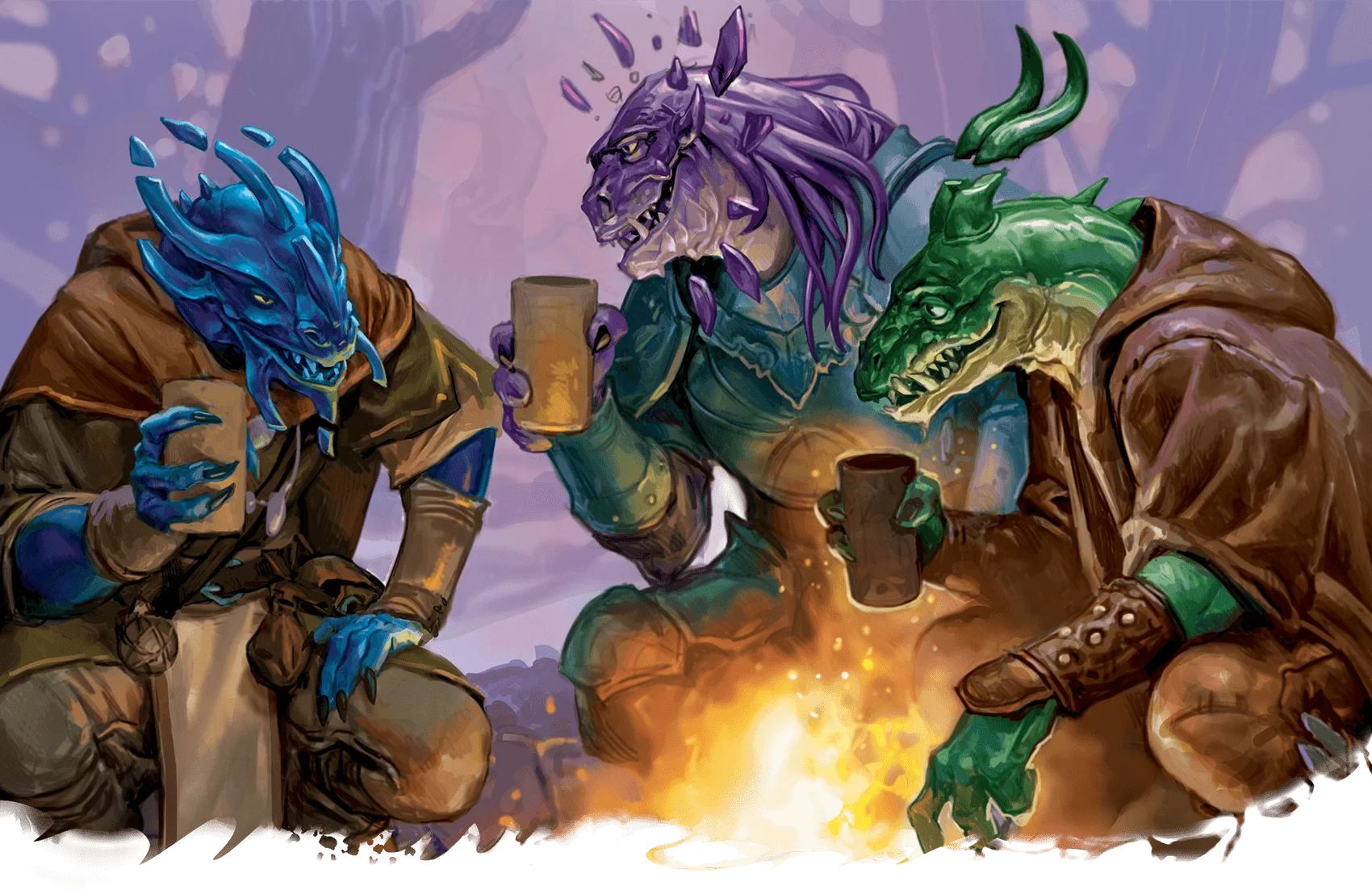
Dragonborn (Gem)
Source: Fizban's Treasury of Dragons p. 11
- Ability Scores: Choose one of: (a) Choose any +2, choose any other +1; (b) Choose any +1, choose any other +1, choose any other +1
- Size: Medium
- Speed: 30 ft.
Traits
Gem Ancestry
You have a gem dragon ancestor, granting you a special magical affinity. Choose one kind of dragon from the Gem Ancestry table. This determines the damage type for your other traits, as shown in the table.
Gem Ancestry
| Dragon | Damage Type |
|---|---|
| Amethyst | Force |
| Crystal | Radiant |
| Emerald | Psychic |
| Sapphire | Thunder |
| Topaz | Necrotic |
Breath Weapon
When you take the Attack action on your turn, you can replace one of your attacks with an exhalation of magical energy in a 15-foot cone. Each creature in that area must make a Dexterity saving throw (DC = 8 + your Constitution modifier + your proficiency bonus). On a failed save, the creature takes 1d10 damage of the type associated with your Gem Ancestry. On a successful save, it takes half as much damage. This damage increases by 1d10 when you reach 5th level (2d10), 11th level (3d10), and 17th level (4d10).
You can use your Breath Weapon a number of times equal to your proficiency bonus, and you regain all expended uses when you finish a long rest.
Draconic Resistance
You have resistance to the damage type associated with your Gem Ancestry.
Psionic Mind
You can send telepathic messages to any creature you can see within 30 feet of you. You don't need to share a language with the creature for it to understand these messages, but it must be able to understand at least one language to comprehend them.
Gem Flight
Starting at 5th level, you can use a bonus action to manifest spectral wings on your body. These wings last for 1 minute. For the duration, you gain a flying speed equal to your walking speed and can hover. Once you use this trait, you can't do so again until you finish a long rest.
Description
Gem dragonborn partake of the heritage of gem dragons, who claim to be heirs of Sardior, the Ruby Dragon. The colors and mysterious powers of gem dragons—amethyst, crystal, emerald, sapphire, and topaz—gleam in these dragonborn's scaled skin and course through their veins. Theirs are the wonders of the mind, the force of will, the brilliant light of insight, and the resounding echo of discovery—but also the desiccation of despair.
Dragonborn
Source: Player's Handbook (2024) p. 187. Available in the SRD and the Free Rules (2024)
- Ability Scores: None
- Type: humanoid
- Size: Medium
- Speed: 30 ft.
Traits
Draconic Ancestry
Your lineage stems from a dragon progenitor. Choose the kind of dragon from the Draconic Ancestors table. Your choice affects your Breath Weapon and Damage Resistance traits as well as your appearance.
Draconic Ancestors
| Dragon | Damage Type |
|---|---|
| Black | Acid |
| Blue | Lightning |
| Brass | Fire |
| Bronze | Lightning |
| Copper | Acid |
| Gold | Fire |
| Green | Poison |
| Red | Fire |
| Silver | Cold |
| White | Cold |
Breath Weapon
When you take the Attack action on your turn, you can replace one of your attacks with an exhalation of magical energy in either a 15-foot Cone or a 30-foot Line that is 5 feet wide (choose the shape each time). Each creature in that area must make a Dexterity saving throw (DC 8 plus your Constitution modifier and Proficiency Bonus). On a failed save, a creature takes 1d10 damage of the type determined by your Draconic Ancestry trait. On a successful save, a creature takes half as much damage. This damage increases by 1d10 when you reach character levels 5 (2d10), 11 (3d10), and 17 (4d10).
You can use this Breath Weapon a number of times equal to your Proficiency Bonus, and you regain all expended uses when you finish a Long Rest.
Damage Resistance
You have Resistance to the damage type determined by your Draconic Ancestry trait.
Darkvision
You have Darkvision with a range of 60 feet.
Draconic Flight
When you reach character level 5, you can channel draconic magic to give yourself temporary flight. As a Bonus Action, you sprout spectral wings on your back that last for 10 minutes or until you retract the wings (no action required) or have the Incapacitated condition. During that time, you have a Fly Speed equal to your Speed. Your wings appear to be made of the same energy as your Breath Weapon. Once you use this trait, you can't use it again until you finish a Long Rest.
Description
The ancestors of dragonborn hatched from the eggs of chromatic and metallic dragons. One story holds that these eggs were blessed by the dragon gods Bahamut and Tiamat, who wanted to populate the multiverse with people created in their image. Another story claims that dragons created the first dragonborn without the gods' blessings. Whatever their origin, dragonborn have made homes for themselves on the Material Plane.
Dragonborn look like wingless, bipedal dragons—scaly, bright-eyed, and thick-boned with horns on their heads—and their coloration and other features are reminiscent of their draconic ancestors.
Subclass Options
At 3rd level, a monk gains the Monastic Tradition class feature and a ranger gains the Ranger Archetype class feature. This section presents two new options for those features—the Drakewarden for the ranger and the Way of the Ascendant Dragon for the monk.
- Monk: Way of the Ascendant Dragon
- Ranger: Drakewarden
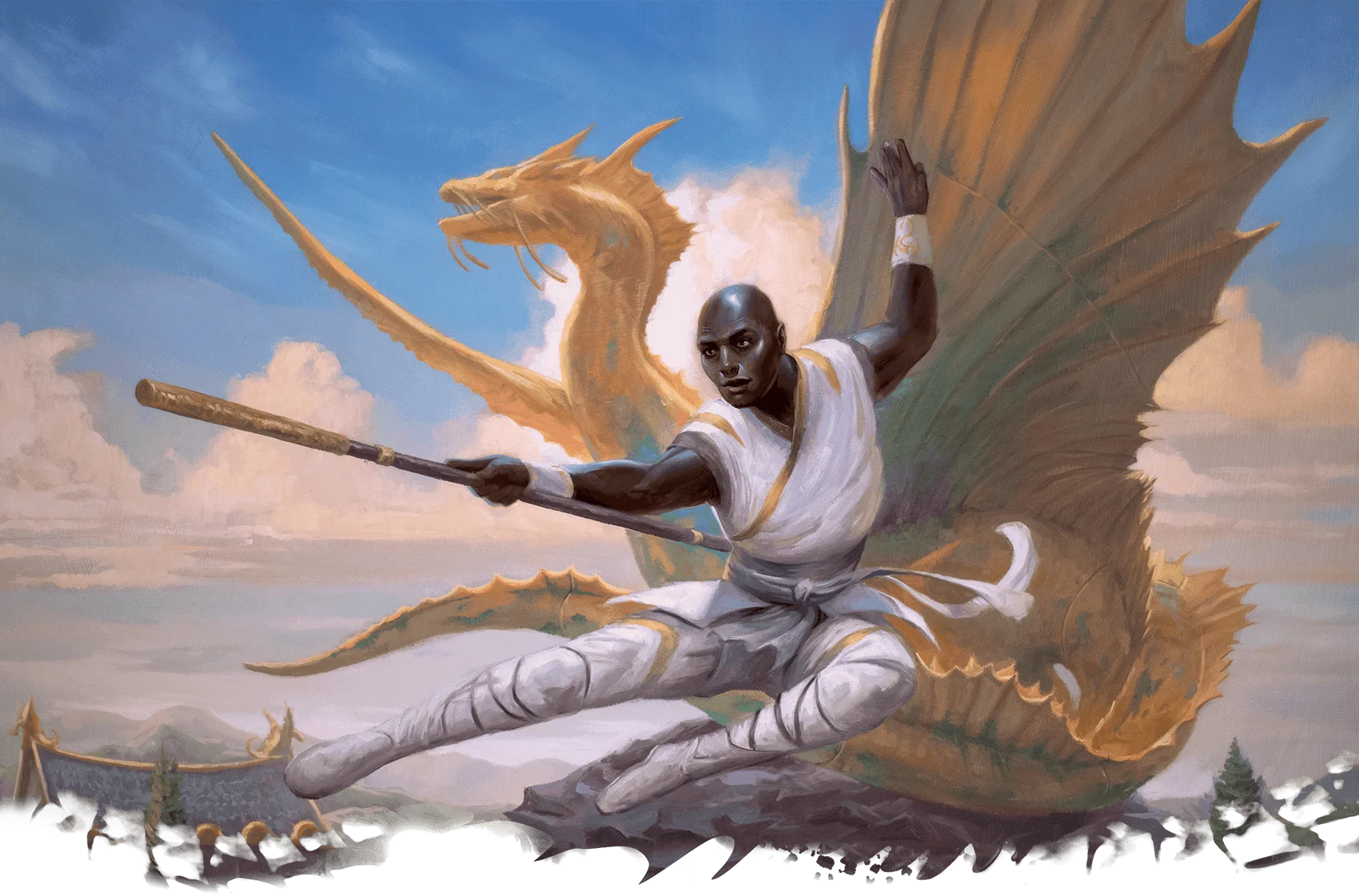
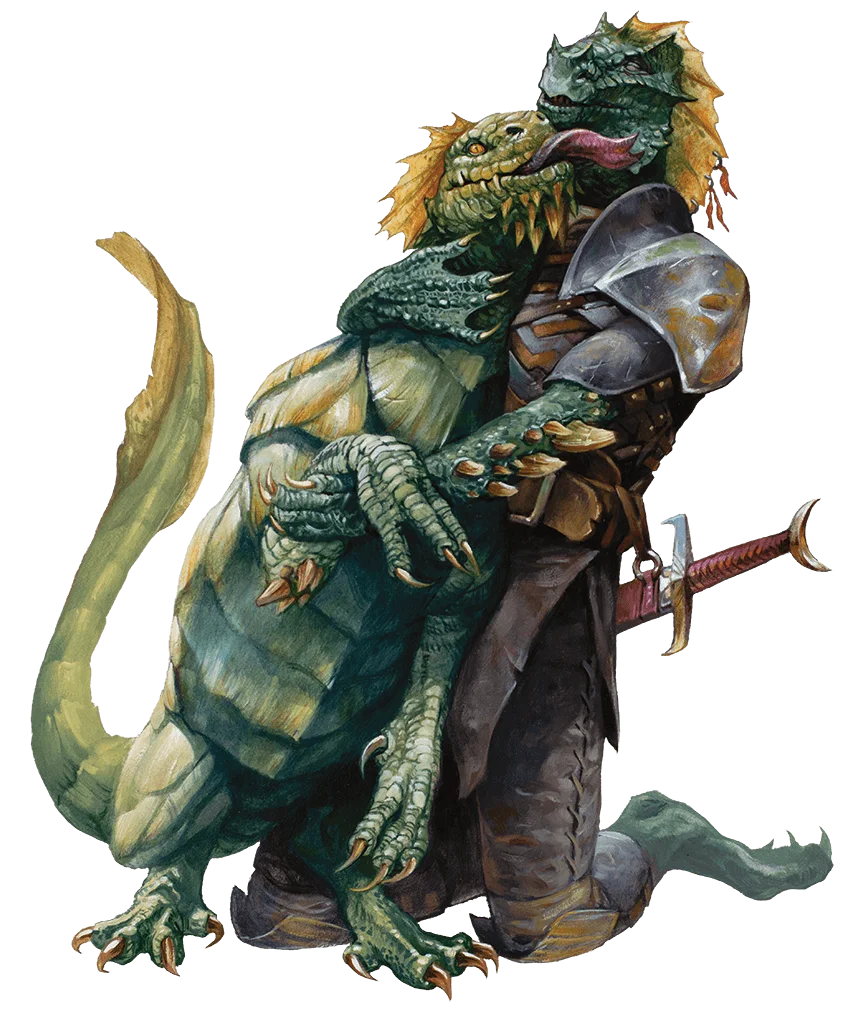
Way of the Ascendant Dragon
Drakewarden
Heroes of the Dragon
Sorcerers whose magic comes from a draconic origin, rangers with a drake companion, and monks who learn the ways of dragon masters are not the only adventurers whose skills, spells, and class features can have their source in the power of dragons. A character of any class can have strong ties to dragonkind. The Draconic Character Ties table provides ideas you might draw on as inspiration for infusing your character with draconic flavor. The classes noted in parentheses at the end of each entry are particularly appropriate for a given tie, but you are not limited to those options.
Draconic Feats
A feat represents a character achieving mastery in one of their capabilities or discovering the ability to do something new. When this mastery arises from a draconic source—whether it's the gift of a dragon, the manifestation of some form of draconic heritage, the blessing of a draconic god, or a consequence of slaying a dragon—it can have supernatural effects.
Here are feats that bestow draconic power, available to you if you use the "optional feat rule" in the "Player's Handbook".