5-dungeon-masters-tools
Dungeon Master's Tools
Source: Tasha's Cauldron of Everything, p. 139
The Dungeon Master employs many tools when preparing and running a D&D campaign. As a DM, your tools include your imagination, your ability to discern what entertains your players, your storytelling acumen, your sense of humor, your ability to listen well, your facility with the game's rules, and more. This chapter adds to your toolbox with guidance and optional rules for a variety of situations. The chapter also includes a selection of ready-to-use puzzles, which you can drop into any campaign.
The tools herein build on the material in the "Dungeon Master's Guide" and the "Monster Manual". You may use some, all, or none of these tools, and feel free to customize how they work. Your group's enjoyment is paramount, so make these rules your own, aiming to match your group's tastes.
Session Zero
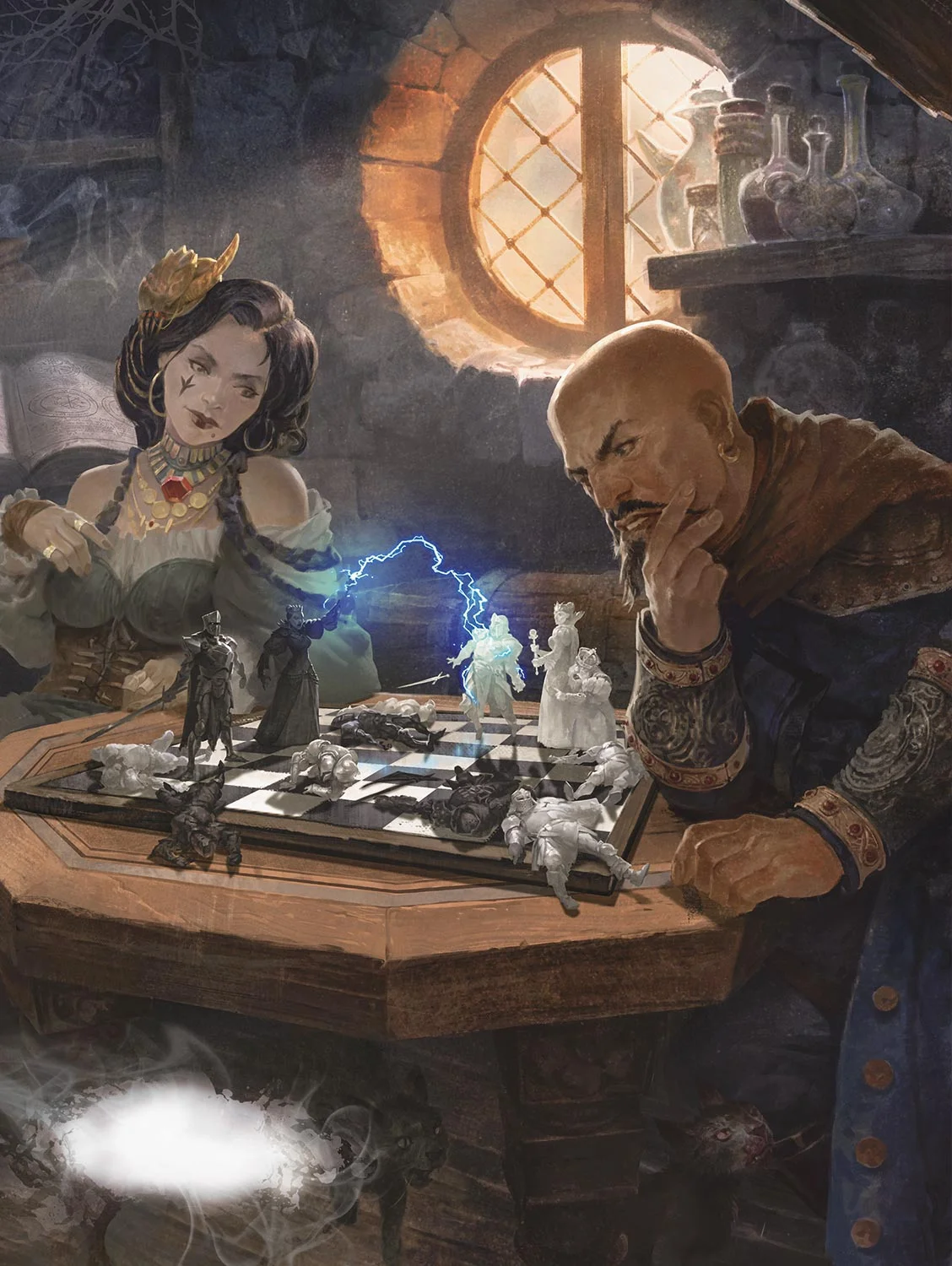
Establish boundaries. And if anyone crosses them, speak up. If they don't listen, there's always cloudkill...
Before making characters or playing the game, the DM and players can run a special session—colloquially called session zero—to establish expectations, outline the terms of a social contract, and share house rules. Making and sticking to these rules can help ensure that the game is a fun experience for everyone involved.
Often a session zero includes building characters together. As the DM, you can help players during the character creation process by advising them to select options that will serve the adventure or campaign that awaits.
Character and Party Creation
Each player has options when it comes to choosing a character race, class, and background, though you may restrict certain options that are deemed unsuitable for the campaign. If there are multiple players in the group, you should encourage them to choose different classes so that the adventuring party has a range of abilities. It's less important that the party include multiple backgrounds, as sometimes it's fun to play an all-soldier party or a troupe of adventuring entertainers. The backgrounds they choose define who their characters were before becoming adventurers and also include roleplaying hooks in the form of ideals, bonds, and flaws—things you ought to know. For example, if a player chooses the criminal background, one of the options for the character's bond is, "I'm trying to pay off an old debt I owe to a generous benefactor." If that's the character's bond, you should work with the player to decide who that generous benefactor is and build relevant storylines into the larger campaign.
Party Formation
During session zero, your role is to let the players build the characters they want and to help them come up with explanations for how their characters came together to form an adventuring party. It can be helpful to assume that the characters know each other and have some sort of history together, however brief that history might be. Here are some questions you can ask the players as they create characters to get a sense of the party's relationships:
- Are any of the characters related to each other?
- What keeps the characters together as a party?
- What does each character like most about every other member of the adventuring party?
- Does the group have a patron? See chapter 2, "Group Patrons" for patron examples.
If the players are having trouble coming up with a story for how their characters met, they may choose an option from the Party Origin table or let a d6 roll choose it for them. You should spend part of session zero helping the players flesh out the details. For example, if the characters came together to overcome a common foe, the identity of this enemy needs to be determined. If a funeral gathered the group, the identity of the deceased and each character's relationship to them will need to be fleshed out.
Running a Game for One Player
A DM running a game for one player should spend part of session zero working with that player to come up with their character's backstory, then let the player decide if they want the character to have a sidekick (see the "Sidekicks" section in this chapter).
You might need to help the player run the sidekick for the first few sessions and should make sure the player understands the functions and limitations of sidekicks:
- Sidekicks are stalwart companions who can perform tasks both in and out of combat, including things such as setting up camp and carrying gear.
- Ideally, a sidekick's abilities should complement those of the main character. For example, a spellcaster makes a good sidekick for a fighter or rogue.
Social Contract
D&D is first and foremost meant to be a fun-for-all experience. If one or more participants aren't having fun, the game won't last long. Session zero is the perfect time for you and the players to discuss the experience they're hoping for, as well as topics, themes, and behavior they deem inappropriate. Out of this discussion, a social contract begins to form.
Sometimes a social contract takes shape organically, but it's good practice to have a direct conversation during session zero to establish boundaries and expectations. A typical social contract in a D&D group includes implicit or explicit commitments to the following points:
- You will respect the players by running a game that is fun, fair, and tailored for them. You will allow every player to contribute to the ongoing story and give every character moments to shine. When a player is talking, you are listening.
- The players will respect you and the effort it takes to create a fun game for everyone. The players will allow you to direct the campaign, arbitrate the rules, and settle arguments. When you are talking, the players are listening.
- The players will respect one another, listen to one another, support one another, and do their utmost to preserve the cohesion of the adventuring party.
- Should you or a player disrespect each other or violate the social contract in some other way, the group may dismiss that person from the table.
This social contract covers the basics, but individual groups might require additional agreed-upon terms to guarantee a fun play experience for all. And a social contract typically evolves as a group's members learn more about one another.
Hard and Soft Limits
Once you and the players have acknowledged the terms of the game's social contract and agreed to uphold them, the conversation can segue into a discussion about soft and hard limits. There are many ways to mediate this discussion, and you might want to do some research to find an approach that might work well for your group. For purposes of this explanation, these terms are described as follows:
A soft limit is a threshold that one should think twice about crossing, as it is likely to create genuine anxiety, fear, and discomfort.
A hard limit is a threshold that should never be crossed.
Every member of the group has soft and hard limits, and it behooves everyone in the group to know what they are. Make sure everyone at the table is comfortable with how this discussion takes place. Players might not want to discuss their limits aloud around the table, especially if they're new to roleplaying games or haven't spent a lot of time with certain other members of the group. One way to alleviate such discomfort is to encourage the players to share their limits privately with you and allow you to present them without attribution to the whole group. For example, the players could write their limits on index cards for you to read aloud. However these limits are presented, it would be useful for you or one of the players to compile the limits into one list that can be shared with the whole group. Keep in mind that any discussion about limits should be treated with care—even sharing a person's limits can be a very painful experience, and this conversation should be handled with respect.
Common in-game limits include—but are not limited to—themes or scenes of sex, exploitation, racial profiling, slavery, violence toward children and animals, gratuitous swearing, and intra-party romance. Common out-of-game limits include unwanted physical contact, dice-sharing, dice-throwing, shouting, vulgarity, rules lawyering, distracting use of cell phones, and generally disrespectful behavior.
The discussion of limits is important because DMs and players can have phobias or triggers that others might not be aware of. Any in-game topic or theme that makes a member of the gaming group feel unsafe or uncomfortable should be avoided. If a topic or theme makes one or more players nervous but they give you consent to include it in-game, incorporating it should be handled with care, and you must be ready to veer away from such topics and themes quickly.
While session zero is the perfect place to start this discussion, it might not be the only time limits are addressed. Someone might cross a line and need to be reminded of a limit, or someone might not think to include some of their limits in the initial discussion. Players can also discover new limits as the campaign unfolds. Make a plan to check in with the group to make sure the list of hard and soft limits is up to date, and remind everyone to revisit this list often in case it changes.
Game Customization
In addition to shaping the game around the characters in the adventuring party, you should be prepared to customize the game to suit the players' tastes. The ""Know Your Players"" section in the introduction of the "Dungeon Master's Guide" provides some guidance for doing so, based on known player archetypes. To help identify what types of players are in the group, you can ask each player any or all of the following questions:
- Which of the three pillars of adventuring (combat, exploration, roleplaying) interest you the most?
- How much humor do you like in the game?
- What level of technology do you prefer?
- Do you enjoy solving in-game puzzles and riddles?
- Do you like to track experience points, or would you rather have your character advance in level when I tell you to?
House Rules
House rules include optional rules, such as those presented in "chapter 9" of the "Dungeon Master's Guide", and rules you create. If you plan to use any house rules, session zero is a good time to discuss those rules with the players and solicit their input.
House rules are best presented as experiments, and time will tell if they're good for your game. If you introduce a house rule in session zero that turns out to have an adverse effect on people's enjoyment of the game, you may jettison or revise the house rule to create a better gaming experience for everyone. Don't feel bad if a house rule doesn't end up working as well as you expected it to. Remember: the goal is to ensure everyone is having fun.
Sidekicks
My soon-to-be sidekick could learn a thing or two from all this—more material for Project Humblekainen.
This section provides a straightforward way to add a special NPC—called a sidekick—to the group of adventurers. These rules take a creature with a low challenge rating and give it levels in one of three simple classes: Expert, Spellcaster, or Warrior.
A sidekick can be incorporated into a group at the party's inception, or a sidekick might join them during the campaign. For example, the characters might meet a villager, an animal, or another creature, forge a friendship, and invite the creature to join them on their adventures.
You can also use these rules to customize a monster for your own use as DM.
Creating a Sidekick
A sidekick can be any type of creature with a stat block in the "Monster Manual" or another D&D book, but the challenge rating in its stat block must be 1/2 or lower. You take that stat block and add to it, as explained in the "Gaining a Sidekick Class" section.
To join the adventurers, the sidekick must be the friend of at least one of them. This friendship might be connected to a character's backstory or to events that have transpired in play. For example, a sidekick could be a childhood friend or pet, or it might be a creature the adventurers saved. As DM, you determine whether there is sufficient trust established for the creature to join the group.
You decide who plays the sidekick. Here are some options:
- A player plays the sidekick as their second character—ideal when you have only one or two players.
- A player plays the sidekick as their only character—ideal for a player who wants a character who's simpler than a typical player character.
- The players jointly play the sidekick.
- You play the sidekick.
There's no limit on the number of sidekicks in a group, but having more than one per player character can noticeably slow down the game. And when estimating the difficulty of an upcoming encounter, count each sidekick as a character.
Gaining a Sidekick Class
When you create a sidekick, you choose the class it will have for the rest of its career: Expert, Spellcaster, or Warrior, each of which is detailed below. If a sidekick class contains a choice, you may make the choice or let the players make it.
Starting Level
The starting level of a sidekick is the same as the average level of the group. For example, if a 1st-level group starts out with a sidekick, that sidekick is also 1st level, but if a 10th-level group invites a sidekick to join them, that sidekick starts at 10th level.
Leveling Up a Sidekick
Whenever a group's average level goes up, the sidekick gains a level. It doesn't matter how much of the group's recent adventures the sidekick experienced; the sidekick levels up because of a combination of the adventures it shared with the group and its own training.
Hit Points
Whenever the sidekick gains a level, it gains one Hit Die, and its hit point maximum increases. To determine the amount of the increase, roll the Hit Die (the type of die appears in the sidekick's stat block), and add its Constitution modifier. It gains a minimum of 1 hit point per level.
If the sidekick drops to 0 hit points and isn't killed outright, it falls unconscious and subsequently makes death saving throws, just like a player character.
Proficiency Bonus
The sidekick's proficiency bonus is determined by its level in its class, as shown in the class's table.
Whenever the sidekick's proficiency bonus increases by 1, add 1 to the to-hit modifier of all the attacks in its stat block, and increase the DCs in its stat block by 1.
Ability Score Increases
Whenever the sidekick gains the Ability Score Improvement feature, adjust anything in its stat block that relies on an ability modifier that you increase. For example, if the sidekick has an attack that uses its Strength modifier, increase the attack's modifiers to hit and damage if the Strength modifier increases.
If it's unclear whether a melee attack in the stat block uses Strength or Dexterity, the attack can use either.
Parleying with Monsters
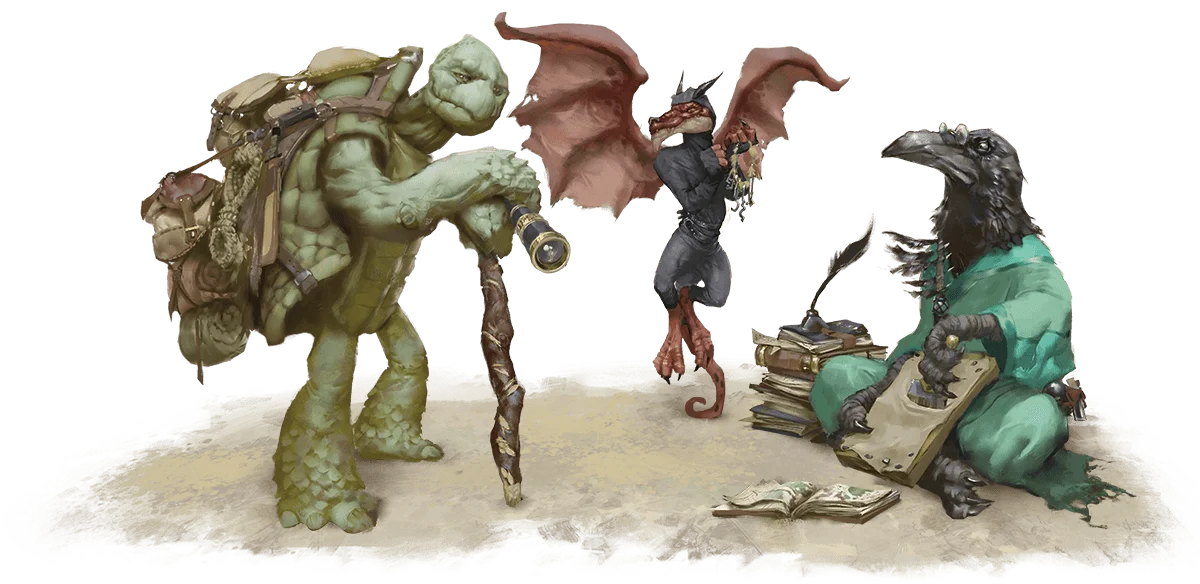
Why fight if a lively chat is possible? If things get out of hand, just show yourself out with a dimension door.
Meeting a monster doesn't have to spark a fight. An offering, like food, can calm some hostile monsters, and sapient creatures often prefer to talk than to draw weapons. If the adventurers try to parley with a monster, you may improvise the encounter or use the "social interaction rules" in the "Dungeon Master's Guide". Consider granting the characters advantage on any ability check they make to communicate with a creature if they offer something it wants. The "Monsters' Desires" section below suggest things that a creature might like, depending on its type.
Monster Research
Adventurers can research what a creature is likely to desire. The Monster Research table suggests which skills can be used to learn about a creature of a particular type. The DC for a relevant ability check equals 10 + the creature's challenge rating.
Monsters' Desires
Environmental Hazards
When your earliest memories are of growing up in the Feywild, things like time-warping mushrooms, mind-bending fruit, and giant tabby cats seem far less whimsical and way more, "Could we please just move to the Material Plane so I can have some scrap of a normal childhood?!"
This section explores how to add fantastical challenges to any locale and ways to further bring an adventure's setting to life.
When a creature's name appears in bold in a table herein, that indicates that you can find the creature's stat block in the "Monster Manual".
Supernatural Regions
Not all lands thrive as nature intended. Magical forces, strange interlopers, or tragic events can alter an area's destiny, fundamentally changing the land. While the flora, fauna, structures, and inhabitants might remain unaffected, the land's innate character takes on new qualities.
A supernatural region is permeated by a preternatural force in an area as large or small as you wish. In the affected area, certain effects and brief encounters reinforce an underlying theme. These effects occur as characters traverse an influenced region or add interest to a specific affected location.
The descriptions of the following supernatural regions summarize the region, present a table of potential effects within the affected area, and note triggers for a random effect. Feel free to customize the effects of each region to suit any adventure.
The effects of a region occur whenever you please, at the time each description suggests, or under one or more of the following circumstances:
- Soon after the party first enters the region
- When a creature loses more than half its hit points
- When a creature casts a spell of 1st level or higher
- When a creature activates a magic item
- When a creature makes an exceptionally loud noise or otherwise attracts attention
- When the party spends at least 30 minutes in the same region
Blessed Radiance
The grace of the Upper Planes touches this region. Consider rolling on the Blessed Radiance Effects table when the following circumstances occur in the region:
- A creature succeeds on a saving throw compelled by the abilities of a fiend or an undead
- A creature is the target of a cleric or paladin spell of 3rd level or higher
- A creature scores a critical hit against a fiend or an undead
- A creature experiences an epiphany or inspiring triumph in the service of righteousness or in defiance of wickedness
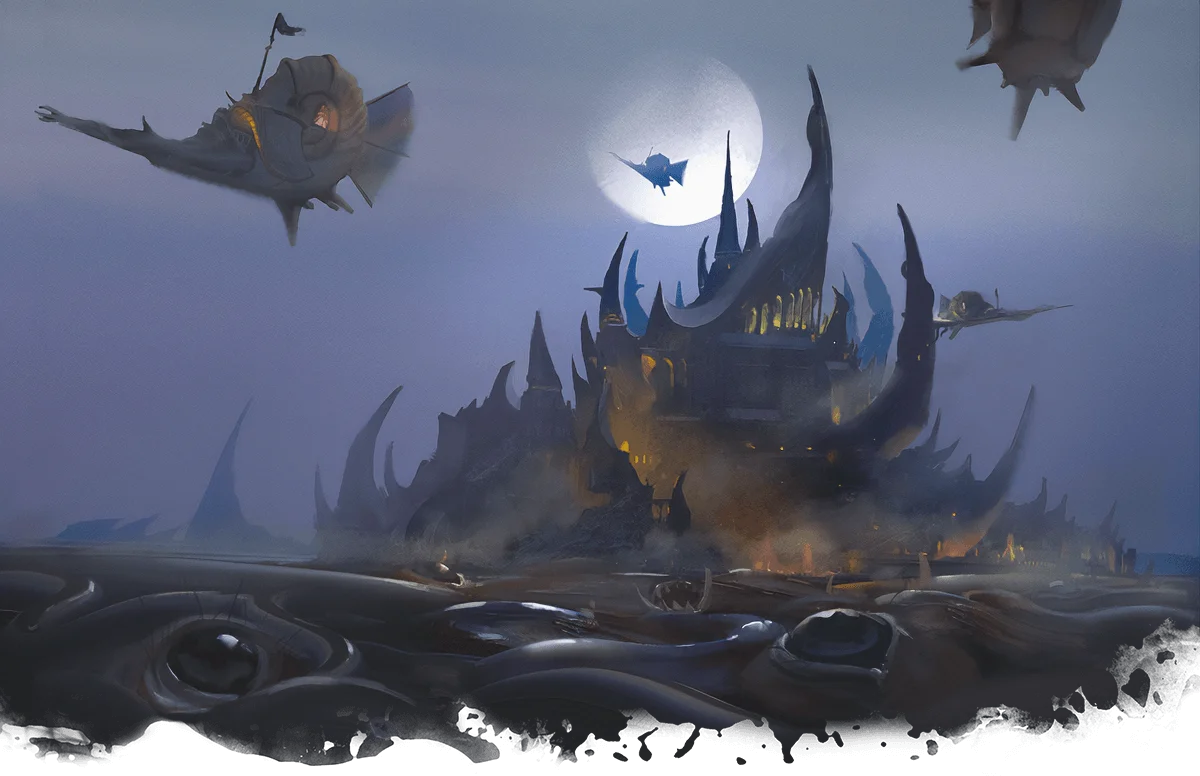
Far Realm
As souls travel away from the Material Plane after death, they either dwell in the Astral Plane as spirits or are pulled toward one of the Outer Planes to continue their journey. But some entities find ways to travel beyond the Outer Planes to dwell in the Far Realm. There they transform over eons into abominations or elder evils, seething in a reality with its own laws. All who stay in the Far Realm are eventually twisted into alien shapes by the realm's eldritch forces.
The Far Realm's pernicious influence is often subtle, leaking into the Material Plane through thin places in reality or as invasive thoughts that inspire life to propagate along alien paths.
Consider rolling on the Far Realm Effects table when the following circumstances occur in a region touched by the Far Realm:
- A warlock whose Otherworldly Patron is a Great Old One rolls a 1 or 20 on the
d20for an ability check, an attack roll, or a saving throw. - The characters take a short or long rest in the region.
- A creature spends more than an hour reading an eldritch tome written by those who have seen or otherwise interacted with the Far Realm.
Haunted
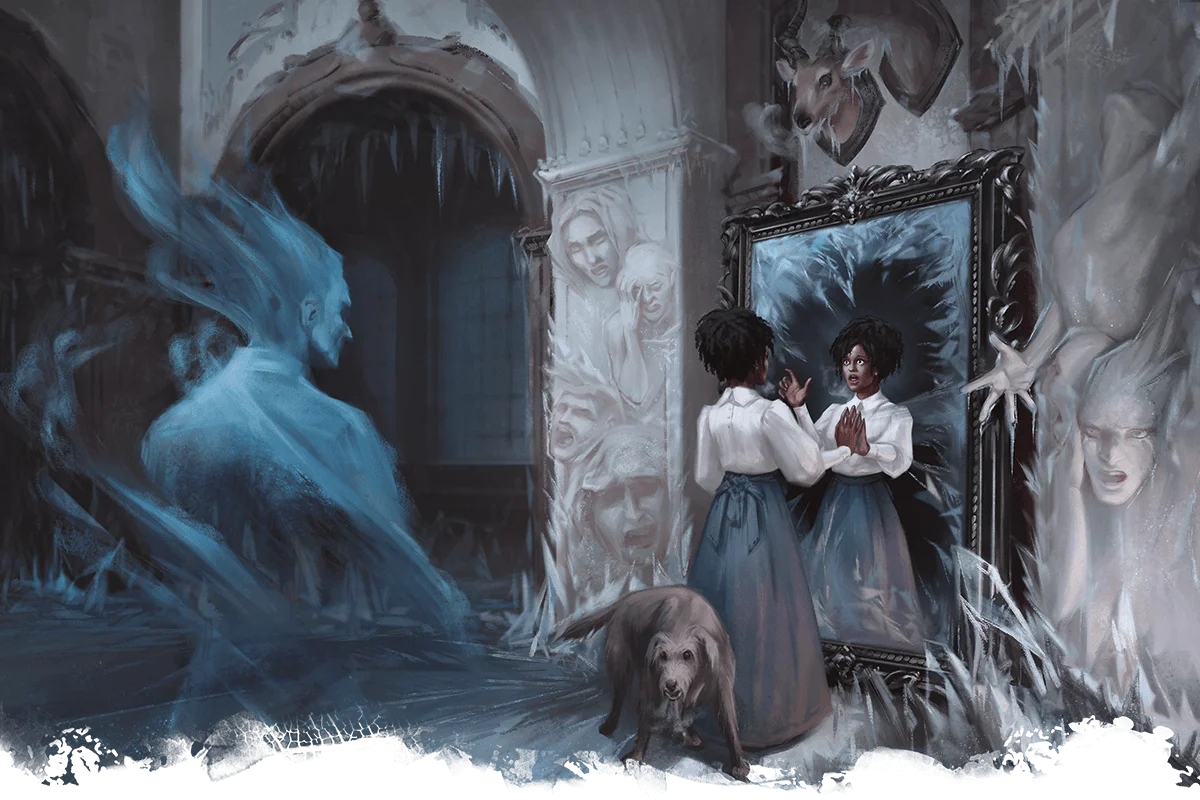
Haunted environs include homes burdened by dark deeds, the sites of mass killings, and locations where individuals died while experiencing powerful fear, sorrow, or hatred. Haunted places bear echoes of the past and, like ghosts, harass visitors even as they seek respite from age-old traumas. Few places are meaninglessly haunted, and you can easily customize the general results on the following table to suit all manner of macabre tales.
Consider rolling on the Haunted Effects table when the following circumstances occur in the region:
- A creature gains the frightened condition.
- Multiple creatures are unable to see.
- A creature is alone.
- Midnight or another ominous hour arrives.
- A ghost or other creature tied to the region's grim history menaces the party.
Infested
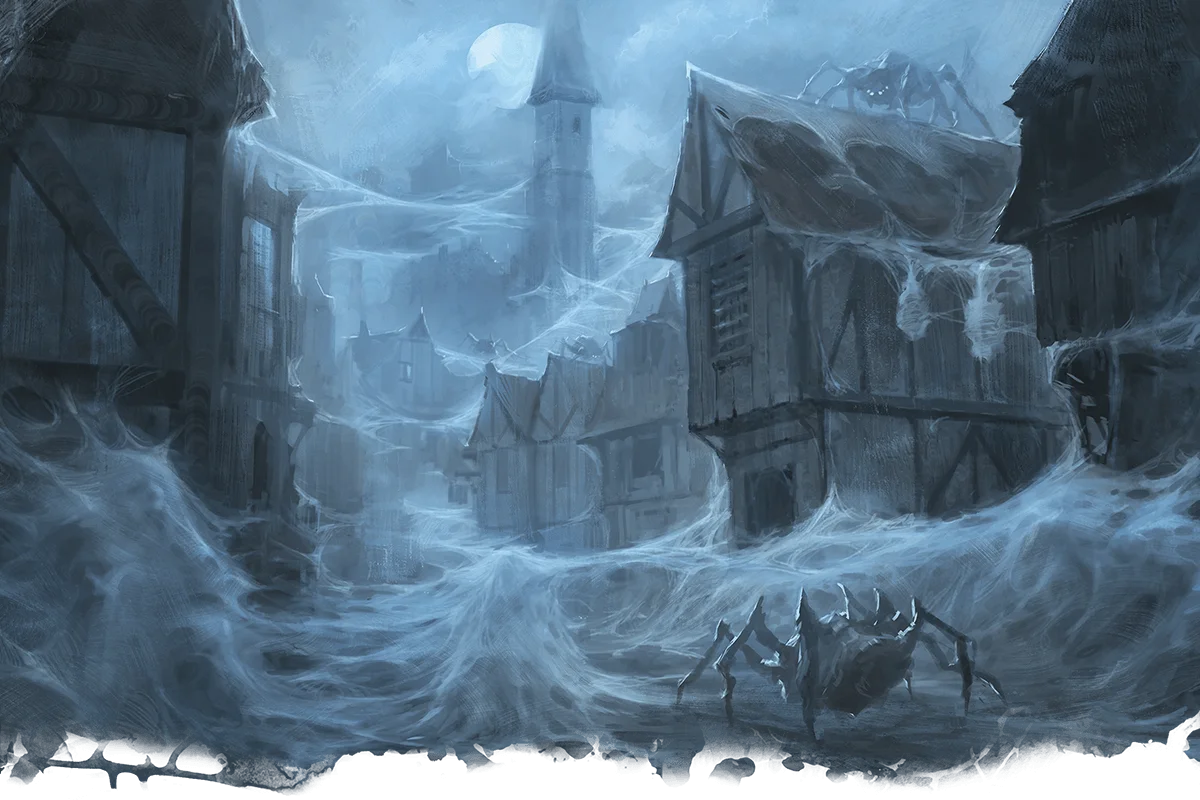
On many worlds, the biomass of insects radically outweighs that of higher organisms. Mass migrations and deadly insect species can imperil larger creatures, but most insects remain nothing more than an annoyance. However, through wild population booms, magical manipulation, supernatural growth, interbreeding with otherworldly species, or stranger circumstances, insects can overrun an entire region. Swarms of insects become the dominant species in an area, consuming plants and animals, creating elaborate hives or tunnels, and infesting structures and the earth.
The following effects represent a region overrun by insects or hives of similar creatures, likely manipulated by magic, otherworldly intelligence, or environmental factors to infest an area in countless numbers and drive out all competing life.
Consider rolling on the Infested Effects table when the following circumstances occur in the region:
- Webs, cocoons, hives, anthills, or other insect dwellings are disturbed.
- A creature attacks an insect swarm or a Small or larger insect, such as a giant centipede or giant spider, in the region.
- A creature begins a short or long rest.
Mirror Zone
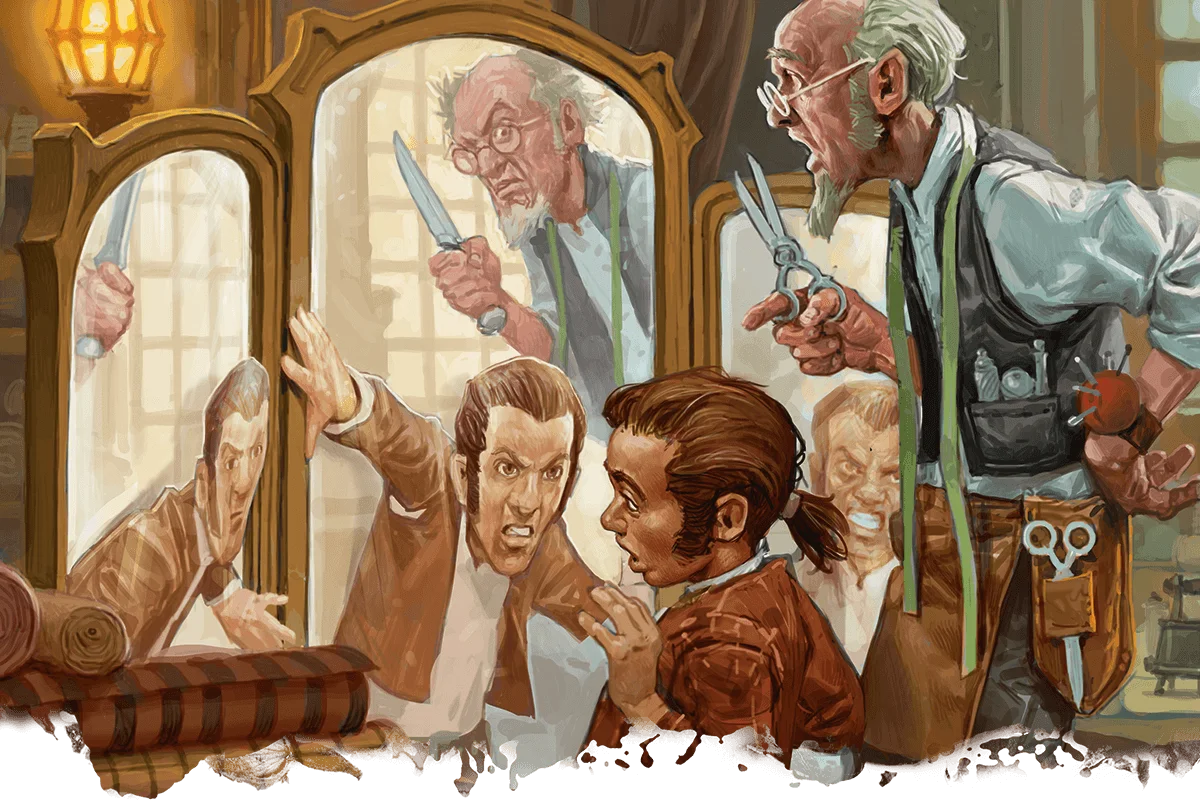
A mirror zone occurs where planar and magical energies converge and create a place of reflections. Creatures, objects, and energy reflect, refract, duplicate, or are transported elsewhere. Such locations arise from the intrusion of a theorized Plane of Mirrors upon the Material Plane, or where powerful magic governing transition, protection, or divination had unexpected results.
Consider rolling on the Mirror Zone Effects table when the following circumstances occur in the region:
- A creature shatters a mirror.
- A creature uses any teleportation magic.
- An illusion appears.
- A creature impersonates another creature.
Psychic Resonance
In an area of psychic resonance, magic imposes strange effects on creatures and objects. These manifestations stem from strong emotions combined with magic use or from the presence of psionic creatures.
Consider rolling on the Psychic Resonance Effects table when the following circumstances occur in the region:
- A creature endures a powerful emotional experience.
- A creature takes an amount of psychic damage greater than its Constitution score.
- A creature becomes charmed or frightened.
- A creature experiences telepathic communication.
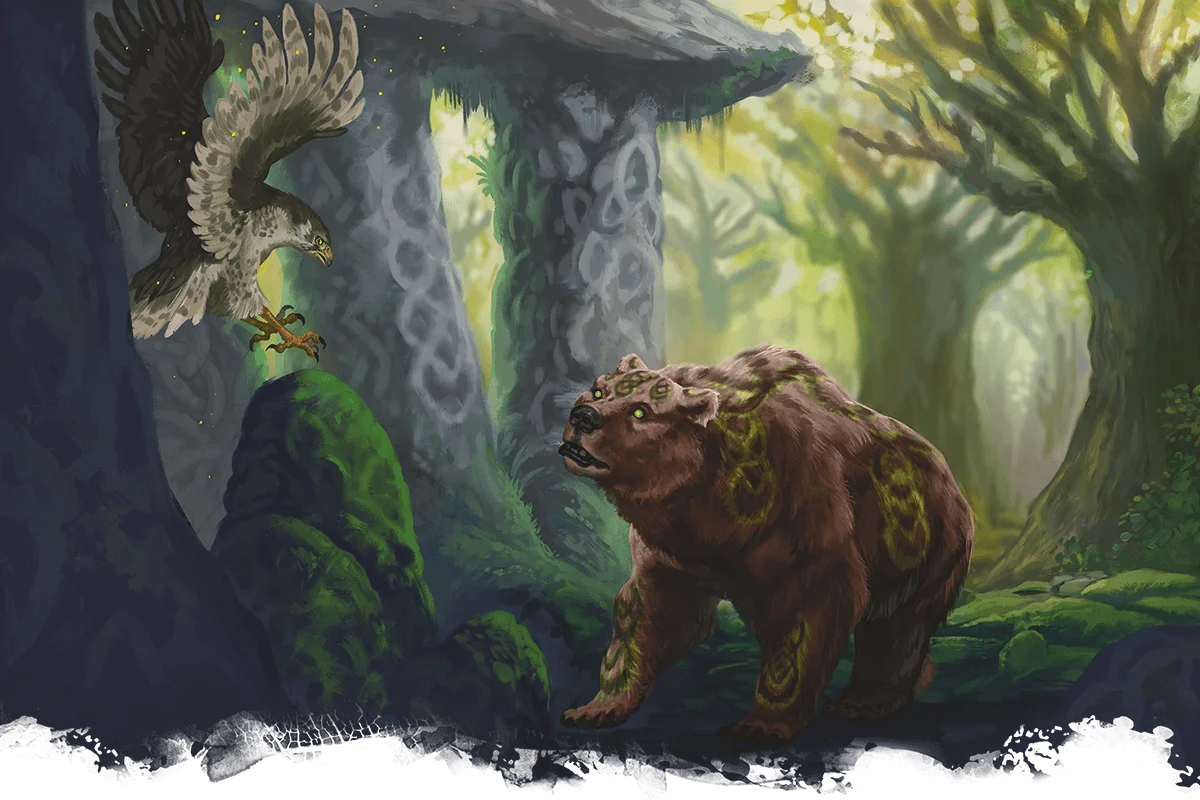
Legends are filled with natural forces and mundane objects that take on humanoid characteristics to guide or confound heroes: statues that sing, animals that whisper secrets, clouds that speak their mind. While monsters like elementals, galeb duhr, and treants represent natural forces brought to life, not every chatty rock or sagacious stream needs a stat block. Perhaps your adventures take a party to a land where plants speak freely or a cursed realm where petrified souls beg for help. Don't feel restricted by the options in the "Monster Manual" or by the limitations of the animate object spell should you want to breathe extra life into your story. Filling a witch's redoubt with murmuring relics, a fey forest with eavesdropping vegetation, or a sky god's temple with avian choirs makes a place especially memorable. Spells such as animate objects, awaken, speak with animals, speak with plants, and the like provide guidance on how to bring commonplace creatures and objects to life.
Unraveling Magic
The source of magic is damaged or corrupted in this region. Magic is unpredictable, and strange results occur when a creature casts a spell. Such regions come into being when potent rituals go awry (or if they succeed, in the case of dangerous and destructive undertakings), in the aftermath of cataclysmic magical battles, or where an artifact was destroyed.
Consider rolling on the Unraveling Magic Effects table when the following circumstances occur in the region:
- Any charges are expended in a magic item.
- A spell slot of 1st level or higher is expended.
- A dragon, a fey, or an elemental of challenge rating 5 or higher dies.

Magical Phenomena
Magic has the ability to make even the most serene natural settings unpredictable. Whether the result of magical calamities, otherworldly influences, or nexuses of inexplicable forces, the subsequent effects range from whimsical to deadly.
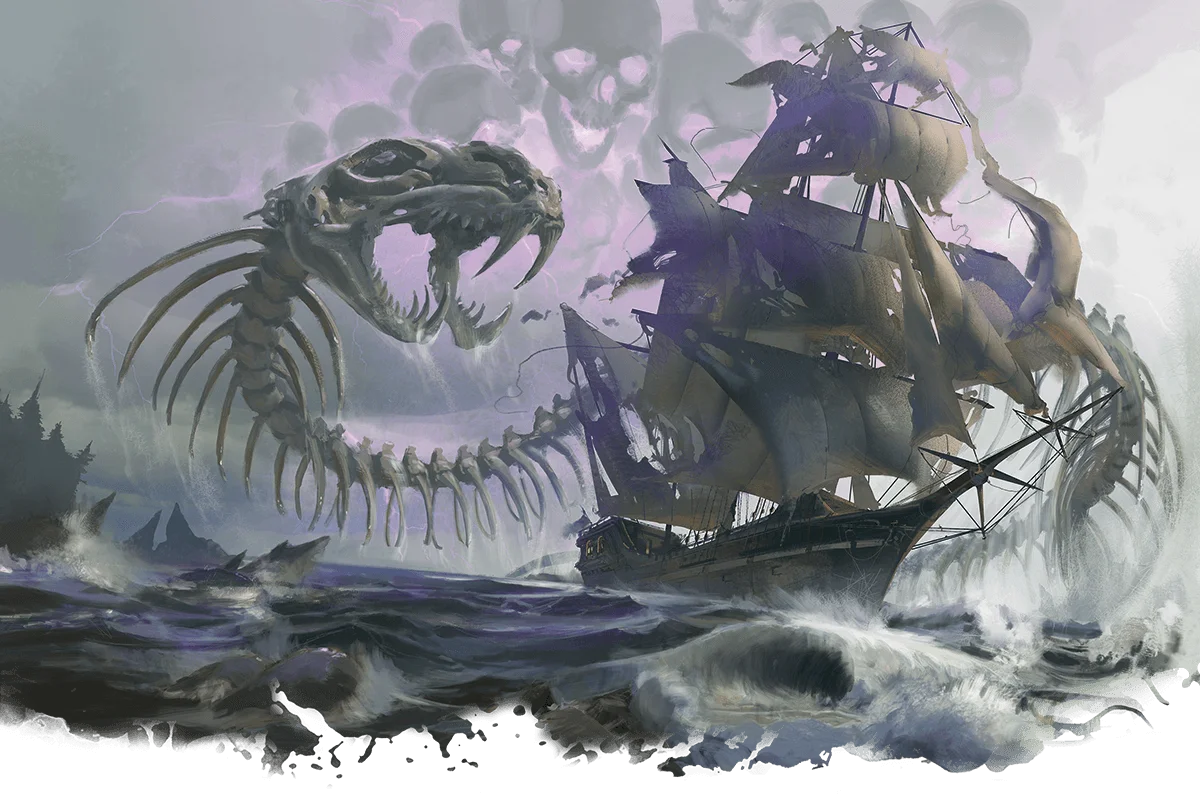
Eldritch Storms
When magical currents become trapped amid winds and clouds, eldritch storms can result.
Emotional Echoes
Occasionally a place becomes infused with the powerful emotions of those who once dwelt, worked, celebrated, or suffered there. Areas with emotional echoes are typically associated with one common emotion, such as joy or sorrow. Such an area might be as small as a room in a house or as large as a forest. Once per day, if a creature within the area expresses even the faintest hint of the prevailing emotion, the land seeks to hold onto that creature and inspire it to produce more of the feeling tied to the emotional echo. The creature is targeted by a suggestion spell (DC 16), with the intent of making it linger in the area and perform an act related to its associated emotion. The effect lasts 24 hours.
The following list notes some of the most common emotional echoes, where they tend to appear, and how they typically influence creatures:
Boldness
Appears in battlefields and echoing canyons, encouraging creatures to shout hidden truths and act out their greatest victories
Doubt
Appears around cliffs or deserts and makes creatures hesitate, mistrusting their ability to climb or escape their current difficulties
Fear
Appears in caves and ruins, overwhelming creatures with dread and urging them to give voice to their deepest fears
Hatred
Appears in volcanic regions and provokes creatures to scream and destroy things
Inspiration
Appears around memorials or natural wonders, causing creatures to create works of art on the spot and obsess over them
Joy
Appears in glens or flowering fields, inspiring creatures to dance, relax, and sing
Love
Appears along beaches or orchards and encourages creatures to confess their love to others and endlessly list their favorite things
Sorrow
Appears in ruins and swamps, particularly around quicksand, and overwhelms creatures with sobbing and confessions of regret
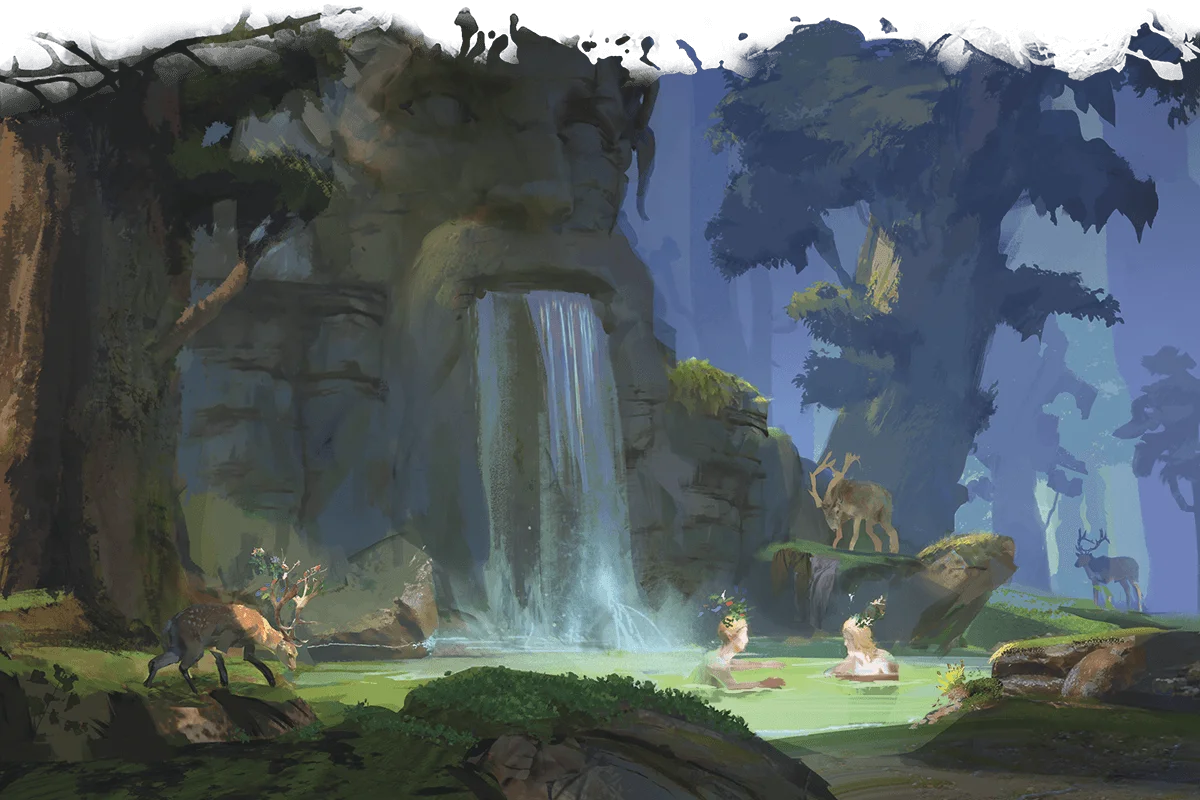
Enchanted Springs
Enchanted springs brim with miraculous waters, whether they tap into magical sources hidden beneath the earth or they're blessed by eldritch beings. Those who find these mystical sites might bathe or drink from the pools and temporarily gain a measure of the waters' magic. All manner of protectors or covetous guardians might lurk around these springs, driving off strangers or demanding a worthy price for access to the mystical waters.
While many enchanted springs bear the blessings of wild gods or fey beings, some are tainted. These might be waters that were long ago polluted by the ichor of an evil entity. As with pristine enchanted springs, folk seek out such defiled places, whether to purify them or claim their foul powers.
Regardless of whether a spring is pure or tainted, creatures might need to drink the water to experience the spring's effects, simply touch the water, or bathe in it for a minute to trigger an effect.
Bottling an enchanted spring's water removes its magical properties, unless the bottle is a specially prepared vial blessed by whatever being enchanted the spring in the first place.
Magic Mushrooms
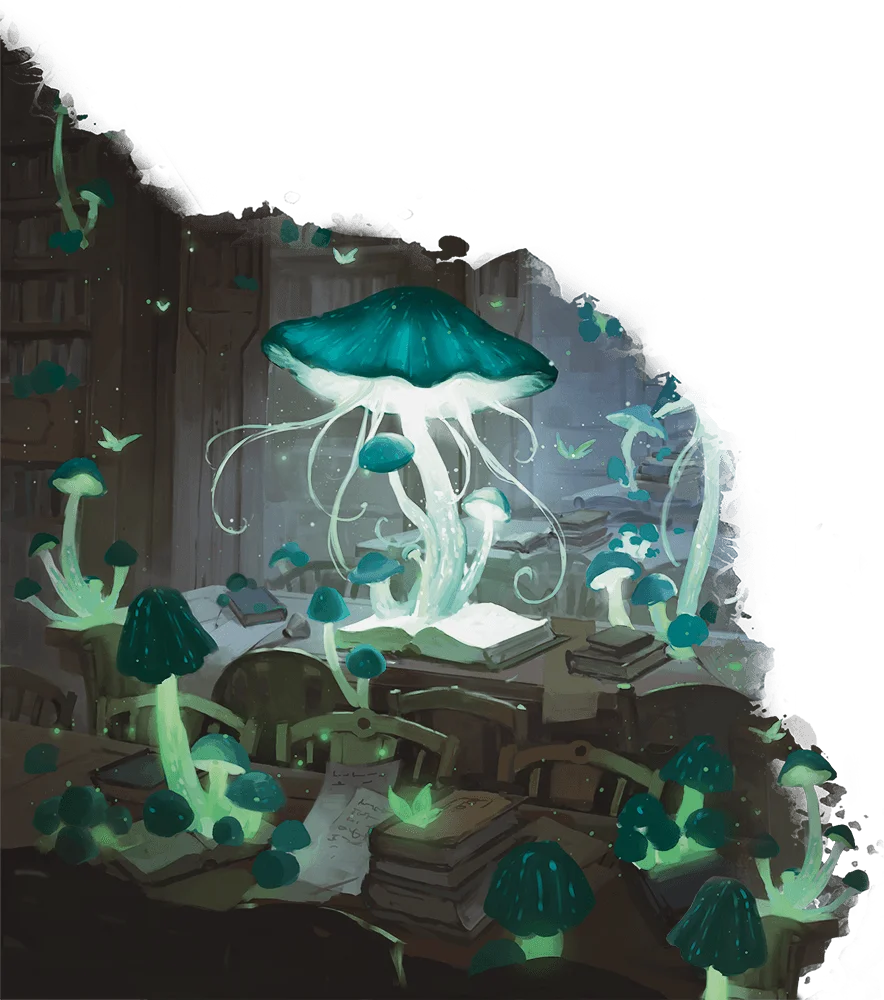
Mushrooms can be deadly, delicious, or both. Some have magical properties, especially those that grow in areas suffused by mystical energy, such as the Underdark and the Feywild.
Creatures proficient in the Medicine, Nature, or Survival skills might be versed on the subject of fungi, especially the magical kind, since the beneficial effects can save lives or bestow unusual powers. But when an unknown variety of fungus is encountered, only an expert can identify it and determine its properties.
To determine the effects of eating such fungus, roll on the Magic Mushroom Effects table.
Mimic Colonies
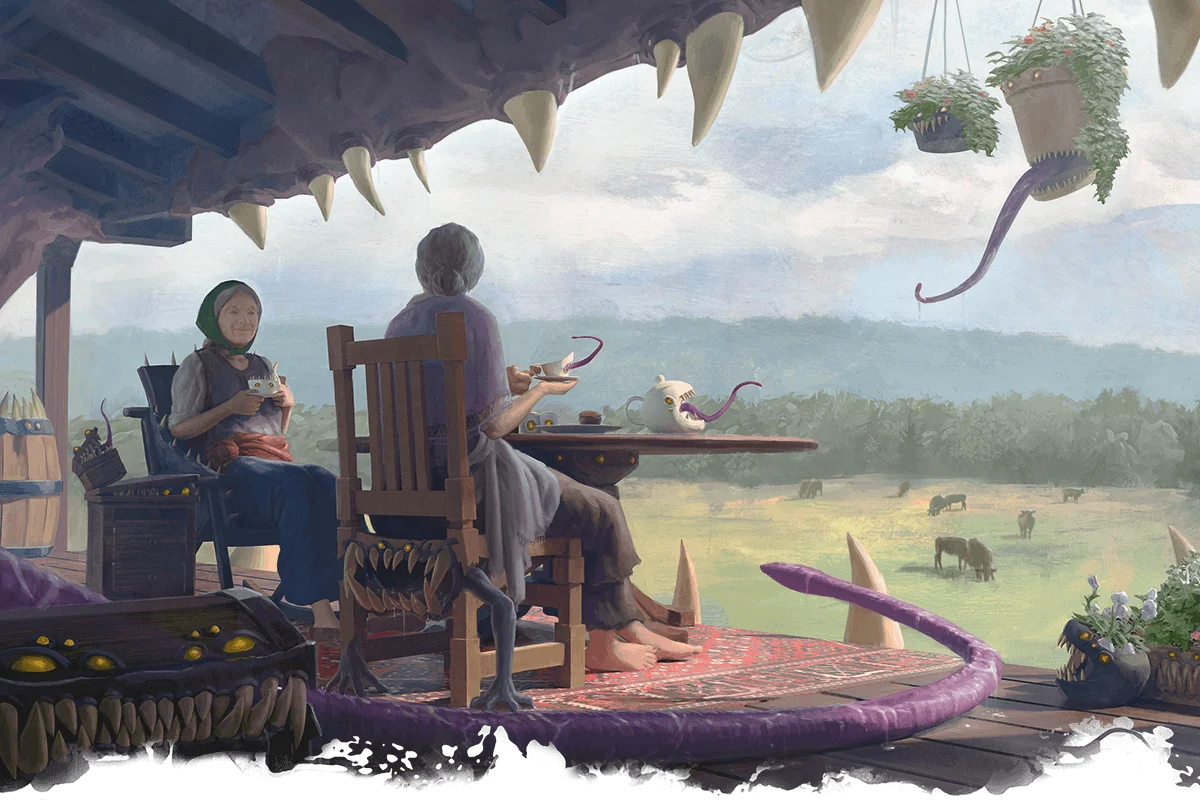
Mimics imitate terrain and dungeon dressing to hunt for food. Rare specimens develop a deeper understanding of the world and can communicate with other creatures. In extremely rare cases, groups of these creatures band together, creating colonies. These bonded mimics cooperate to create larger objects than any lone mimic could approximate. A mimic colony can work together to form buildings, bridges, crystal formations, cliff faces, statues, and nearly anything it desires. Entire villages appearing out of nowhere might be composed of mimics!
Mimic Communication
Members of the colony develop telepathy and the ability to speak. While within 10 miles of the colony, any mimic can communicate telepathically with other creatures within 120 feet of it and can speak Common and Undercommon fluently (or two other languages of the DM's choice). The colony's offspring gain these abilities innately and can use them even away from the colony, as shown in the Juvenile Mimic stat block.
Confronting a Colony
A mimic colony's primary goal is survival. If threatened by a force the mimics can't overcome, they are willing to bargain. Mimic colonies have learned that adventurers they can't defeat can be bought off with information about nearby creatures or locations, hidden treasure (which the colony obtained from prior), or even one of their own young.
If the colony's survival is threatened and it thinks it has a chance of surviving a fight, it can leverage its combined might using special lair actions. On initiative count 20 (losing all ties), the mimic colony takes a lair action, causing one of the following effects; it can't use the same effect two rounds in a row:
- The mimic colony chooses up to three creatures within 300 feet of it. Each target must succeed on a DC 15 Strength saving throw or have its speed reduced to 0 until initiative count 20 on the following round, as pieces of the environment grasp the target. If a target fails the save by 5 or more, it is restrained instead for that duration.
- The mimic colony uses the Help action, aiding a creature of its choice within 300 feet of it.
- The mimic colony chooses up to three creatures within 300 feet of it. Each target must succeed on a DC 15 Dexterity saving throw or take 13 (
3d8) acid damage, as orifices appear on surfaces in the environment and launch caustic spittle. - The mimic colony chooses a cube of nonmagical, inanimate material in physical contact with it. The cube can be up to 15 feet on a side. The colony reshapes that material however it likes. This transformation lasts for 1 hour.
When determining the difficulty of an encounter with a hostile mimic colony, consider the colony to be one additional creature of challenge rating 2.
Primal Fruit
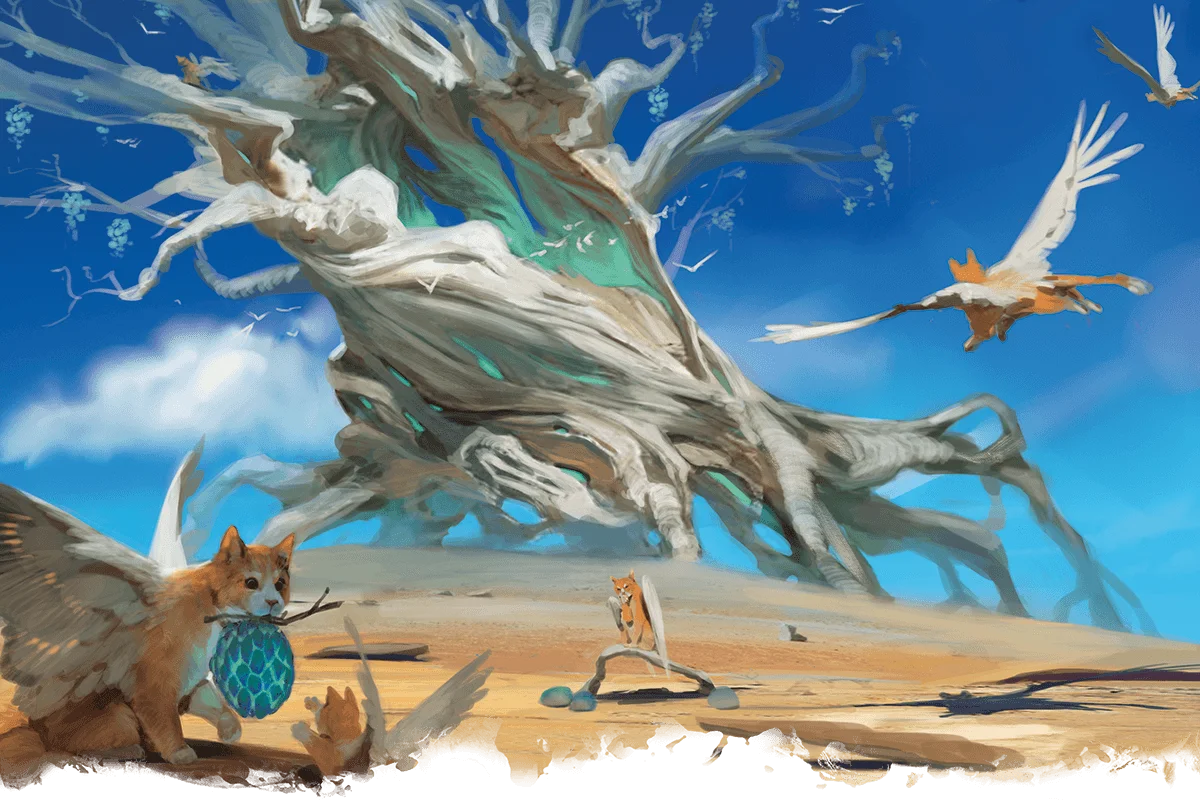
In wild places brimming with nature's power, gardens meticulously tended by eccentric wizards, and blessed groves touched by divine providence, plants can sometimes produce fruit bursting with primal magic. Not every fruit-bearing plant holds this stored magic, but those that do bear obvious signs: their colors are more vibrant or shift randomly, their skin sparkles in the light or glows in the dark, soft hums emanate from them, or they feel peculiar to the touch.
A fruit-bearing plant that is suffused with magic might produce 1d6 pieces of primal fruit every week. Primal fruit remains potent for 1 week, after which it loses its magical properties but remains edible.
As an action, a creature can eat a piece of primal fruit to gain its effects. This fruit can be squeezed into juice or cooked into a dish and retains its magic. Choose an effect or roll on the Primal Fruit Effects table to determine what happens when a piece of the fruit is consumed. An identify spell or similar magic reveals the beneficial effect of a piece of fruit before it is eaten, but it doesn't reveal a curse or side effect.
Unearthly Roads
Currents of magic run through the world—invisible, artery-like networks that exert subtle influence and connect disparate lands. The greatest of these magical streams are persistent paths, often known by colloquial names or simply as unearthly roads. An unearthly road acts like a sort of planar portal that stretches from one place to another, be they sites on the same world or on different planes of existence. Unearthly roads allow creatures to cross great distances rapidly, moving from an entrance gate to an exit gate or vice versa. These paths operate like long tunnels, and a creature that travels on an unearthly road progresses 21 miles of distance in the time it would normally take it to travel 1 mile. While on the road, glimpses of the world beyond might be visible in blurred or distorted visions of scenery or especially prominent landmarks. Creatures or specific details are not visible beyond an unearthly road.
Some unearthly roads serve as trade routes or secret connections between distant lands. Others shift locations at noteworthy times or in response to external phenomena, like on specific anniversaries or in response to the phases of the moon. Some might also require a particular item, ritual, or action to open their gates. The Unearthly Road Keys table offers suggestions on how to enter an unearthly road.
Natural Hazards
Even without the threats of supernatural environments, the world is a dangerous place. The following natural hazards expand on those presented in the "Dungeon Master's Guide".
Spell Equivalents of Natural Hazards
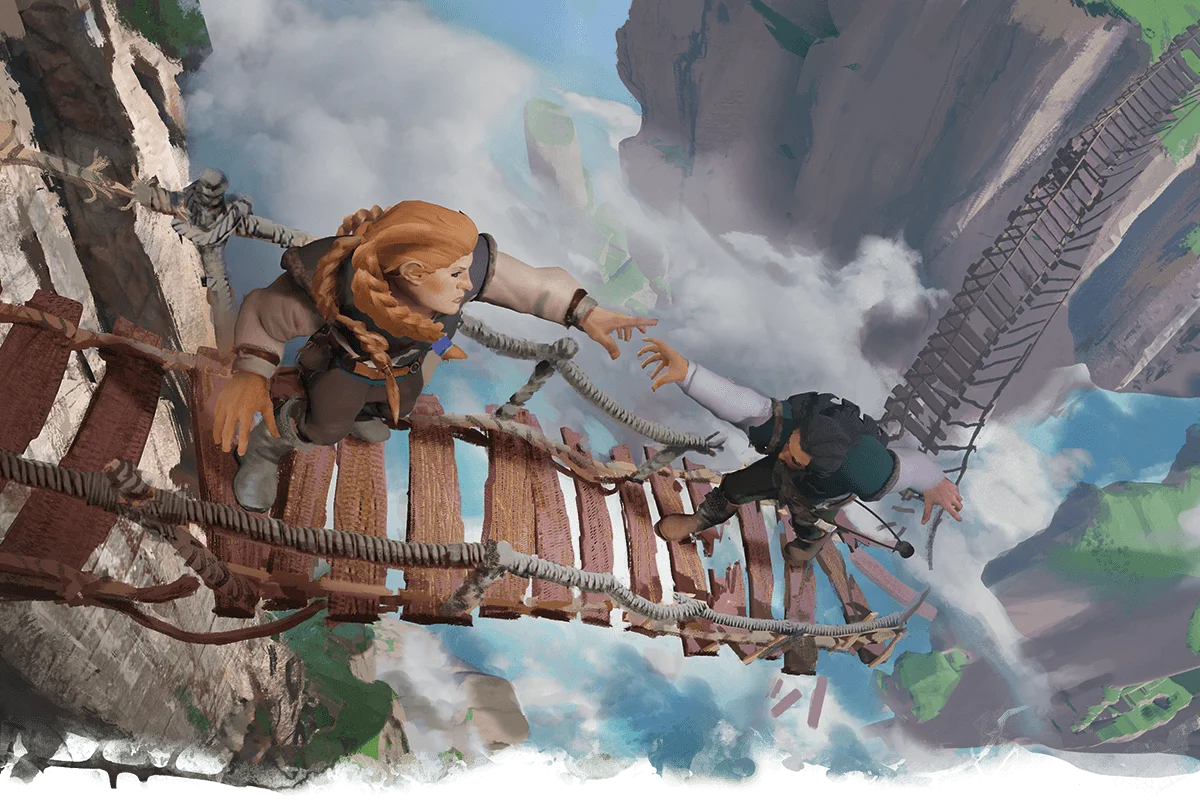
Numerous spells emulate the wrath of nature, and you can use spell effects to represent a variety of natural hazards. The Spells as Natural Hazards table presents some common environmental dangers and the spells you may use to approximate them.
Puzzles
Why create a solvable puzzle? Just pose an enigmatic question without an answer and watch your trespassers squirm!
Devious traps and multifaceted mysteries might be staples of fantasy adventures, but they're not the easiest challenges for a DM to present on the fly. This section presents a selection of puzzles designed to invite group participation and challenge adventurers of any stripe—from genius scholars to martial masters. Each puzzle is flexible enough to be included in your campaign as presented or customized to fit the needs of a specific adventure.
Why Use Puzzles?
Puzzles provide exciting opportunities to use wit to overcome obstacles and allow characters to collaborate to make discoveries. You might add a puzzle to an adventure for any of the following reasons:
- To encourage a party to discover information through teamwork
- To provide an opportunity for characters to use their skills in uncommon ways
- To make a setting feel more whimsical, mysterious, or otherworldly
- To explain why no one has ever discovered something hidden close at hand
- To reveal a secret no one knows and magic can't reveal
Some puzzles can take considerable time to solve, so be mindful of how often you use them in your adventures. Remember, most puzzles don't need to be solved immediately, and they might be all the more satisfying if their riddles linger unresolved for multiple sessions.
Puzzle Elements
Text that appears in a box like this is meant to be read aloud or paraphrased for the players when their characters first arrive in a location with a puzzle or when otherwise noted.
Additionally, the following sections appear in each puzzle:
- Difficulty. Each puzzle is classified as easy, medium, or hard. The harder the puzzle, the more likely the players will need hints to solve it.
- Puzzle Features. This section presents an overview of the puzzle's features and how they can be interacted with.
- Solution. This section explains how the puzzle is solved.
- Hint Checks. This section suggests hints that characters might use their skills to reveal. Provide one or more of the hints if the characters get stuck. If a character has proficiency in a hint's associated skill, give them that hint if they ask you for help.
- Customizing the Puzzle. This section explores how to integrate the puzzle into your adventures, alter its difficulty, or make other adjustments.
Hints
If players request a hint while attempting to solve a puzzle, consult that puzzle's "Hint Checks" section. Each hint is associated with a skill and a DC. If a character in the party has proficiency in a skill related to a hint, share that hint with them. If the same skill is listed multiple times with the same or higher DCs, reveal hints with the lowest DCs first then hints with higher DCs if the group requests additional help.
If no character has proficiency in any of the listed skills, characters can make ability checks using the listed skills and DCs. Those who succeed on a check learn the associated hint.
Don't hesitate to reveal hints to the party. Hints provide characters with relevant skills the opportunity to shine, even if they're not usually particularly cunning. Additionally, if party members have backgrounds or campaign experiences that might tie into a puzzle, those make great reasons to provide characters with additional hints.
Running Puzzles
Once you've presented a puzzle to a group, feel free to add and clarify details as you would in any other type of encounter. Try not to give away details of the puzzle's solution in your descriptions, but there's nothing wrong with letting a hint slip here or there.
Don't worry whether it's a player or a character who's solving a puzzle. While hint checks provide a way for character experience to contribute to a puzzle's solution, ultimately the boundaries between a player's and a character's ability to solve a puzzle isn't as important as the group enjoying the challenge. However, if a player knows the answer to a puzzle in advance, urge them to share only hints their character learns.
After presenting a puzzle, encourage the party to solve it together, to pool hints, and to share their insights. Work with the group to share any puzzle handouts and to take turns talking through their thoughts. Ultimately, solving a puzzle will be a victory for the whole group, not one individual.
Creature Paintings
Difficulty: Easy
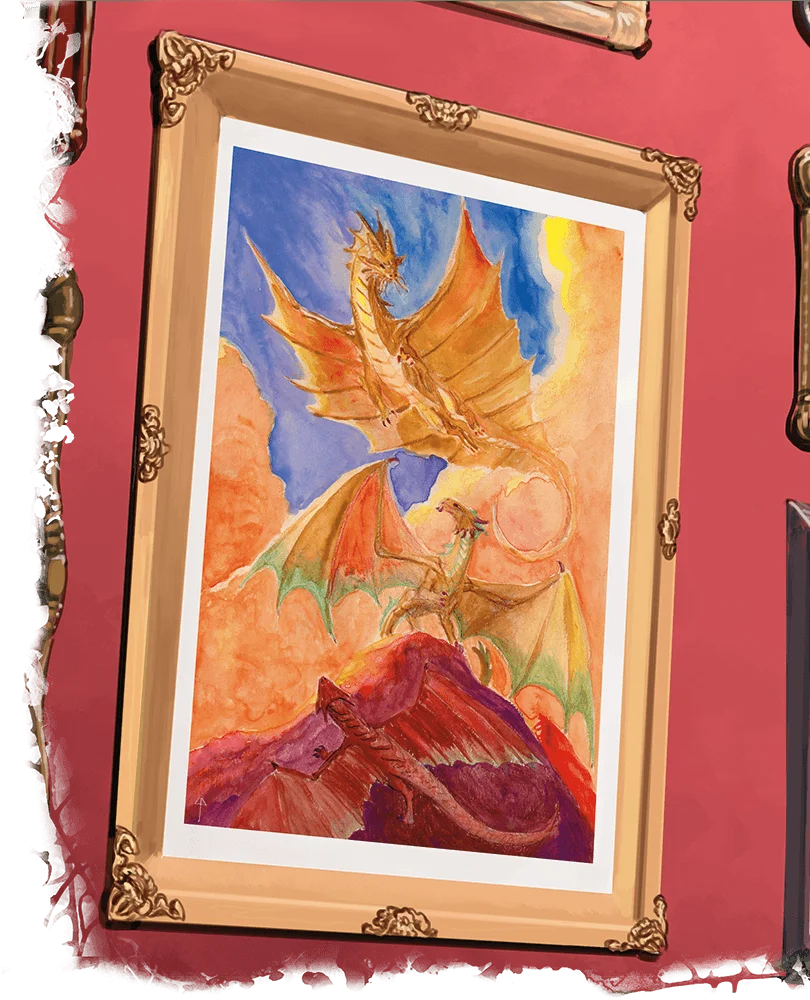
This short puzzle works anywhere that makes sense for characters to peruse several paintings, such as in a museum or manor. These paintings could even appear in a sketchbook found in a dusty old drawer. This counting puzzle leads to a name of a creature.
Fit this into your campaign by making the name of the creature the first item on a scavenger hunt or the first clue in a larger mystery.
This gallery is decorated with seven framed paintings of creatures. A few chairs and benches have been placed in front of the art for viewing.
A plaque mounted on one of the walls bears the following dedication: "In order to gain all knowledge, one must know where to start. Count on your enemies to reveal the source of the secret. This room is dedicated to the defeat of all monsters within."
Characters should be free to explore the gallery and inspect the paintings and dedication to discover the parts of the puzzle.
Puzzle Features
There are seven paintings on the walls. The paintings feature a gruesome werewolf under a full moon, a trio of gnolls fighting over a spear, a grinning beholder, two trolls sitting under a tree, five kobolds around a bonfire, two gelatinous cubes patrolling a dungeon corridor, and three dragons in flight.
Solution
Each painting features a number of creatures of a particular kind, as summarized in the Creature Paintings table. Counting into each creature's name by the number of creatures in the painting reveals a letter. When unscrambled, the letters spell out "owlbear." Characters are likely to reveal these letters in random order. Arranging them in the correct order is part of the puzzle.
Significance of "Owlbear"
This puzzle's solution, "owlbear," might be the passphrase to bypass a future trap or unlock a magically sealed door. It might also be a clue that points to a hidden treasure. For example, there might be a stuffed owlbear in another room that has treasure hidden inside it.
Hint Checks
Any character has the option of making these ability checks to receive a hint:
Intelligence (Investigation) DC 10. The character deduces that the number of creatures in a painting is important and uses that number to determine which letter of the creature's name they should review.
Wisdom (Perception) DC 10. When looking at the dedication, the words "count on" alert the character that they should count the creatures.
Customizing the Puzzle
You can replace the monsters in the artwork with distinctive objects, members of obvious professions, and anything else that might logically be in a group. Then, follow the letter-counting method detailed in this puzzle to determine how many subjects should feature in each piece of art.
Reckless Steps
Difficulty: Easy
This puzzle features a word search on floor tiles, which might present a barrier to exploration in myriad scenarios. To cross safely, characters must first uncover what words they're searching for and then find them in the tiles.
You enter a cobweb-filled room lit by torches on opposite walls. Dust on the floor has collected in grooves that cover rows of five-foot-square tiles. On the opposite wall, a solitary arch leads from the room. One wall bears the following inscription:
Eight appear before your eyes,
And eight remain in schooled disguise.
Avoid all magic in this room,
Lest reckless steps ensure your doom.
The tiles covering the floor of this room each bear a single letter written in the Common alphabet, making the room a giant word search. Traps beneath many of the tiles threaten those who move through the room heedless of the hidden words.
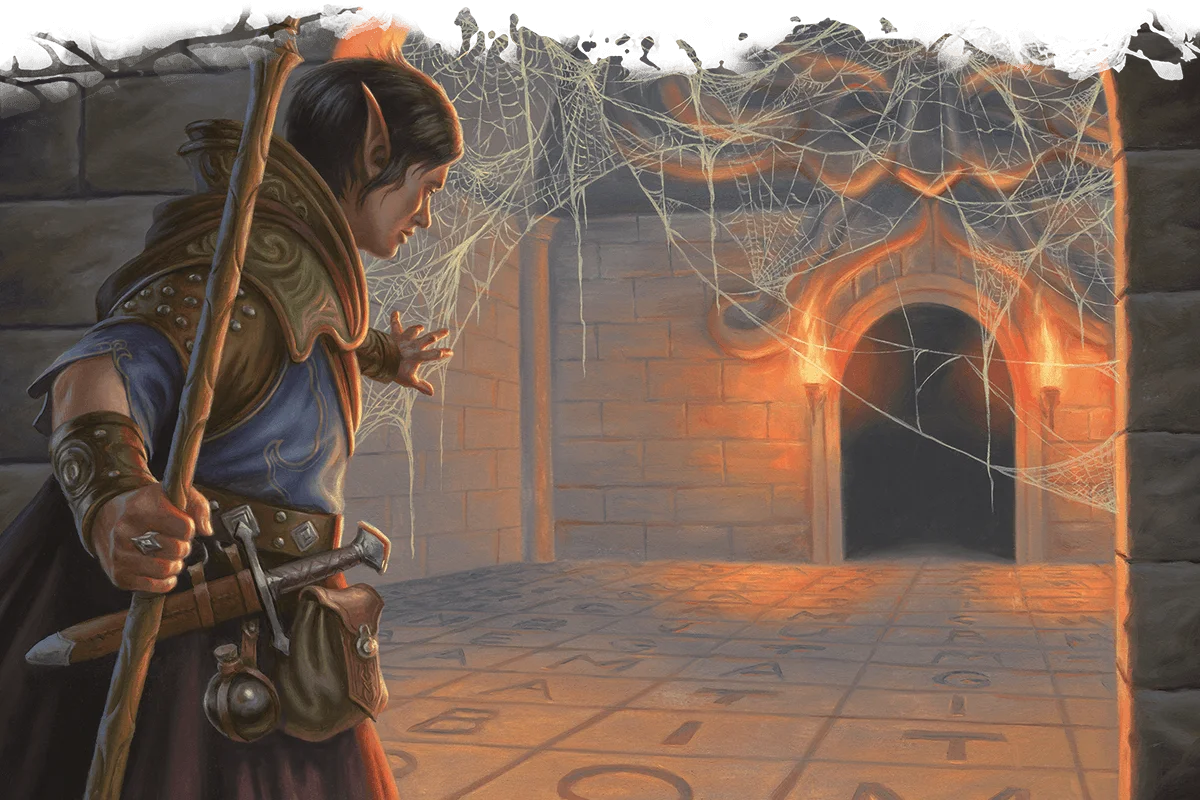
Puzzle Features
The floor of this 60-foot-by-70-foot room is made of 5-foot-square stone tiles laid out in a grid. Each tile has a letter chiseled into it, as shown in puzzle handout 1 at the end of this chapter. Place a copy of the handout for this puzzle on the table, and allow players to use miniatures to show how their characters navigate the room.
To safely walk across the room, a character must step on the correct tiles. Stepping on an incorrect tile sets off a trap.
Traps
Certain tiles (as indicated in this trap's "Solution" section) are trapped. A trapped tile is triggered when more than 20 pounds of weight are placed on it, activating the pressure plate underneath and causing jets of poisonous gas to spout from the cracks between the tiles. Any creature above the trapped floor tile or one of its adjacent tiles must make a DC 15 Constitution saving throw, taking 11 (2d10) poison damage on a failed save, or half as much damage on a successful one.
As an action, a character can disable a trap with a successful DC 15 Dexterity check using thieves' tools. If a character fails to disable the trap, the tile's trap can no longer be disabled.
Characters can attempt to jump over trapped tiles, using the "jump rules" in the "Player's Handbook".
Solution
The only safe tiles for characters to step on are the ones with the faded black letters in "diagram 4.1". Red letters spell out either "magic" or one of the schools of magic: abjuration, conjuration, divination, enchantment, evocation, illusion, necromancy, and transmutation. Stepping on one of these tiles triggers a poison trap, as described earlier.
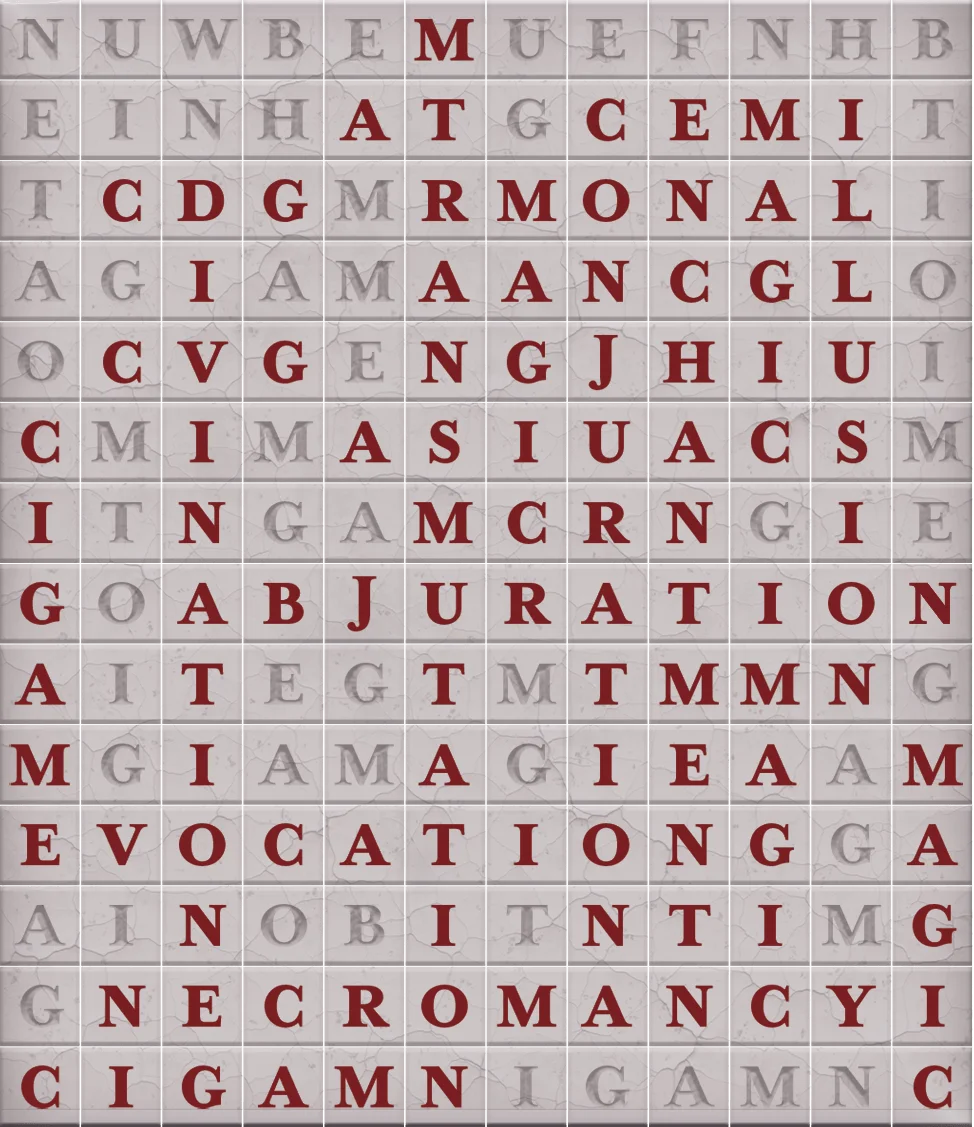
Hint Checks
Any character has the option of making these ability checks to receive a hint:
Intelligence (Arcana) DC 10. The character sees one instance of a school of magic on the floor.
Intelligence (Investigation) DC 10. The character interprets the clue in the wall verse: there are eight schools of magic.
Wisdom (Perception) DC 10. Each character who succeeds on this check sees an instance of the word "magic" in the floor.
Customizing the Puzzle
Consider using this puzzle's structure to create any number of thematic word searches hiding deadly traps. Once you've created a hint suggesting what types of words to look for, it's a simple matter to create your own grid of hidden words.
Raising the Difficulty
You can increase this puzzle's difficulty by changing the word search's letters to use another alphabet, such as those presented in the "Player's Handbook". Alternatively, you can create an entirely new code to replace the letters, requiring the characters to find a cipher to reveal the tiles' meanings before they can undertake the puzzle and cross the room safely.
You can also increase the difficulty by introducing trap variants, as described below.
Trap Variants
Rather than have the same poison gas trap on every trapped tile, each word can have a distinct trap associated with it, as described below:
- Magic. The trap triggers normally, as described in this puzzle's "Traps" section.
- Abjuration. The trap casts dispel magic on each creature in the room, using a 9th-level spell slot.
- Conjuration. The trap teleports the creature that triggered it back to the entrance of the room. That creature must also make a DC 15 Constitution saving throw, taking 11 (
2d10) force damage on a failed save, or half as much damage on a successful one. - Divination. The creature that triggered the trap must succeed on a DC 15 Intelligence saving throw or be unable to perceive any of the letters on the tiles by sight or touch. Any magic that ends a curse ends this effect on the character. A player whose character is affected by this trap should not be allowed to reference the accompanying player handout until the effect on that character ends.
- Enchantment. The trap casts suggestion (save DC 15) on the creature that triggered it. On a failed save, a gentle voice only the creature can hear tells it to move 5 feet in a random direction. This movement might cause it to trigger another trap.
- Evocation. Magical fire erupts from the trapped tile. The creature that triggered this trap must succeed on a DC 15 Dexterity saving throw, taking 11 (
2d10) fire damage on a failed save, or half as much damage on a successful one. - Illusion. A suit of animated armor appears in an unoccupied space within 5 feet of the creature that set off this trap. The armor attacks only the creature that summoned it and can't leave the room. It doesn't set off any of the room's traps and disappears if it takes any damage. Otherwise, it lasts for 1 minute.
- Necromancy. Any creature that triggers this trap hears a banshee's wail in its mind. Unless the creature is a construct or undead, it must succeed on a DC 13 Constitution saving throw. On a failure, the creature drops to 0 hit points. On a success, it takes 10 (
3d6) psychic damage. - Transmutation. The trap casts polymorph (save DC 15) on the creature that triggered it. On a failed save, the creature turns into a giant frog.
Skeleton Keys
Difficulty: Easy
This puzzle presents a quick encounter useful for providing treasure or information. It features a box with four locks.
You come upon a sinister metal box with an iron lock built into each of its four sides. Each lock sports a keyhole with a sculpted image above it. Four iron keys hang from hooks on a nearby wall, and each key has a different number of teeth. Above the keys, the following verse has been etched into the wall:
The spells on these locks are all the same.
Though each possesses a unique name.
Count on your answer to unlock the way,
But use the wrong key to your dismay.
All four locks must be opened before the box's contents (whatever they might be) can be accessed.
Puzzle Features
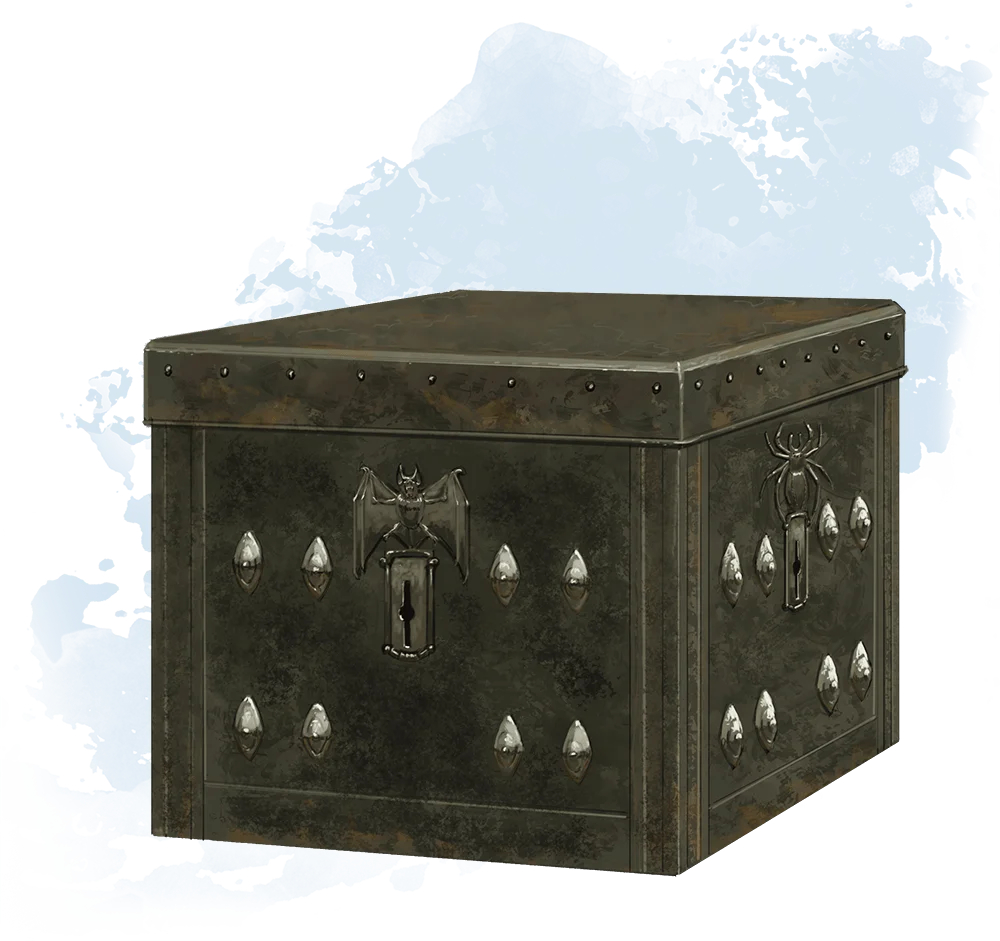
Show the players puzzle handout 2 (see the end of this chapter) when their characters examine the keys. Each key has a different number of teeth: six, five, four, and three, respectively.
Each lock has a creature molded in iron above it: a bat, snake, spider, or wolf, respectively. These locks can't be picked. If anything other than the correct key is placed inside a lock, creatures corresponding to the image above the lock (1d4 giant bats, 1d4 giant poisonous snakes, 1d4 giant wolf spiders, or 1d4 wolves) are summoned into the room. Each summoned creature is hostile and disappears after 10 minutes or when reduced to 0 hit points. These beasts can't be charmed or frightened.
Solution
Once the characters identify the creature depicted above each lock, they should count the letters in each creature's name. The number of letters in a creature's name corresponds to the number of teeth on the correct key, as shown in the Skeleton Keys Solution table.
Hint Checks
Any character has the option of making these ability checks to receive a hint:
Intelligence (Nature) DC 10
The character knows that "natural" knowledge about bats, snakes, spiders, and wolves in general won't help here.
Wisdom (Perception) DC 10
The character realizes that the keys' skull-shaped heads are all the same and probably have no bearing on the puzzle's solution.
Customizing the Puzzle
The focal parts of this puzzle are the locks and keys, not the chest. You could easily convert this puzzle to feature any types of locks, be they on doors, cells, books, or some more esoteric barrier.
Beyond the form the locks and keys take, you might also consider adjusting the creatures depicted with each lock to suit your adventures. Just keep in mind that the number of teeth on each key must match the number of letters in your substitutions, and those substitutions should be things the characters can identify.
Raising the Difficulty
Rather than associating each lock with a particular image of a creature, consider presenting a riddle alongside each lock. The answer to each riddle should be the related creature's name, allowing characters to match the riddles' answers to the proper keys.
All That Glitters
Difficulty: Medium
This gem-filled room can be placed in any dungeon, estate, or building with multiple rooms and might serve as both a trap and a place to obtain a reward.
Dozens of gems lie strewn upon the floor. Amid the treasure stands a marble statue with its hands clasped in front of it. A placard at the statue's base reads, "Only one treasure may leave this room. Cross with another and find your tomb."
Puzzle Features

The statue, which is impervious to damage, depicts Ioun or some other god of knowledge or order. Any character who succeeds on a DC 10 Intelligence (Religion) check can identify the figure being depicted.
Diamond
Between the palms of the statue's clasped hands is a diamond, which can only be found and retrieved once the puzzle is solved. Once the characters solve the puzzle, the statue's hands open, allowing the diamond to be taken. Upon breaching the threshold of the room with the diamond, a trapped soul in the form of a friendly, thankful spirit is released. The spirit leaves to pursue its own goals, and the diamond is left behind as a reward. The diamond is worth 5,000 gp.
Gemstones
An inventory of the room reveals the following gemstones scattered across the floor: eighteen pieces of jade, sixteen onyxes, fourteen amethysts, thirteen sapphires, twelve rubies, nine pieces of amber, eight citrines, five garnets, and one piece of quartz.
If a creature attempts to leave the room with any of these stones, the gem disappears and an angry spirit trapped inside it is released. The spirit manifests as a hostile undead creature of your choice, such as a ghost, specter, or skeleton. When this creature is reduced to 0 hit points, its form dissipates, leaving no trace of itself behind.
Named Spirits
Characters hear each spirit whisper its name before it dissipates. The names themselves are not important, other than they must start with the appropriate letter of the alphabet.
The following list provides names for all the imprisoned spirits, each name starting with the letter associated with the spirit's gemstone prison:
- Quartz. Antonio
- Garnet. Ella, Ethan, Ember, Edwina, Ernest
- Citrine. Hobert, Holden, Hilda, Haddon, Hugo, Hera, Hessy, Hemma
- Amber. Ivy, Iris, Ian, Idris, Iggy, Imelda, Ice, Innis, Isabella
- Ruby. Lou, Leela, Lowan, Lannis, Lake, Luke, Leila, Leean, Luna, Luvia, Lee, Leira
- Sapphire. Mona, Maethius, Merry, Moon, Medea, Martha, Marni, Moen, Mava, Moloth, Mo, Mia, Miranda
- Amethyst. Nox, Neville, Norman, Ned, Nadia, Nian, Nero, Nick, Narice, Nava, Nia, Nicol, Nestor, Nera
- Onyx. Paul, Pam, Pluck, Petra, Pax, Pia, Paden, Po, Pacey, Pima, Peck, Pablo, Piers, Pom, Peleg, Peet
- Jade. Ren, Ryannis, Rue, Romag, Redd, Remy, Ria, River, Rhonda, Resta, Rhys, Ron, Ricker, Rey, Ro, Rowan, Regan, Rhiannon
Solution
An inventory of the room reveals gemstones in the amounts shown in the Gem Inventory table. The table lists the gems in alphabetical order, but you should list them in any other order when describing them to players so not to accidentally give away a hint.
Each type of gem is associated with a letter of the alphabet, and each gem's letter is revealed by counting into the alphabet by a number of letters equal to the number of gems of its type. For example, there is one piece of quartz, so "quartz" corresponds to the first letter of the alphabet (A), while there are fourteen amethysts, so "amethyst" corresponds to the fourteenth letter of the alphabet (N).
Once the gems are sorted by type and alphabetized, characters can count into the alphabet by how many of each are in the room to reveal the words "in her palm." When a character speaks this phrase aloud, the statue's folded hands open, revealing the previously hidden diamond.
Hint Checks
Any character has the option of making these ability checks to receive a hint:
Intelligence (Arcana) DC 15
The character can determine that there are spirits imprisoned in the gemstones scattered on the floor.
Intelligence (Religion) DC 10
The character knows that the statue represents a god of knowledge and order, and the character has a strong feeling that the order of the gems in the room is important.
Wisdom (Insight) DC 10
The character senses that the number of each type of gem isn't arbitrary.
Customizing the Puzzle
This puzzle explores how to use groups of objects to disguise a message. So long as your groups can be arranged in a logical order (like the gems being arranged alphabetically in this puzzle), all you must do is adjust the number of items to correspond to a particular letter of the alphabet. Alternatively, perhaps another organizing principle orders your groups. For example, tombstones that feature varying numbers of skulls might be arranged by dates, while stacks of books might be ordered by shared page-counts. These details can be easy to miss, though, so make sure you present a riddle or other signpost to make sure your players notice there's a puzzle at hand.
Lowering the Difficulty
To make the puzzle easier to solve, a spirit can provide a hint in addition to giving its name. Coaxing a hint from a spirit requires a successful DC 15 Charisma (Persuasion or Intimidation) check. Consider hints like "A is the first letter in the alphabet" and "The gemstones, in order, will help for a spell."
Releasing the Spirits
If the characters don't attempt to remove gems from the room, or if they spend too long deliberating, create a new trigger to release the spirits. For example, perhaps a spirit is released if a character places a gem near the statue or if it's held for too long.
Eye of the Beholder
Difficulty: Medium
This map puzzle is designed to lead a party through a dungeon where a roaming beholder doesn't wish to be disturbed. A series of clues tie to the word "eye," and the characters must determine how to get through the area safely.
A disorienting wave sweeps over you. Suddenly, your surroundings are unfamiliar and shrouded in shadows.
Out of the gloom appears a hooded goblin carrying a lantern.
"Hello, friends!" the goblin says. "I can help you through these parts—if you can figure out my riddles. You don't want to make a wrong turn in here, as there are eyes everywhere. Solve the riddles and follow my directions to the letter."
The goblin is friendly, and its offer is genuine. It's name is Igor (pronounced eye-gor), which it reveals only if asked. The characters find themselves in a maze that emits magical darkness that can't be dispelled. No vision can penetrate this darkness, and only the goblin's lantern can illuminate it. Igor's lantern emits light in a 5-foot radius, but only so long as the goblin holds it. The lantern goes dark if any other creature takes custody of it.
Puzzle Features
The magical maze the characters find themselves in is comprised of an endless series of identical chambers. Each chamber has four passages, one at each cardinal direction. The goblin guide poses riddles that can lead the party along the path that ultimately exits the maze. Each time the party moves through the correct passage and enters a new room, the goblin provides them with a new riddle that hints which direction to travel in next. If they make an error, the characters encounter a monster of your choice and then must backtrack from their last correct turn. After three wrong turns, the party encounters the beholder.
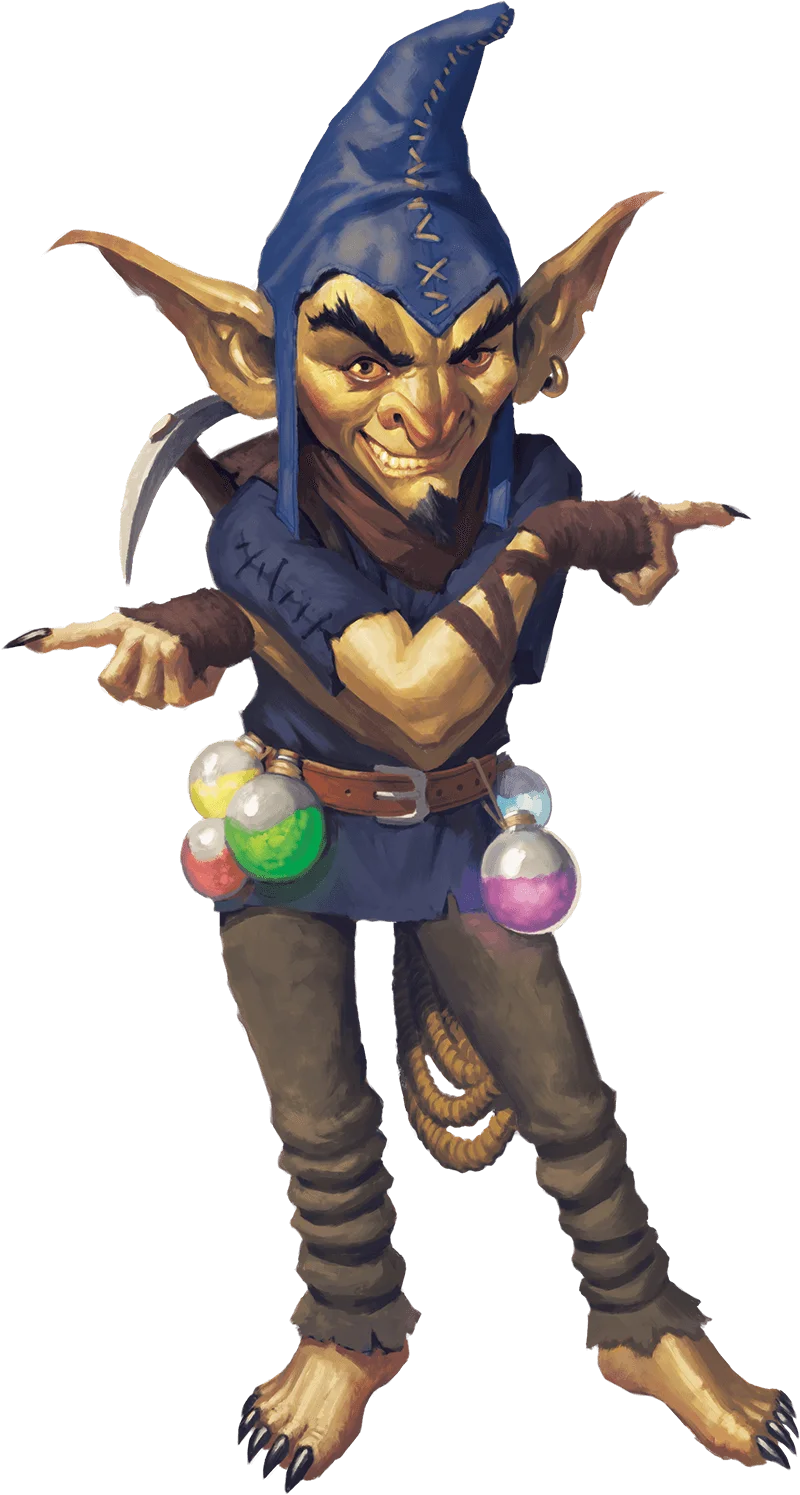
Hallways
The halls of this maze are 60 feet long and 10 feet wide. If the characters move away from the guide during combat or for any other reason, the goblin encourages them to follow him back to the last correct turn.
The Goblin's Riddles
Upon meeting the characters (and to discourage them from attacking), the goblin makes it clear there is no way out of the maze without his help. Characters can determine that the goblin is sincere in wanting to help with a successful DC 10 Wisdom (Insight) check.
Once the goblin has the characters' attention, it provides the first riddle, then waits for the party to venture down a passage of its choice. The goblin stops at each intersection and either provides the next riddle (if the party chose the correct path) or avoids the monster the group encounters (if the party chose the incorrect path), leading the characters back to the last correct chamber along the path after any battle.
The goblin's riddles (and their answers) are as follows:
- What beast has the sharpest eye? (Eagle)
- Threads get pulled through the eye of what? (Needle)
- What is the eye to the soul? (Window)
- Whose eye matters to a witch's brew? (Newt)
- This eye curses you with misfortune. (Evil)
- This eye brings a temporary calm. (Storm)
- Roll a one on a six-sided die. Roll another and get the same. Take both together, and what's their name? (Snake eyes)
Solution
The answer to each riddle begins with a letter indicating the direction of the path the characters should follow next. The path provided by the riddles' answers takes the following route: east, north, west, north, east, south, south. This path leads the characters through some chambers more than once, which is a necessary part of the magic that will allow them to escape.
Hint Checks
Any character has the option of making these ability checks to receive a hint:
Charisma (Persuasion) DC 15
The goblin provides a hint in the form of a synonym of the riddle's answer (for example,).
Intelligence (Investigation) DC 10
After a few riddles are answered correctly, a character notices that all the answers relate to eyes.
Wisdom (Insight) DC 15
After one or more correct answers are given, the character realizes that each answer corresponds to a cardinal direction.
Customizing the Puzzle
The characters can easily persuade the goblin to join their party. What other secrets does the goblin know? Does he have an agenda for helping the characters find their freedom? And why has he lingered in the maze if he knows the way out? There might be more to this guide than meets the eye.
Four by Four
Difficulty: Medium
This puzzle is easily situated in a dungeon, a dusty mausoleum, or an abandoned shrine.
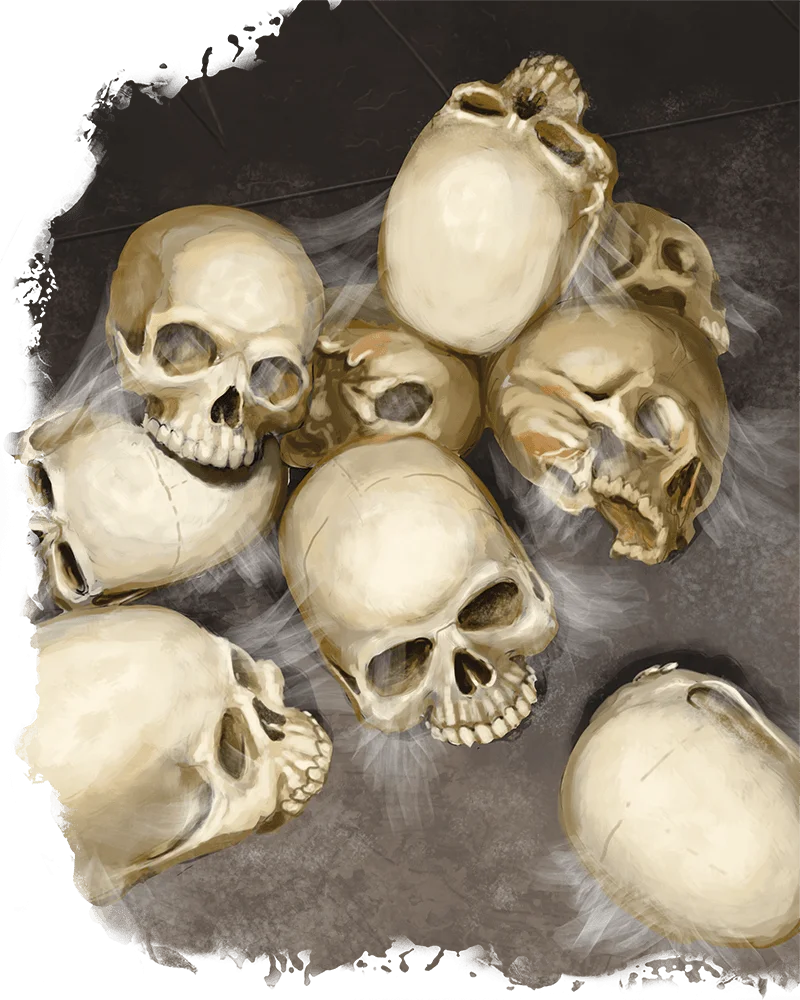
You enter a dimly lit chamber. Nine dwarf skulls rest near a four-foot-square set of tiles in the floor, and carved into a nearby stone altar is the following inscription:
Brave warriors met their demise foretold.
Their secret kept shall yet unfold.
If crowns placed correctly on the shrine,
Celestial beds for four of nine.
Solving this puzzle causes a secret compartment in the altar to open, revealing treasure hidden within. The compartment can't be opened in any other way.
Puzzle Features
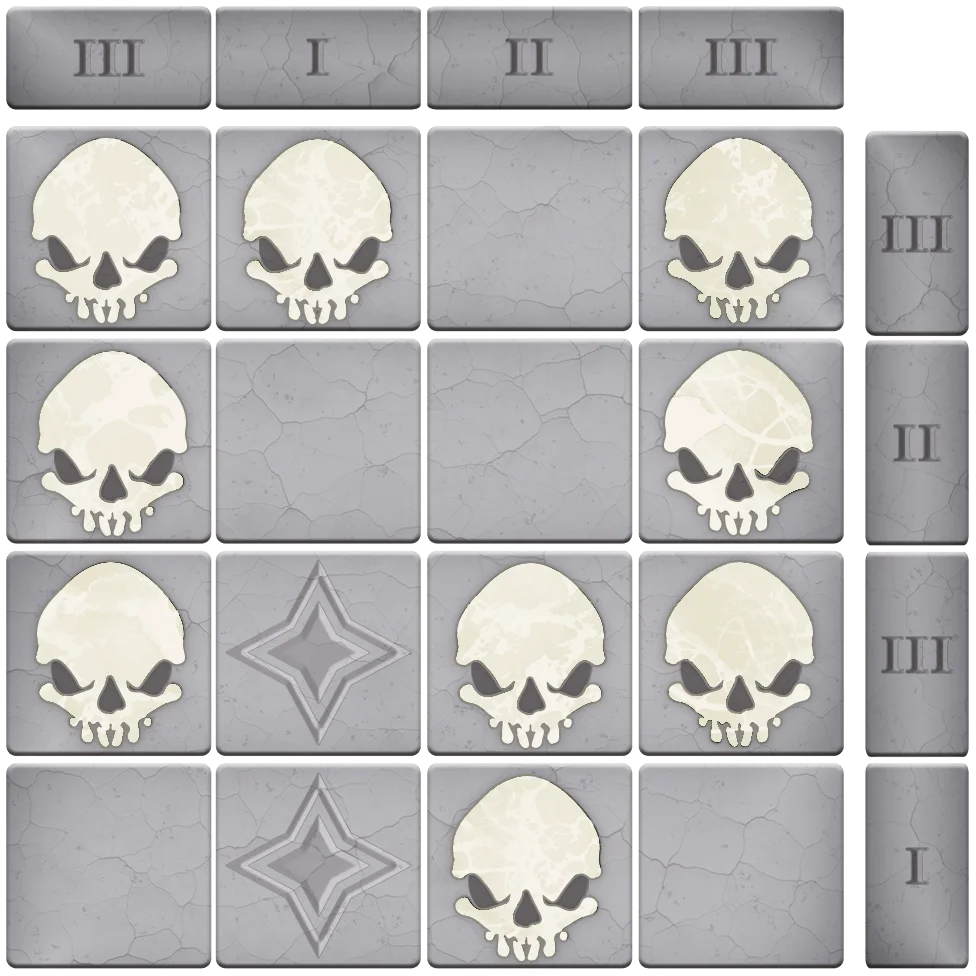
Nine dwarf skulls rest near a grid of 1-foot-square tiles, as shown in puzzle handout 3 (see the end of this chapter). Columns and rows in the grid are labeled with the markings I, II, or III.
Solution
The numbers labeling each row and column denote how many skulls belong within. Characters must place the skulls so that the correct number of skulls appear both in the rows and columns, while still covering four of the stars. This puzzle has multiple possible solutions, with one shown in diagram 4.2.
Hint Checks
Dwarf characters have advantage on ability checks to gain hints in this room. Any character has the option of making these ability checks to receive a hint:
Intelligence (Investigation) DC 15
The verse indicates to the character that four of the skulls need to rest on tiles engraved with stars.
Wisdom (Insight) DC 15
The I, II, and III markings around the edge of the grid likely denote how many skulls must be placed in those rows and columns.
Customizing the Puzzle
If one of the characters is a dwarf, this might be the perfect time to bring in a familial storyline. Are these the skulls of their long-lost clan? Does one of the skulls belong to a relative that they have been seeking? And what do they think the puzzle is implying with only four of the nine skulls receiving "celestial beds"?
Illusive Island
Difficulty: Medium
Three numerical dials seal a box, door, or other locked object. Figuring out the correct combination is the goal of this puzzle, as there are no visible locks to pick.
Puzzle Features
The numbers the dials are originally set to don't matter. If the players ask, choose any three digits you please.
A corked wooden tube contains two clues: a map of an island and a set of directions.
Map
Give the players a copy of puzzle handout 4 (see the end of this chapter). This map depicts an unfamiliar island with various landmarks but no key.
Directions
The directions are written on a single sheet of parchment and recount the route a group took in their search for treasure:
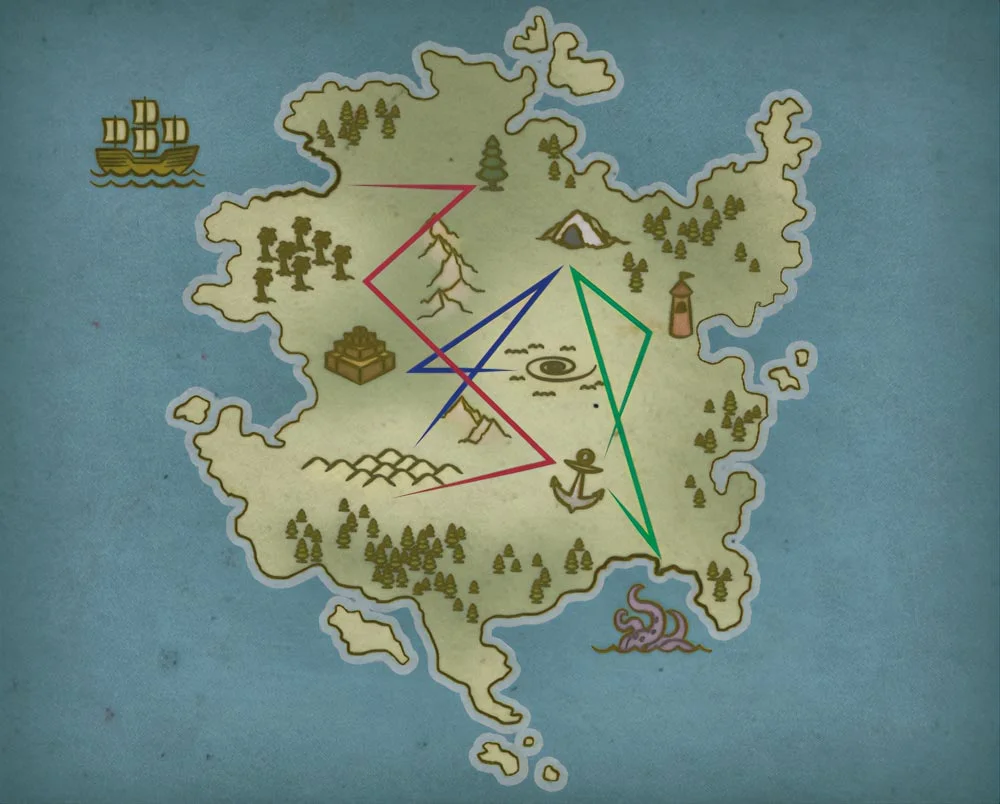
Day 1. Our search for the lost treasure began at the northwest inlet, Windstaff Cove. After unloading our necessities, we traveled east to Lone Pine, then southwest past Northridge to the Palms Oasis. As evening approached, we continued southeast to Anchor Point, then camped in the Great Dunes.
Day 2. In the morning, we arose at the Dunes and headed to Deadman's Cave. After finding it empty, our party continued to the Golden Ziggurat. Heading due east, we made camp at the Swirling Sands.
Day 3. After a strange night's sleep, we awoke on the third day back at Anchor Point with no memory or trace of traveling there. The Swirling Sands must have taken us in the night! We skirted the Swirling Sands to reach the Red Tower but still couldn't find the treasure. Thinking that we may have overlooked something in the cave, we headed back. From there, we headed to the southern coast to see if the treasure was at Kraken Point. Finding nothing, we returned to Anchor Point. What awaited us there was unlike any treasure we'd imagined.
Solution
Characters who follow the directions and trace their paths on the map reveal three numbers: 3, 4, and 8 (see diagram 4.3). Turning the dials to these numbers in the same order opens the locked object.
Hint Checks
Any character has the option of making these ability checks to receive a hint:
Intelligence (Investigation) DC 10
The word "trace" from the Day 3 entry strikes the character as important, suggesting that the map is meant to be drawn on.
Wisdom (Insight) DC 15
The map doesn't have labels, which means the names of the landmarks aren't significant. What's important are their positions relative to one another.
Wisdom (Perception) DC 10
The fact that the expedition lasted three days is significant, as there are three dials.
Wisdom (Survival) DC 15
The character knows the directions don't represent an efficient way to search an area and deduces the directions must be presenting some sort of message.
Customizing the Puzzle
Consider creating your own map and series of directions to customize this puzzle. By crafting directions that suit locations in your campaign's' setting, you can create a puzzle that's integrated into your adventure's plot, using a map the characters might already possess. Your version of the puzzle can add as many digits and directions as you see fit, or it might reveal letters, symbols, or short words, depending on the complexity of your design.
Raising the Difficulty
You can increase this puzzle's challenge by dividing the map into pieces that need to be separately discovered, or the characters might need to learn the directions from someone who personally explored the island. As long as the order of locations doesn't change, the code remains correct.
Material Components
Difficulty: Medium
This puzzle might appear in a wizard's workshop, study, or spellbook. The solution leads to a password that reveals new or rare spells (such as those in chapter 3). Alternatively, the password can be used for any other function that fits with your story.
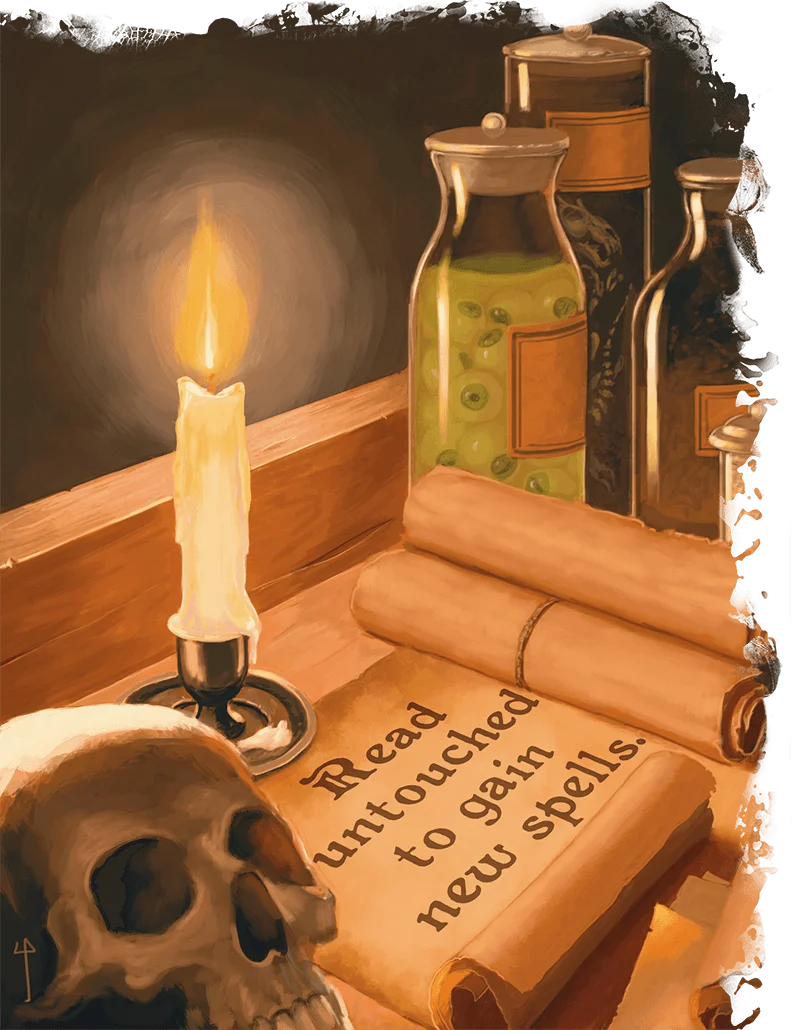
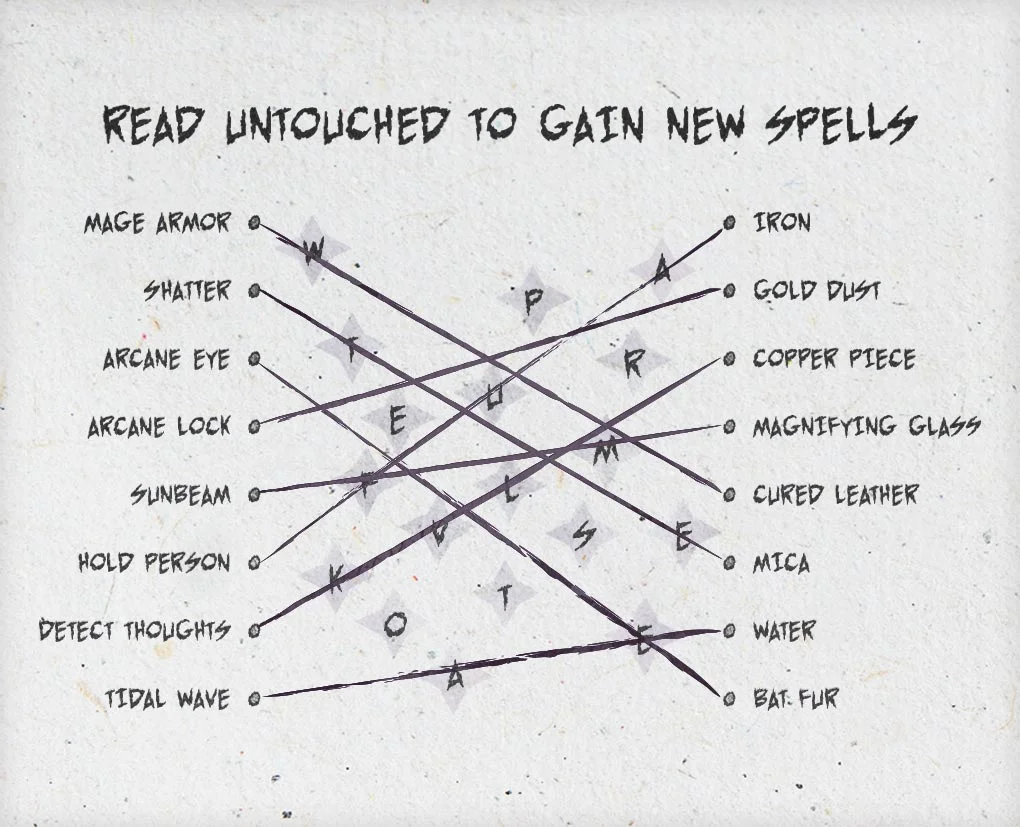
You find an old piece of paper bearing a list of spells and components. Random letters are also scratched quickly on the paper between the two lists. A message at the top of the page says, "read untouched to gain new spells."
Give the players a copy of puzzle handout 5 (see the end of this chapter).
Puzzle Features
The wizard's study is filled with spell components, books, potions, and various odds and ends. While the various supplies might help characters solve the puzzle, the only item the characters need is the parchment. If the puzzle is giving them grief, they can take the parchment with them and find others who can help them solve it.
Bookcases
All around the wizard's study are shelves and cases filled with books, scrolls, and other supplies. A character who makes a successful DC 12 Intelligence (Arcana) check notices a spell component with no gp value from the list (such as a chip of mica or a bit of bat fur).
Lists
The parchment has a list of spells and a list of material components. However, the components to the right don't match with the adjacent spells to the left. The parchment itself doesn't have any magical qualities, but the word it reveals potentially does.
Wizards and other spellcasters can identify the correct spell components for any spell they know, but they must succeed on the Intelligence (Arcana) checks noted in the "Hint Checks" section below to recall the correct material components for any less familiar spells.
Solution
Drawing a line from a spell to its material component crosses out letters that fall between the columns, as shown in diagram 4.4. Once all spells are connected to components, the untouched letters spell out "presto," which, when said aloud with the paper in hand, causes one or more spell scrolls (or some other treasure of your choice) to magically appear.
Hint Checks
Any character has the option of making these ability checks to receive a hint:
Intelligence (Arcana) DC 10
The character recalls up to three of the material components for spells on the list they don't currently know.
Wisdom (Insight) DC 15
The character suspects that the jumbled letters in the middle—or some number of them—probably spell out a command word, pass-phrase, or important clue.
Wisdom (Perception) DC 10
The character notices that straight lines drawn between spells and material components cross through some of the letters in the center.
Customizing the Puzzle
While spells and components make easy to associate lists, you might also consider creating your own version of this puzzle using paired sets of monsters and creature types, planes of existence and their native inhabitants, famous figures in a setting and their homelands, and so forth.
Lowering the Difficulty
If your party doesn't include characters with considerable magical expertise, consider adding art to the room's walls or on decorative book covers that reveal connections between the listed spells and components. These images might give away a few connections between the lists or lower the DCs of the puzzle's hint checks.
Raising the Difficulty
Rather than using common spells the characters might be familiar with, a more challenging version of this puzzle might feature lost spells or other lore the party has no way of knowing. Only by consulting experts, undertaking research, or further adventuring might the party reveal the connections between the two lists.
Members Only
Difficulty: Medium
A secret club, cultist meeting, or thieves' guild requires a password to enter. In this puzzle, those who guard a certain door are so secretive that they change the password constantly, fearing someone might have infiltrated their members' ranks.
You watch a figure approach an oak door with a slide window. The figure knocks, and a guard opens the window and says, "Six." The figure replies, "Three." The guard then opens the door, allowing the figure to enter.
This building seems to have only one entrance: the oak door with a small slide window. A guard opens the window and speaks a seemingly random number to anyone who knocks on the door.
Puzzle Features
Even after observing the building from all angles, characters only see members entering through the one door after speaking to the guard.
Door
The door is made of oak reinforced with 3-inch-wide iron bars. Three deadbolts secure the door, which is also barred from the inside, so there are no locks that can be picked from the outside.
Guard
A guard stands on the other side of the door around the clock, and the only way to speak with the guard is through the door's slide window. The guard can be any sort of talking creature, such as an assassin, a cult fanatic, or a thug. More monstrous options include a bugbear, wereboar, or nycaloth.
If a character knocks on the door, the guard slides open the window and gruffly gives a number, expecting the proper response. The guard gives a different number each time someone knocks. Any proper response grants a single character entry, and the guard only allows one member to enter at a time.
Characters who provide incorrect answers and attempt to enter again must disguise themselves in some way or be refused entry. The guard only willingly opens the door for someone who speaks the correct password. The guard raises the alarm if unauthorized people try to open or bypass the door, calling six more guards to help defend the entrance.
Members
If the characters continue watching the door, they see up to four more visitors approach it. To eavesdrop on each exchange, the characters must succeed on a DC 12 group Dexterity (Stealth) check to remain hidden; if the group check fails, the visitor notices they're being observed and speaks quietly enough that their answer can't be overheard.
- Second Visitor. The guard opens the window and says, "Twelve." The visitor responds with "Six" and is allowed inside.
- Third Visitor. The guard opens the window and says, "Ten." The visitor responds with "Five" and is turned away.
- Fourth Visitor. The guard opens the window and says, "Seven." The visitor responds with "Five" and is allowed inside.
- Fifth Visitor. The guard opens the window and says, "Zero." The visitor responds with "One" and is turned away.
Solution
Each member that approaches the door is given a number by the guard. There is no mathematical equation here; the only valid response to a number given by the guard is the number of letters in the guard's number.
For example, one member was given the number "six." There are three letters in the word "six," so the password for that member is "three." More potential answers are provided in the Potential Passwords table.
Hint Checks
Any character has the option of making these ability checks to receive a hint:
Intelligence (Investigation) DC 15
The character deduces there is no mathematical equation that connects the numbers exchanged between the guard and visitors.
Wisdom (Insight) DC 15
The character suspects that the answer has to do with the word, not the number.
Customizing the Puzzle
Part of what makes this puzzle challenging is that it misleads players into thinking they're overhearing a mathematical equation. To figure out the solution, they have to first overcome their own assumptions. An easier version of this puzzle might involve counting the letters in any type of word the guard provides and responding with that number. Alternatively, the response to the guard's number might be any word with the same number of letters as that number—for example, "five" has four letters, making "duck" or "smog" suitable responses. The more your puzzle plays with numbers as words rather than digits, the more challenging it's likely to be.
Exact Change
Difficulty: Hard
This puzzle provides an elaborate, coin-based lock to any sort of door, vault, or other barrier.
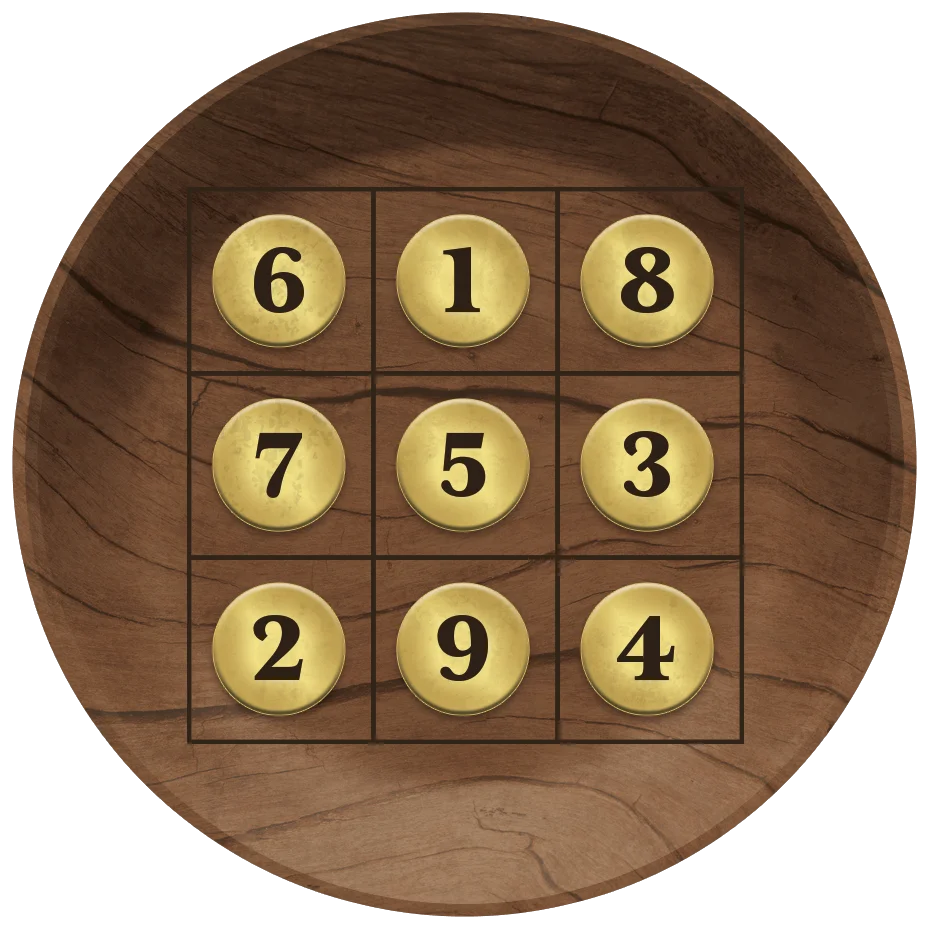
The door here is locked and has no handle. Instead, there is a slot in the door with an engraving above it that reads, "Insert exact change here." Nearby, a wooden bowl of coins rests atop a wooden table.
The tabletop is engraved with nine squares in a three-by-three grid. Nailed to the table's leg is a piece of parchment with the following instructions:
Fifteen per column, fifteen per row;
Diagonally, the same is so.
A plea of warning to carefully count;
No two places may hold the same amount.
What coins in the center be fed through the door;
Exact change for passage or trouble galore.
Puzzle Features
The bowl on the table contains forty-five gold coins. The puzzle requires that an exact number of coins be fed into the slot into the door. If the wrong amount is deposited, it triggers either an alarm or a trap of your choice.
Solution
Diagram 4.5 shows how to divide the forty-five coins so that every square has a different amount and each row and column adds up to fifteen.
The verse explains that the door requires the amount of coins shown in the center square. Upon inserting exactly five coins, the locked door opens.
Hint Checks
Any character has the option of making these ability checks to receive a hint:
Intelligence (Investigation) DC 15
The character realizes that if diagonal corners add up to ten, it makes filling out the rest of the grid much easier.
Wisdom (Insight) DC 15
The character figures out the placement of two numbers other than the center number.
Four Elements
Difficulty: Hard
This puzzle might appear anywhere elementals of earth, air, fire, and water serve as guardians. If the puzzle isn't solved correctly, one or more of these guardian elementals magically transform from statues and attack the characters.
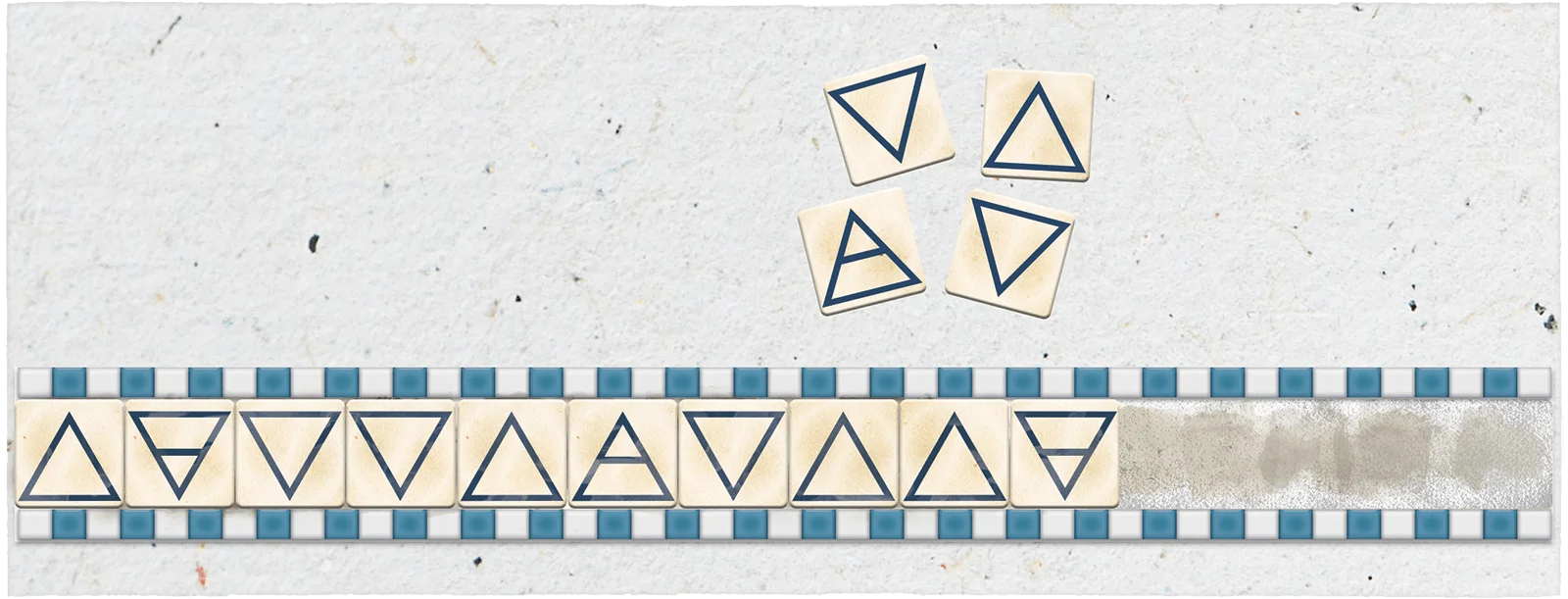
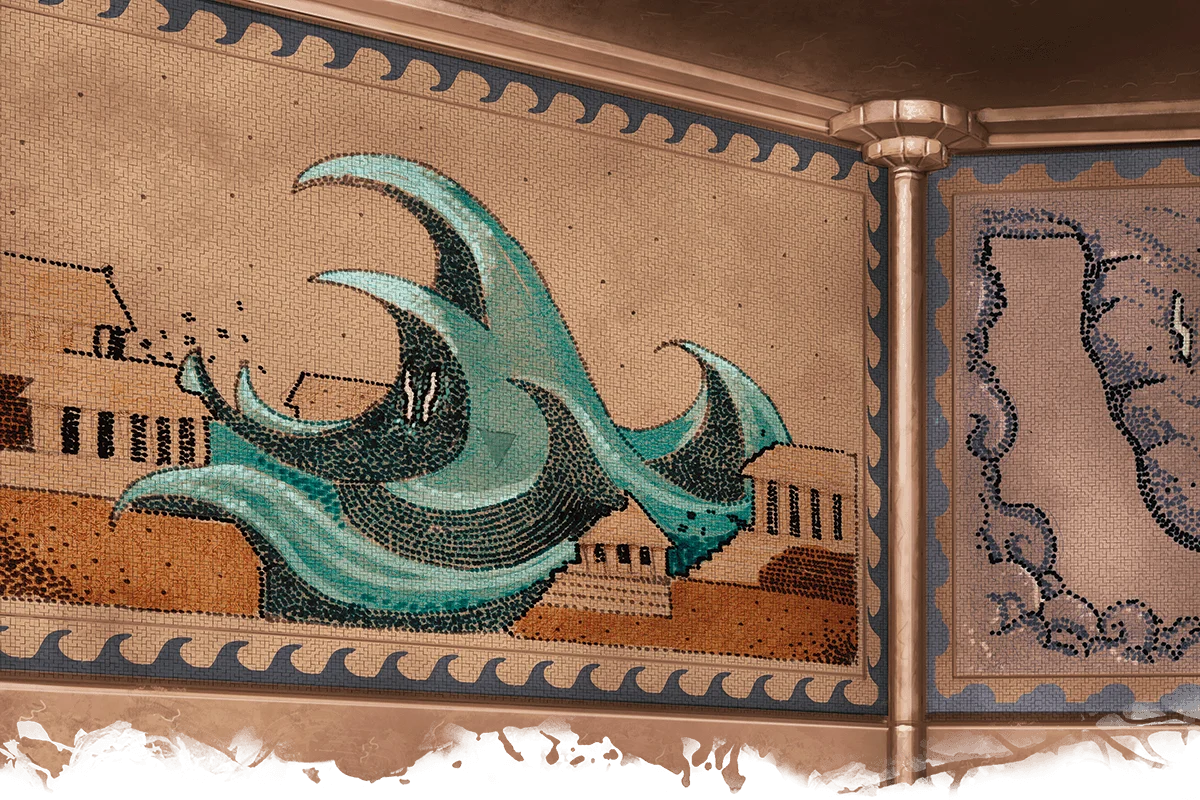
The door slams behind you as you enter this hexagonal room. Four of the walls are covered in mosaics, each depicting the destructive force of one of the four elements. Four nine-foot-tall, stone statues of elementals line the far wall across from the closed door. Above the statues is a row of square tiles with triangular symbols painted on them. Four of these tiles have fallen off and lie strewn upon the floor, which bears the following inscription:
Four elementals trapped in stone,
Their elements ordered to lock their home.
Even patterns against all odd,
A tile misplaced awakens its god.
In proper order safely seal these four,
Or best one of each to open the door.
Once the characters enter this room, the door behind them slams shut. It can be opened only by completing this puzzle, and there are no other exits.
Puzzle Features
The mosaics, statues, and tiles are described below in greater detail.
Mosaics
The four wall mosaics depict the following:
- A water elemental crashes through a city wall in a huge wave. In the center of the image is a triangle pointing downward.
- An earth elemental looms over a group of warriors. A triangle pointing downward with a horizontal line through it is carved into its chest.
- A fire elemental burns through a forest town. In the center of the flames is a triangle pointing upward.
- An air elemental gusts through a stormy sky. Within the clouds is a triangle pointing upward with a line running horizontally through it.
Statues
The statues are actual elementals magically bound in stone. The magic that turned these elementals into statues is slowly coming undone, as the tile pattern that binds them has fallen apart.
Tiles
If the characters don't replace the four fallen tiles in their proper sequence, all four statues revert to their true forms at the same time and attack the characters. The exact timing of this event is left to you, but the characters should be given enough time to take a crack at solving the puzzle. The characters can also release the elementals individually by putting titles in the wrong order or orientation.
Puzzle handout 6 (see the end of this chapter) illustrates the row of tiles set into the wall above the statues. Without a check, the characters realize that four of the tiles fell down when the door slammed shut behind them. With a successful DC 15 Intelligence (Arcana) check, a character can determine that these tiles are what keeps the elementals bound.
If a tile is placed in the wrong place in the row, the corresponding elemental is freed from its stone prison and attacks. Only one of each elemental appears:
- If the improperly placed tile has an open triangle pointing downward, the water elemental is freed.
- If the improperly placed tile has an open triangle pointing upward, the fire elemental is freed.
- If the improperly placed tile has a triangle pointing upward with a horizontal line running through it, the air elemental is freed.
- If the improperly placed tile has a triangle pointing downward with a horizontal line running through it, the earth elemental is freed.
Solution
The correct, complete pattern is shown here:

The odd-numbered tiles form a recurring pattern of open triangles that alternate between pointing up and down. Tiles 1, 5, 9, and 13 are upward-pointing triangles, while tiles 3, 7, and 11 are downward-pointing triangles.
The even-numbered tiles display a different pattern. Tiles 2 and 4 point downward, but the first of them has a line through the triangle. Tiles 6 and 8 follow the same pattern, but the triangles point up. The pattern then repeats, with tiles 10 and 12 being the same as tiles 2 and 4 and tile 14 being the same as tile 6.
Solving the puzzle or defeating all four elementals causes the door to the room to swing open.
Hint Checks
Any character has the option of making these ability checks to receive a hint:
Intelligence (Investigation) DC 15
The character notes the words "even" and "odd" in the verse on the room's floor and believes they have some significance to the missing tiles.
Wisdom (Perception) DC 10
The character can deduce which tiles correspond to which elementals.
Customizing the Puzzle
Interweaving multiple patterns makes it easy to disguise them. With this in mind, you might use any group of symbols to create as elaborate a series of patterns as you please, then challenge players to fill in a missing segment. While the symbols in this puzzle refer to the four elements, you might use holy symbols, colors, dolls on a shelf, or any other repeating design to convey your puzzle.
When an elemental is defeated, it might leave behind a valuable gemstone, a map fragment, a clue to some other puzzle, or something similar.
Raising the Difficulty
To increase the difficulty of this puzzle, enforce a time factor: perhaps one elemental breaks free at the end of every five minutes of real time that pass until the puzzle is solved.
You can also raise the difficulty by having statues depict genies instead of elementals. In this case, replace the four elementals with a dao, a djinni, an efreeti, and a marid. These genies are compelled to attack the characters and can't be reasoned with.
Haunted Hallway
Difficulty: Hard
Many unquiet spirits linger in the world because they can't bare to leave something behind. In this puzzle, finding the solution also means helping a lost soul find peace.
Six alcoves line this hall, each one numbered from one to six. On the floor of each alcove, a lit candle gently flickers.
From the hall's far end drifts a low moan. There, barely visible, sobs the apparition of a small girl hovering over a discarded rag doll. "Names, names," she cries. "I can remember them all except the one I need."
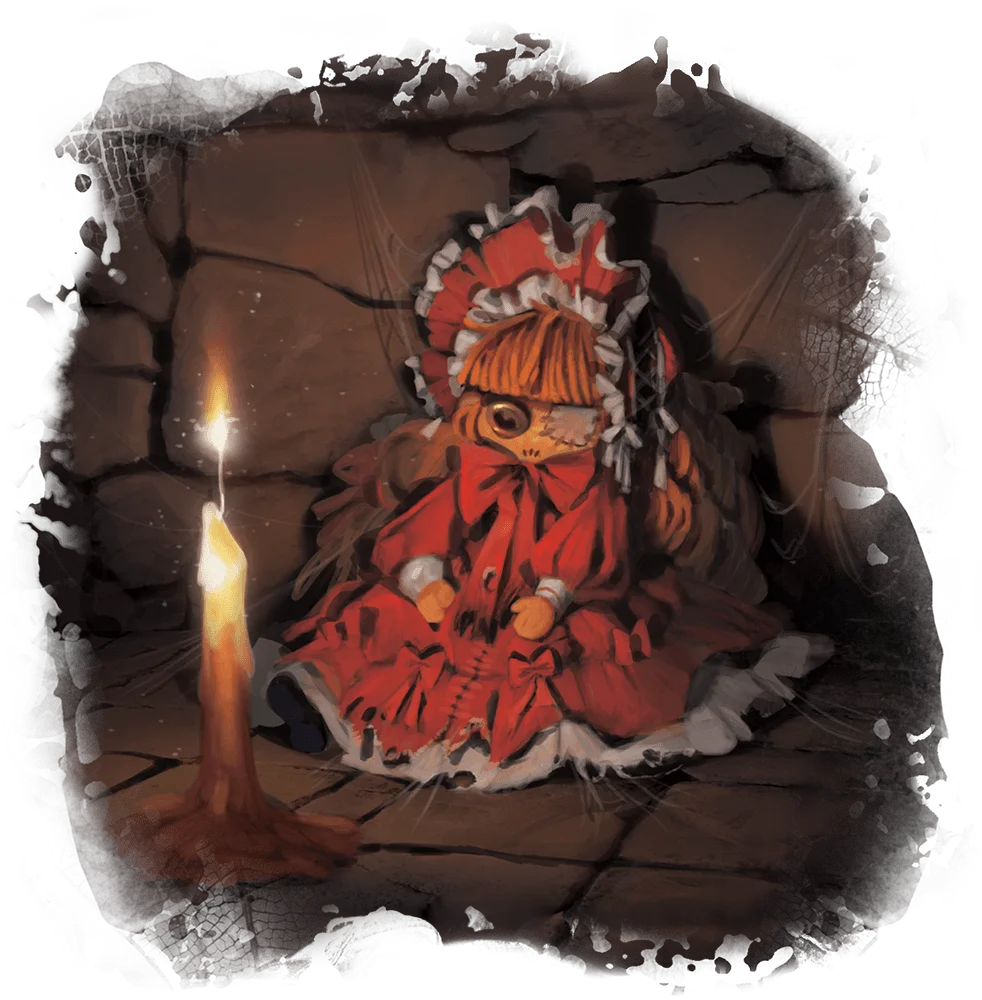
The spirit, Dolora, is a harmless apparition who won't engage the party in combat. If threatened, she vanishes and reappears at the opposite end of the hall, sobbing anew.
If approached with compassion, Dolora bemoans the fact that she can't pick up her doll until she speaks its name, which she has forgotten. She refuses to leave this place without the doll.
Dolora, who only recalls fragmented memories of her life, can't answer many questions. This is particularly true about the messages associated with the alcoves in the hall (see), she can provide the names of specific people when prompted. For example, if a character asks directly, "What was your mother's name?" Dolora provides the correct response. She also spells out the name, which is a clue that the spelling is important.
Puzzle Features
Dolora can't leave the hall and avoids the alcoves.
Alcoves
The hall is lined with six alcoves, each one with a unique numeral between 1 and 6 carved above it. A verse scratched into the back wall of each alcove is made visible by the candlelight. Each verse is presented below, accompanied by a parenthetical explanation that shouldn't be shared with the players or their characters:
- Verse 1. "Not his keeper, nor he mine; loved and hated at the same time." (This refers to Dolora's brother, whose name was Sam.)
- Verse 2. "My first vision: her hazel eyes. My first sound: her lullabies." (This refers to Dolora's mother, whose name was Delia.)
- Verse 3. "Her lives she lost, all three by three, and through the dark this hunter sees." (This refers to Dolora's cat, whose name was Fifi.)
- Verse 4. "Lines in his face of life lived long; stories were his paternal song." (This refers to Dolora's grandfather, whose name was Tobias.)
- Verse 5. "Mentor and guide, her lessons learned. Knowledge measured by letters I earned." (This refers to Dolora's teacher, whose name was Johana.)
- Verse 6. "Loved to eat hay, just as her friends did; lived in one room with a shoat and a kid." (This refers to Dolora's horse, whose name was Alexia.)
Each verse describes someone who was close to Dolora. Once the characters determine who a verse is talking about, they may ask Dolora to provide the correct name. For example, "What is your cat's name?" is a valid question for verse 3. The spirit then answers, "Fifi," and she spells it aloud.
Candles
Each candle is a simple, 6-inch-tall wax taper. While in this hall, the candles never melt down and can't be extinguished.
Rag Doll
If the characters examine the rag doll or ask Dolora about it, she imparts the following information:
"My doll knows all six—the first for the first, the second for the second, the third for the third, the fourth for the fourth, the fifth for the fifth, and the sixth for the sixth."
Solution
Once the characters learn all six names, they must extract one letter from each name, as noted in the Remembered Names table. An alcove's number determines which letter to extract; for example, "Alexia" is the name connected to the verse in alcove 6, and the sixth letter in that name is A.
The doll's name is Sefina. Once Dolora is told this, she picks up the doll, speaks its name, and disappears with it, her spirit having been laid to rest. If there's some piece of information you wish to have the spirit reveal to the party, such as the location of a nearby treasure or the secret of a more dangerous spirit, Dolora whispers this as she fades away.
Hint Checks
Any character has the option of making these ability checks to receive a hint:
Charisma (Persuasion) DC 10
Dolora thinks of the character as her friend. When this character figures out the answer to a riddle, Dolora calls out the name of the person it's about unprompted (for example, as soon as the character says).
Charisma (Intimidation) DC 15
The character frightens Dolora into divulging information. She tells the character that she remembers the names of people she knew. Dolora also reveals that it's important that their names be spelled correctly, though she doesn't say why.
Intelligence (Investigation) DC 15
The character interprets Dolora's cryptic clue about the doll as follows: "all six" refers to the six letters of the doll's name, which can be determined by gathering information from the verses in the six alcoves.
What's on the Menu
Difficulty: Hard
The characters discover that a popular local tavern is a front for a secret organization that they seek to join or infiltrate. The name of the tavern can be whatever you want it to be. One suggestion is the Cloak & Dagger.
To get their foot in the proverbial door, the characters must speak the correct password to the tavern-keeper, Holda Heidrun. They can discover this password by solving a puzzle hidden in the tavern's menu.
The tavern is crowded with happy people enjoying their food and drinks. Behind the bar, a stocky woman is wiping down the wooden bar top. She looks up as you enter and nods toward an empty table before her attention is drawn elsewhere. You see a copy of the tavern's menu on the table.
Customize the tavern and flesh out its occupants as you see fit.
In addition to being the tavern-keeper, Holda Heidrun is the keeper of many secrets. If the characters prod her for information, she asks for the password, and if the characters don't know it, she divulges nothing of consequence. "If you're worth your weight in copper," she says, "you'd speak the password to earn my trust."
Puzzle Features
A sign at the bar declares that a meal costs 1 sp, a mug of ale costs 4 cp, a glass of fine wine costs 1 sp, and a bottle of fine wine costs 3 sp. The menu on the table contains a list of specialties the tavern serves, and how much each item costs. Only the menu is needed to solve the puzzle.
Menu
Characters who peruse the menu see the items listed in the Menu Items table, in the order given.
Solution
Arrange the menu items in alphabetical order, then count into each item by the number of letters indicated in its price, as shown in the What's On the Menu Solution table. Stringing the seven letters together forms the password: chimera.
The characters can figure out the password without putting the menu items in alphabetical order. Once they get all seven letters, they must solve the anagram to get the password.
Speaking the correct password to Holda grants access to whatever secrets she's keeping—fuel for the characters' next adventure.
Hint Checks
Any character has the option of making these ability checks to receive a hint:
Charisma (Intimidation or Persuasion) DC 15
The character convinces Holda to whisper the following hint: "Count your lucky coppers that we have seven choices on the menu for you."
Dexterity (Stealth) DC 15
The character blends in with the crowd to eavesdrop on another table, overhearing the patrons discussing how they must have gotten a misprinted menu because the prices don't seem right, or bemoaning the fact that the menu doesn't list items in alphabetical order.
Intelligence (History) DC 15
The character recalls stories of how secret messages used to be sent through taverns using common items anyone could access, such as menus.
Wisdom (Perception) DC 15
The character notices the prices on the menu don't make much sense. For example, why is rabbit stew so much cheaper than corn and lentil stew?
Customizing the Puzzle
"Chimera" might not be the password but rather a reference to something or someone else in the tavern. Characters who solve the puzzle and succeed on a DC 15 Wisdom (Perception) check might notice another patron wearing a cloak pin shaped like a chimera, or spot a shield emblazoned with a chimera hanging on a wall that conceals a secret door. Only after speaking to the patron or seeing what's on the other side of the secret door do the characters obtain the actual password, which can be anything you want.
You can easily change "chimera" to something else by swapping out menu items, choosing different letters within the replacement items, and adjusting the prices accordingly.
Lowering the Difficulty
Other tavern patrons can provide additional hints by talking among themselves in places where the characters can overhear them. A patron might say something like, "This inn keeps getting more expensive. With these fancy new meals, I'm surprised they aren't charging a copper per letter!"
A too-helpful barmaid might take pity on the struggling characters and walk them through the various menu items in the order that would allow them to skip the anagram (ale and cheese pastry, brandied ham and carrots, corn and lentil soup, dragonfire mead, grilled fish and carrots, rabbit stew, and seared boar and potatoes). She might even recommend that the characters "start with the ale and cheese pastry, and continue on from there."
Puzzle Handouts
PERMISSION IS GRANTED TO PHOTOCOPY THE PAGES IN THIS SECTION FOR PERSONAL USE.
Puzzle Handout 1: Reckless Steps
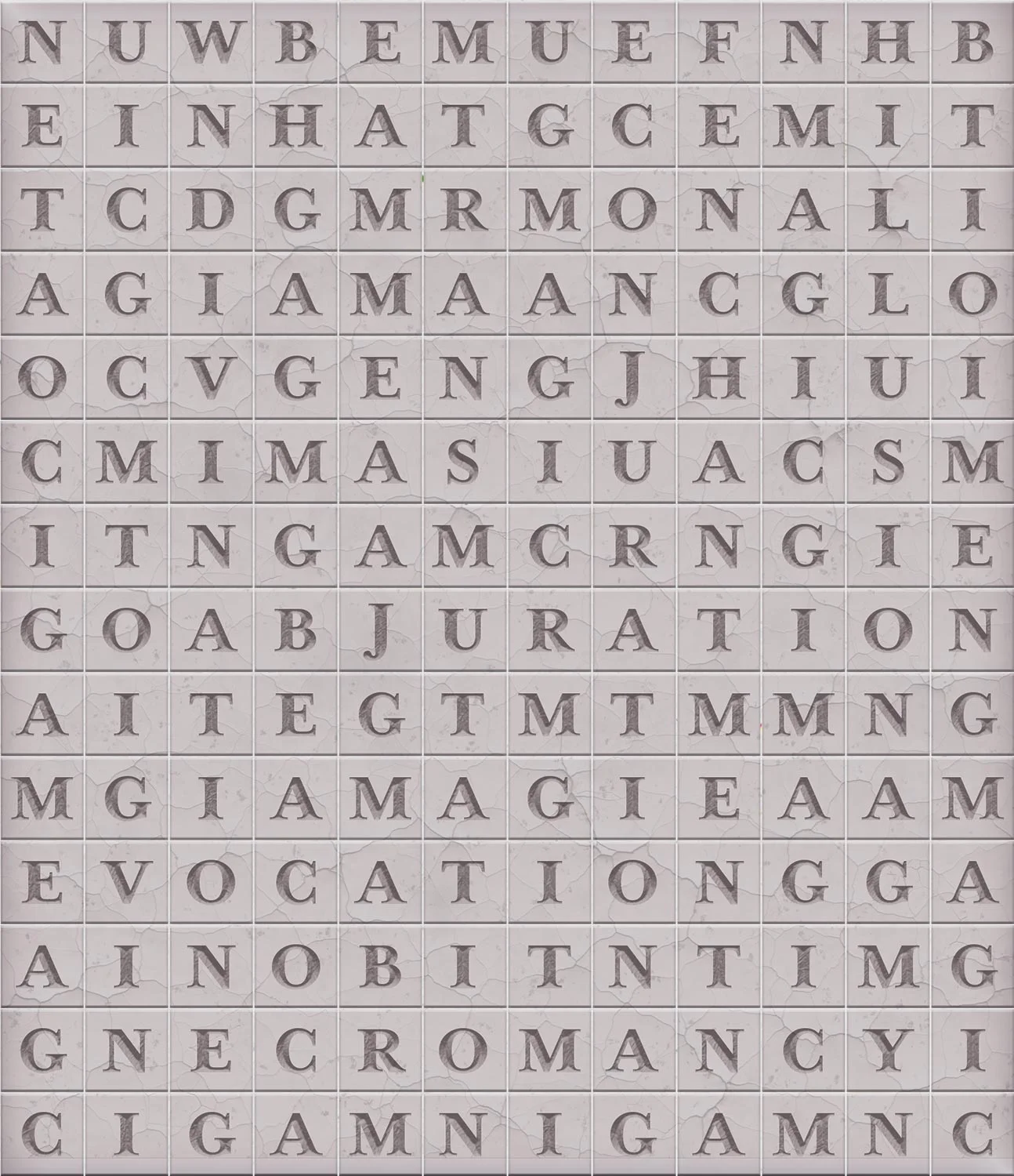
Puzzle Handout 2: Skeleton Keys
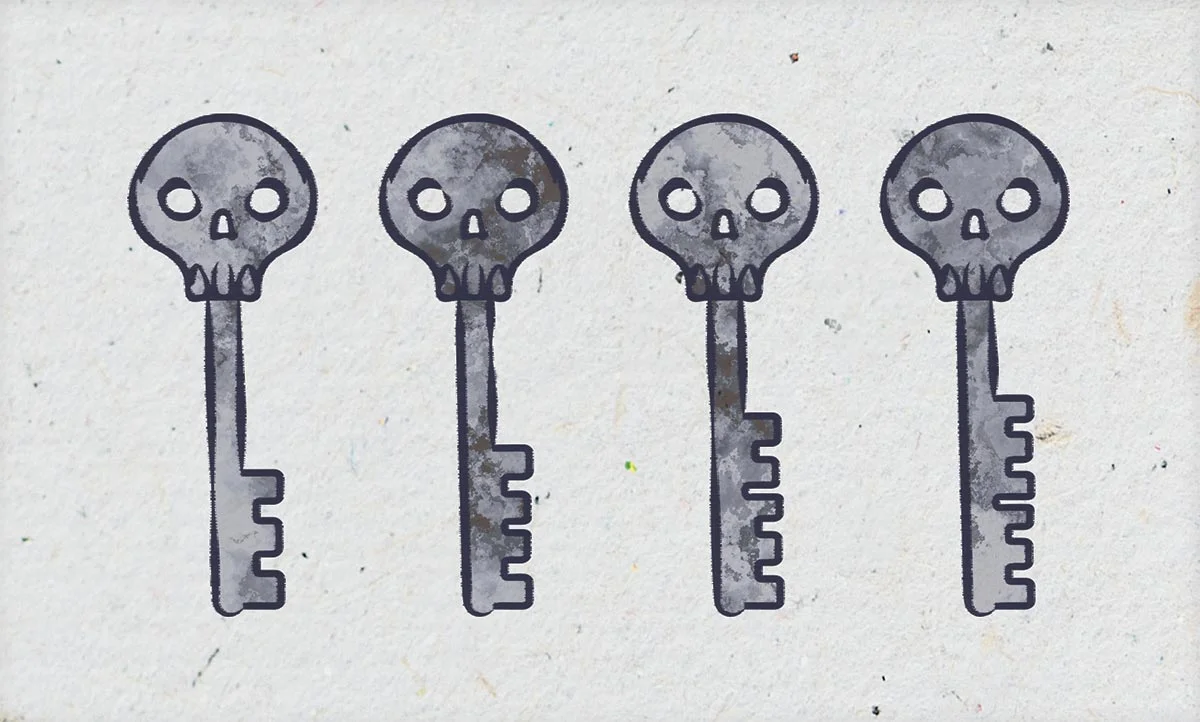
Puzzle Handout 3: Four by Four
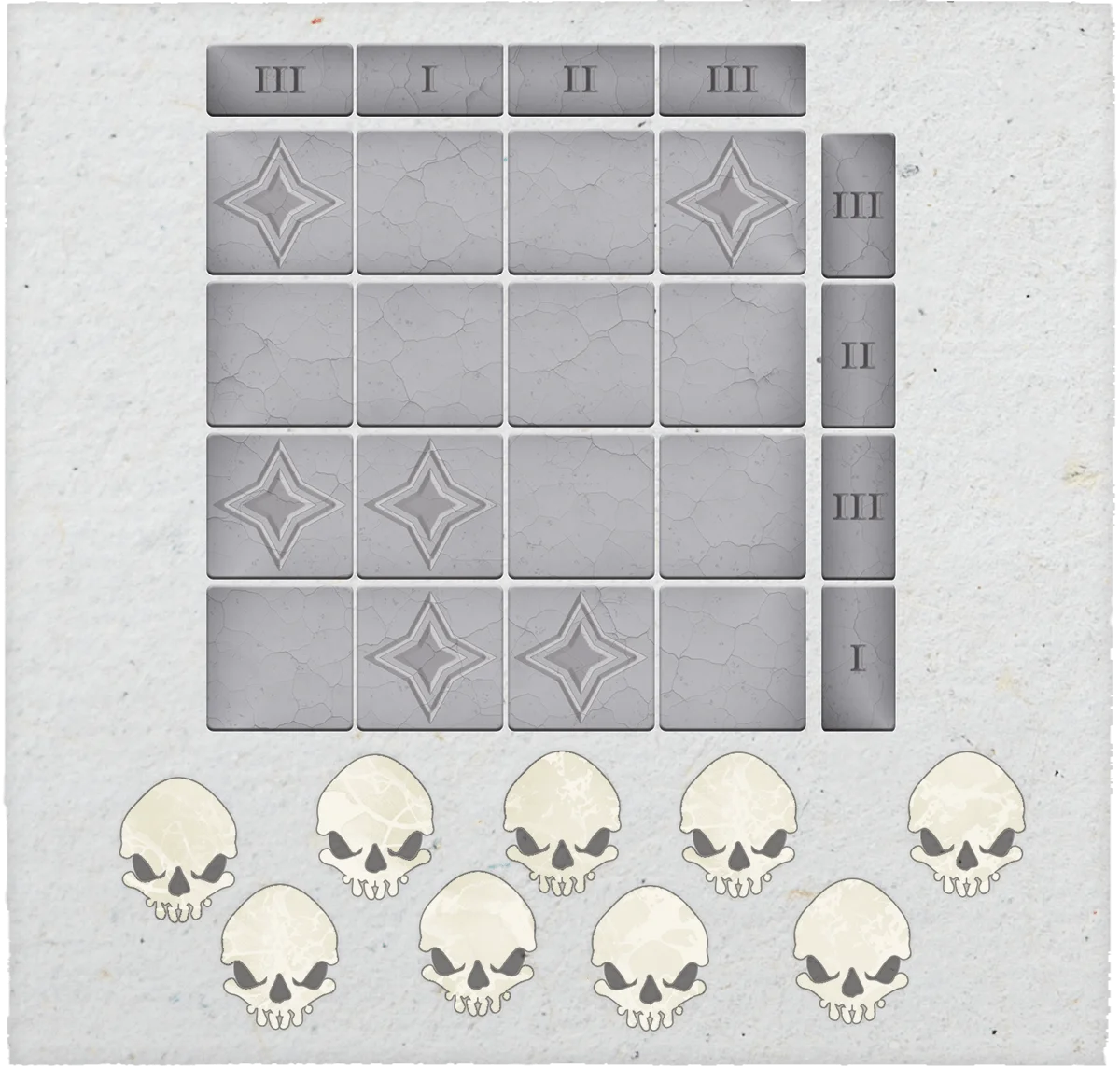
Puzzle Handout 4: Illusive Island
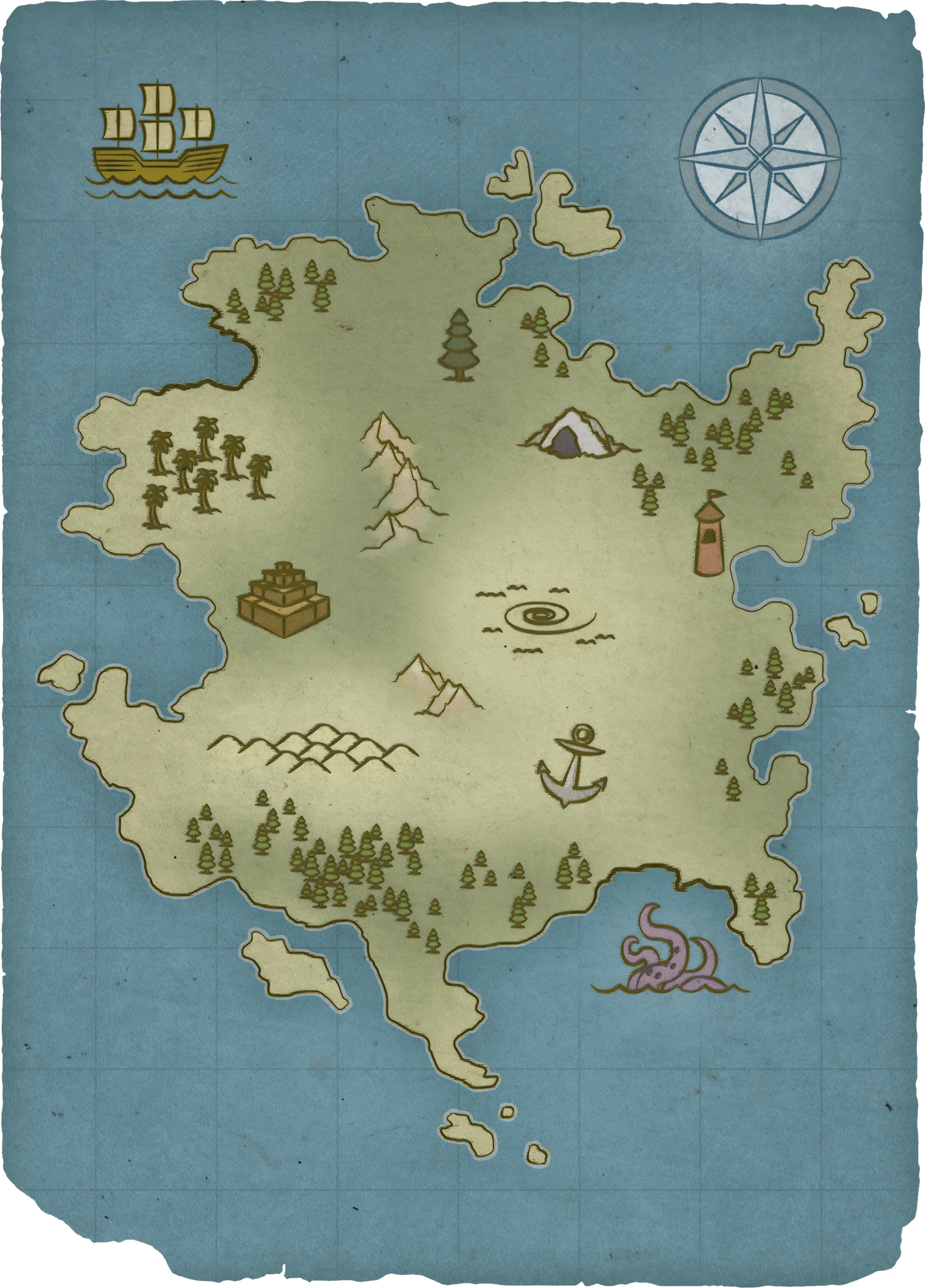
Puzzle Handout 5: Material Components
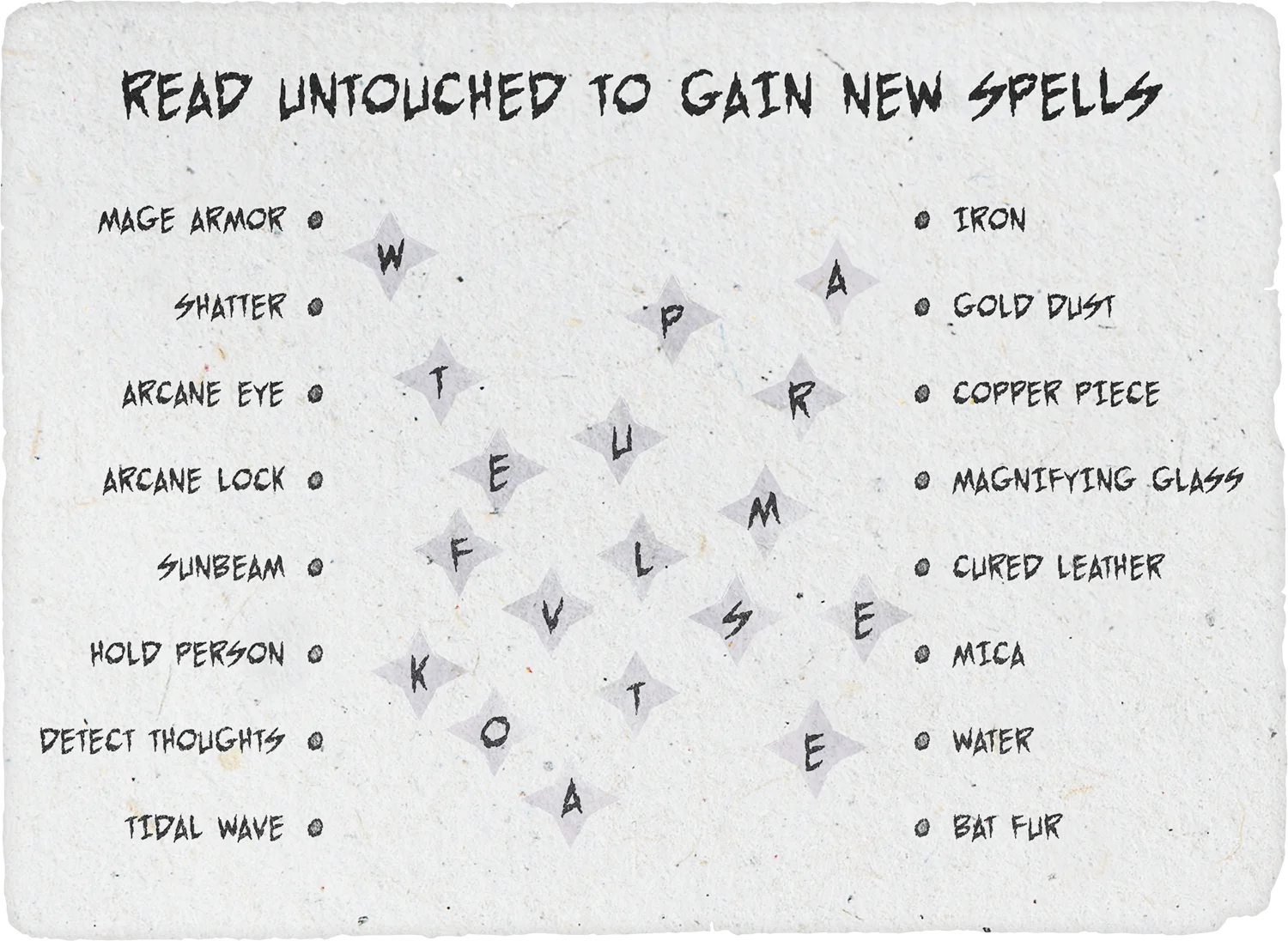
Puzzle Handout 6: Four Elements