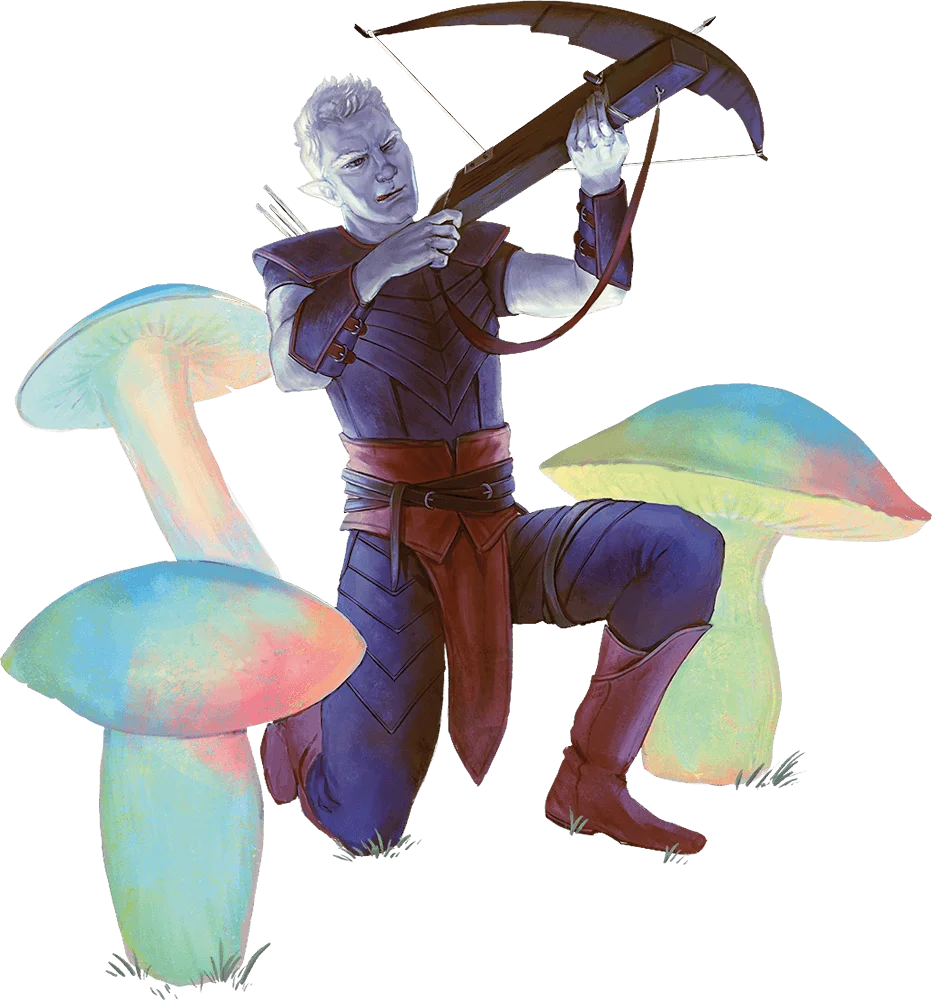
When you make your D&D character, you have an array of options in the "Player's Handbook" to create the sort of adventurer you want. This chapter adds to those options, making it possible to realize even more character concepts. If you combine these options with those in "Xanathar's Guide to Everything", the possibilities for your characters become vast.
Here are the options featured in this chapter:
A way to customize your character's origin by changing some of your racial traits
Guidance on changing your subclass
The artificer class, a master of magical invention
Class features and subclasses for every class in the "Player's Handbook"
Sometimes you pick a skill proficiency that ends up not being very useful in the campaign or that no longer fits your character's story. In those cases, talk to your DM about replacing that skill proficiency with another skill proficiency offered by your class at 1st level. A convenient time for such a change is when you reach a level that grants you the Ability Score Increase feature, representing that your character has spent a level or two studying the new skill and letting the old one atrophy.
Changing Your Subclass
Each character class involves the choice of a subclass at 1st, 2nd, or 3rd level. A subclass represents an area of specialization and offers different class features as you level up. With your DM's approval, you can change your subclass when you would normally gain a new subclass feature. If you decide to make this change, choose another subclass that belongs to your class and replace all your old subclass features with the features of the new subclass that are for your new level and lower.
Training Time
To change your subclass, your DM might require you to spend time devoted to the transition, as you study the ways of the new specialization. This transition requires a number of days equal to twice your new level in the class; a higher level represents more to learn.
The DM might also require an expenditure of money to pay for training, magical reagents, or other goods needed for the transition. The cost is typically 100 gp times your new level. This cost might be accompanied by a quest of some sort. For example, a sorcerer who wants to adopt a Draconic Bloodline could be required to receive blood, a blessing, or both from an ancient dragon.
If you return to a subclass that you previously held, you forgo the gold cost, and the time required for the transition is halved.
Sudden Change
Sometimes a character undergoes a dramatic transformation in their beliefs and abilities. When a character experiences a profound self-realization or faces an entity or a place of overwhelming power, beauty, or terror, the DM might allow an immediate subclass change. Here are a few examples:
An Oath of Devotion paladin failed to stop a demonic horde from ravaging her homeland. After spending a night in sorrowful prayer, she rises the next morning with the features of the Oath of Vengeance, ready to hunt down the horde.
A wizard lies down for a nap beneath an oak tree whose roots reach into the Feywild. In his dreams, he faces visions of multiple possible futures. When he awakens, his subclass features have been replaced by those of the School of Divination.
A cleric of the War Domain has spent years in conflict with the enemies of her temple. But one day, she wanders into a sun-dappled glade, where her god once shed a tear of mercy over the world's suffering. Drinking from the glade's brook, the cleric is filled with such compassion for all people that she now bears the powers of the Life Domain, ready to heal rather than make war.
Artificer
Masters of invention, artificers use ingenuity and magic to unlock extraordinary capabilities in objects. They see magic as a complex system waiting to be decoded and then harnessed in their spells and inventions. You can find everything you need to play one of these inventors in the next few sections.
Artificers use a variety of tools to channel their arcane power. To cast a spell, an artificer might use alchemist's supplies to create a potent elixir, calligrapher's supplies to inscribe a sigil of power, or tinker's tools to craft a temporary charm. The magic of artificers is tied to their tools and their talents, and few other characters can produce the right tool for a job as well as an artificer.
Artificers in Many Worlds
Throughout the D&D multiverse, artificers create inventions and magic items of peace and war. Many lives have been brightened or saved because of the work of kind artificers, but countless lives have also been lost because of the mass destruction unleashed by certain artificers' creations.
In the Forgotten Realms, the island of Lantan is home to many artificers, and in the world of Dragonlance, tinker gnomes are often members of this class. The strange technologies in the Barrier Peaks of the world of Greyhawk have inspired some folk to walk the path of the artificer, and in Mystara, various nations employ artificers to keep airships and other wondrous devices operational.
Artificers in the City of Sigil share discoveries from throughout the multiverse, and from there, the gnome artificer Vi runs a cosmos-spanning business that hires adventurers to fix problems that others deem unfixable. In Vi's home world, Eberron, magic is harnessed as a form of science and deployed throughout society, largely as a result of the wondrous ingenuity of artificers.
A quote from Tasha
Artificers invent cutting-edge problems, then try to solve them—loudly and often with collateral damage.
Masters of invention, artificers use ingenuity and magic to unlock extraordinary capabilities in objects. They see magic as a complex system waiting to be decoded and then harnessed in their spells and inventions. You can find everything you need to play one of these inventors in the next few sections. Artificers use a variety of tools to channel their arcane power. To cast a spell, an artificer might use alchemist's supplies to create a potent elixir, calligrapher's supplies to inscribe a sigil of power, or tinker's tools to craft a temporary charm. The magic of artificers is tied to their tools and their talents, and few other characters can produce the right tool for a job as well as an artificer.
Artificers in Many Worlds
Throughout the D&D multiverse, artificers create inventions and magic items of peace and war. Many lives have been brightened or saved because of the work of kind artificers, but countless lives have also been lost because of the mass destruction unleashed by certain artificers' creations.
In the Forgotten Realms, the island of Lantan is home to many artificers, and in the world of Dragonlance, tinker gnomes are often members of this class. The strange technologies in the Barrier Peaks of the world of Greyhawk have inspired some folk to walk the path of the artificer, and in Mystara, various nations employ artificers to keep airships and other wondrous devices operational.
Artificers in the City of Sigil share discoveries from throughout the multiverse, and from there, the gnome artificer Vi runs a cosmos-spanning business that hires adventurers to fix problems that others deem unfixable. In Vi's home world, Eberron, magic is harnessed as a form of science and deployed throughout society, largely as a result of the wondrous ingenuity of artificers.
Creating an Artificer
To create an artificer, consult the subsections which give you hit points, proficiencies, and starting equipment. Then look at the Artificer table to see which features you get at each level. The descriptions of those features appear below.
A quote from Tasha
Artificers invent cutting-edge problems, then try to solve them-loudly and often with collateral damage.
Multiclassing and the Artificer
If your group uses the optional rule on multiclassing in the "Player's Handbook", here's what you need to know if you choose artificer as one of your classes.
Ability Score Minimum
As a multiclass character, you must have at least an Intelligence score of 13 to take a level in this class, or to take a level in another class if you are already an artificer.
Proficiencies Gained
If artificer isn't your initial class, here are the proficiencies you gain when you take your first level as an artificer: light armor, medium armor, shields, thieves' tools, tinker's tools.
Spell Slots
Add half your levels (rounded up) in the artificer class to the appropriate levels from other classes to determine your available spell slots.
Artificer
Source: Eberron: Rising from the Last War
Masters of unlocking magic in everyday objects, artificers are supreme inventors. They see magic as a complex system waiting to be decoded and controlled. Artificers use tools to channel arcane power, crafting magical objects. To cast a spell, an artificer could use alchemist's supplies to create a potent elixir, calligrapher's supplies to inscribe a sigil of power on an ally's armor, or tinker's tools to craft a temporary charm. The magic of artificers is tied to their tools and their talents.
Arcane Science
Source: Eberron: Rising from the Last War
In the world of Eberron, arcane magic has been harnessed as a form of science and deployed throughout society. Artificers reflect this development. Their knowledge of magical devices, and their ability to infuse mundane items with magic, allows Eberron's most miraculous projects to continue.
During the Last War, artificers were marshaled on a massive scale. Many lives were saved because of the inventions of brave artificers, but countless lives were also lost because of the mass destruction unleashed by their creations.
Seekers of New Lore
Source: Eberron: Rising from the Last War
Nothing excites an artificer quite like uncovering a new metal or discovering a source of elemental energy. In artificer circles, new inventions and strange discoveries create the most excitement. Artificers who wish to make their mark must innovate, creating something fresh, rather than iterating on familiar designs.
This drive for novelty pushes artificers to become adventurers. Eberron's main travel routes and populated regions have long since been explored. Thus, artificers seek the frontiers of civilization in hopes of making the next great discovery in arcane research.
Creating an Artificer
Source: Eberron: Rising from the Last War
When creating an artificer, think about your character's relationship with the artisan who taught them their craft. Does the character have a rival? Talk to your DM about the role played by artificers in the campaign and the sort of organizations you might have ties to.
Artificers in Other Worlds
Eberron is the world most associated with artificers, yet the class can be found throughout the D&D multiverse. In the Forgotten Realms, for example, the island of Lantan is home to many artificers, and in the world of Dragonlance, tinker gnomes are often members of this class. The strange technologies in the Barrier Peaks of the World of Greyhawk have inspired some folk to walk the path of the artificer, and in Mystara, various nations employ artificers to keep airships and other wondrous devices operational. In the City of Sigil, artificers share discoveries from throughout the cosmos, and one in particular—the gnome inventor Vi—has run a multiverse-spanning business from there since leaving the world of her birth, Eberron. In the world-city Ravnica, the Izzet League trains numerous artificers, the destructiveness of whom is unparalleled in other worlds—except, perhaps, by the tinker gnomes of Krynn.
Quick Build
Source: Eberron: Rising from the Last War
You can make an artificer quickly by following these suggestions. First, put your highest ability score in Intelligence, followed by Constitution or Dexterity. Second, choose the guild artisan background.
Optional Rule: Multiclassing
Source: Eberron: Rising from the Last War
If your group uses the optional rule on multiclassing in the "Player's Handbook", here's what you need to know if you choose artificer as one of your classes.
Ability Score Minimum
Source: Eberron: Rising from the Last War
As a multiclass character, you must have at least an Intelligence score of 13 to take a level in this class, or to take a level in another class if you are already an artificer.
Proficiencies Gained
Source: Eberron: Rising from the Last War
If artificer isn't your initial class, here are the proficiencies you gain when you take your first level as an artificer: light armor, medium armor, shields, thieves' tools, tinker's tools.
Spell Slots
Source: Eberron: Rising from the Last War
Add half your levels (rounded up) in the artificer class to the appropriate levels from other classes to determine your available spell slots.
Class Features
Optional Rule: Firearm Proficiency (Level 1)
The secrets of creating and operating gunpowder weapons have been discovered in various corners of the D&D multiverse. If your Dungeon Master uses the rules on firearms in "chapter 9" of the "Dungeon Master's Guide" and your artificer has been exposed to the operation of such weapons, your artificer is proficient with them.
Magical Tinkering (Level 1)
1st-level artificer feature
You've learned how to invest a spark of magic into mundane objects. To use this ability, you must have thieves' tools or artisan's tools in hand. You then touch a Tiny nonmagical object as an action and give it one of the following magical properties of your choice:
The object sheds bright light in a 5-foot radius and dim light for an additional 5 feet.
Whenever tapped by a creature, the object emits a recorded message that can be heard up to 10 feet away. You utter the message when you bestow this property on the object, and the recording can be no more than 6 seconds long.
The object continuously emits your choice of an odor or a nonverbal sound (wind, waves, chirping, or the like). The chosen phenomenon is perceivable up to 10 feet away.
A static visual effect appears on one of the object's surfaces. This effect can be a picture, up to 25 words of text, lines and shapes, or a mixture of these elements, as you like.
The chosen property lasts indefinitely. As an action, you can touch the object and end the property early.
You can bestow magic on multiple objects, touching one object each time you use this feature, though a single object can only bear one property at a time. The maximum number of objects you can affect with this feature at one time is equal to your Intelligence modifier (minimum of one object). If you try to exceed your maximum, the oldest property immediately ends, and then the new property applies.
Spellcasting (Level 1)
1st-level artificer feature
You've studied the workings of magic and how to cast spells, channeling the magic through objects. To observers, you don't appear to be casting spells in a conventional way; you appear to produce wonders from mundane items and outlandish inventions.
Tools Required. You produce your artificer spell effects through your tools. You must have a spellcasting focus—specifically thieves' tools or some kind of artisan's tool—in hand when you cast any spell with this Spellcasting feature (meaning the spell has an 'M' component when you cast it). You must be proficient with the tool to use it in this way. See "chapter 5", "Equipment," in the "Player's Handbook" for descriptions of these tools.
After you gain the Infuse Item feature at 2nd level, you can also use any item bearing one of your infusions as a spellcasting focus.
The Magic of Artifice
As an artificer, you use tools when you cast your spells. When describing your spellcasting, think about how you're using a tool to perform the spell effect. If you cast cure wounds using alchemist's supplies, you could be quickly producing a salve. If you cast it using tinker's tools, you might have a miniature mechanical spider that binds wounds. When you cast poison spray, you could fling foul chemicals or use a wand that spits venom. The effect of the spell is the same as for a spellcaster of any other class, but your method of spellcasting is special.
The same principle applies when you prepare your spells. As an artificer, you don't study a spellbook or pray to prepare your spells. Instead, you work with your tools and create the specialized items you'll use to produce your effects. If you replace cure wounds with heat metal, you might be altering the device you use to heal—perhaps modifying a tool so that it channels heat instead of healing energy.
Such details don't limit you in any way or provide you with any benefit beyond the spell's effects. You don't have to justify how you're using tools to cast a spell. But describing your spellcasting creatively is a fun way to distinguish yourself from other spellcasters.
Cantrips (0-Level Spells). At 1st level, you know two cantrips of your choice from the artificer spell list. At higher levels, you learn additional artificer cantrips of your choice, as shown in the Cantrips Known column of the Artificer table.
When you gain a level in this class, you can replace one of the artificer cantrips you know with another cantrip from the artificer spell list.
Preparing and Casting Spells. The Artificer table shows how many spell slots you have to cast your artificer spells. To cast one of your artificer spells of 1st level or higher, you must expend a slot of the spell's level or higher. You regain all expended spell slots when you finish a long rest.
You prepare the list of artificer spells that are available for you to cast, choosing from the artificer spell list. When you do so, choose a number of artificer spells equal to your Intelligence modifier + half your artificer level, rounded down (minimum of one spell). The spells must be of a level for which you have spell slots.
For example, if you are a 5th-level artificer, you have four 1st-level and two 2nd-level spell slots. With an Intelligence of 14, your list of prepared spells can include four spells of 1st or 2nd level, in any combination. If you prepare the 1st-level spell cure wounds, you can cast it using a 1st-level or a 2nd-level slot. Casting the spell doesn't remove it from your list of prepared spells.
You can change your list of prepared spells when you finish a long rest. Preparing a new list of artificer spells requires time spent tinkering with your spellcasting focuses: at least 1 minute per spell level for each spell on your list.
Spellcasting Ability. Intelligence is your spellcasting ability for your artificer spells; your understanding of the theory behind magic allows you to wield these spells with superior skill. You use your Intelligence whenever an artificer spell refers to your spellcasting ability. In addition, you use your Intelligence modifier when setting the saving throw DC for an artificer spell you cast and when making an attack roll with one.
Spell save DC: your proficiency bonus + your Intelligence
Spell attack modifier: your proficiency bonus + your Intelligence
Ritual Casting. You can cast an artificer spell as a ritual if that spell has the ritual tag and you have the spell prepared.
Infuse Item (Level 2)
2nd-level artificer feature
You've gained the ability to imbue mundane items with certain magical infusions, turning those objects into magic items.
Infusions Known (Level 2)
When you gain this feature, pick four artificer infusions to learn, choosing from the "Artificer Infusions[1]" section at the end of the class's description. You learn additional infusions of your choice when you reach certain levels in this class, as shown in the Infusions Known column of the Artificer table.
Whenever you gain a level in this class, you can replace one of the artificer infusions you learned with a new one.
Artificer Infusions
Artificers have invented numerous magical infusions, extraordinary processes that rapidly create magic items. To many, artificers seem like wonderworkers, accomplishing in hours what others need weeks to complete.
The description of each of the following infusions details the type of item that can receive it, along with whether the resulting magic item requires attunement.
Some infusions specify a minimum artificer level. You can't learn such an infusion until you are at least that level.
Unless an infusion's description says otherwise, you can't learn an infusion more than once.
Infusing an Item. Whenever you finish a long rest, you can touch a nonmagical object and imbue it with one of your artificer infusions, turning it into a magic item. An infusion works on only certain kinds of objects, as specified in the infusion's description. If the item requires attunement, you can attune yourself to it the instant you infuse the item. If you decide to attune to the item later, you must do so using the normal process for attunement (see).
Your infusion remains in an item indefinitely, but when you die, the infusion vanishes after a number of days have passed equal to your Intelligence modifier (minimum of 1 day). The infusion also vanishes if you give up your knowledge of the infusion for another one.
You can infuse more than one nonmagical object at the end of a long rest; the maximum number of objects appears in the Infused Items column of the Artificer table. You must touch each of the objects, and each of your infusions can be in only one object at a time. Moreover, no object can bear more than one of your infusions at a time. If you try to exceed your maximum number of infusions, the oldest infusion immediately ends, and then the new infusion applies.
If an infusion ends on an item that contains other things, like a bag of holding, its contents harmlessly appear in and around its space.
Artificer Specialist (Level 3)
3rd-level artificer feature
Choose the type of specialist you are, each of which is detailed at the end of the class's description. Your choice grants you features at 5th level and again at 9th and 15th level.
The Right Tool for the Job (Level 3)
3rd-level artificer feature
You've learned how to produce exactly the tool you need: with thieves' tools or artisan's tools in hand, you can magically create one set of artisan's tools in an unoccupied space within 5 feet of you. This creation requires 1 hour of uninterrupted work, which can coincide with a short or long rest. Though the product of magic, the tools are nonmagical, and they vanish when you use this feature again.
Ability Score Improvement (Level 4)
4th-level artificer feature
When you reach 4th level, you can increase one ability score of your choice by 2, or you can increase two ability scores of your choice by 1. As normal, you can't increase an ability score above 20 using this feature.
If your DM allows the use of feats, you may instead take a feat.
Artificer Specialist Feature (Level 5)
5th-level artificer feature
You gain a feature granted by your Artificer Specialist choice.
Tool Expertise (Level 6)
6th-level artificer feature
Your proficiency bonus is now doubled for any ability check you make that uses your proficiency with a tool.
Flash of Genius (Level 7)
7th-level artificer feature
You've gained the ability to come up with solutions under pressure. When you or another creature you can see within 30 feet of you makes an ability check or a saving throw, you can use your reaction to add your Intelligence modifier to the roll.
You can use this feature a number of times equal to your Intelligence modifier (minimum of once). You regain all expended uses when you finish a long rest.
Ability Score Improvement (Level 8)
8th-level artificer feature
When you reach 8th level, you can increase one ability score of your choice by 2, or you can increase two ability scores of your choice by 1. As normal, you can't increase an ability score above 20 using this feature.
If your DM allows the use of feats, you may instead take a feat.
Artificer Specialist Feature (Level 9)
9th-level artificer feature
You gain a feature granted by your Artificer Specialist choice.
Magic Item Adept (Level 10)
10th-level artificer feature
You've achieved a profound understanding of how to use and make magic items:
You can attune to up to four magic items at once.
If you craft a magic item with a rarity of common or uncommon, it takes you a quarter of the normal time, and it costs you half as much of the usual gold.
Spell-Storing Item (Level 11)
11th-level artificer feature
You can now store a spell in an object. Whenever you finish a long rest, you can touch one simple or martial weapon or one item that you can use as a spellcasting focus, and you store a spell in it, choosing a 1st- or 2nd-level spell from the artificer spell list that requires 1 action to cast (you needn't have it prepared).
While holding the object, a creature can take an action to produce the spell's effect from it, using your spellcasting ability modifier. If the spell requires concentration, the creature must concentrate. The spell stays in the object until it's been used a number of times equal to twice your Intelligence modifier (minimum of twice) or until you use this feature again to store a spell in an object.
Ability Score Improvement (Level 12)
12th-level artificer feature
When you reach 12th level, you can increase one ability score of your choice by 2, or you can increase two ability scores of your choice by 1. As normal, you can't increase an ability score above 20 using this feature.
If your DM allows the use of feats, you may instead take a feat.
Magic Item Savant (Level 14)
14th-level artificer feature
Your skill with magic items deepens:
You can attune to up to five magic items at once.
You ignore all class, race, spell, and level requirements on attuning to or using a magic item.
Artificer Specialist Feature (Level 15)
15th-level artificer feature
You gain a feature granted by your Artificer Specialist choice.
Ability Score Improvement (Level 16)
16th-level artificer feature
When you reach 16th level, you can increase one ability score of your choice by 2, or you can increase two ability scores of your choice by 1. As normal, you can't increase an ability score above 20 using this feature.
If your DM allows the use of feats, you may instead take a feat.
Magic Item Master (Level 18)
18th-level artificer feature
You can now attune to up to six magic items at once.
Ability Score Improvement (Level 19)
19th-level artificer feature
When you reach 19th level, you can increase one ability score of your choice by 2, or you can increase two ability scores of your choice by 1. As normal, you can't increase an ability score above 20 using this feature.
If your DM allows the use of feats, you may instead take a feat.
Soul of Artifice (Level 20)
20th-level artificer feature
You have developed a mystical connection to your magic items, which you can draw on for protection:
You gain a +1 bonus to all saving throws per magic item you are currently attuned to.
If you're reduced to 0 hit points but not killed outright, you can use your reaction to end one of your artificer infusions, causing you to drop to 1 hit point instead of 0.
An Alchemist is an expert at combining reagents to produce mystical effects. Alchemists use their creations to give life and to leech it away. Alchemy is the oldest of artificer traditions, and its versatility has long been valued during times of war and peace.
Subclass Features
Tool Proficiency (Level 3)
When you adopt this specialization at 3rd level, you gain proficiency with alchemist's supplies. If you already have this proficiency, you gain proficiency with one other type of artisan's tools of your choice.
Alchemist Spells (Level 3)
Starting at 3rd level, you always have certain spells prepared after you reach particular levels in this class, as shown in the Alchemist Spells table. These spells count as artificer spells for you, but they don't count against the number of artificer spells you prepare.
Beginning at 3rd level, whenever you finish a long rest, you can magically produce an experimental elixir in an empty flask you touch. Roll on the Experimental Elixir table for the elixir's effect, which is triggered when someone drinks the elixir. As an action, a creature can drink the elixir or administer it to an incapacitated creature.
Creating an experimental elixir requires you to have alchemist's supplies on your person, and any elixir you create with this feature lasts until it is drunk or until the end of your next long rest.
When you reach certain levels in this class, you can make more elixirs at the end of a long rest: two at 6th level and three at 15th level. Roll for each elixir's effect separately. Each elixir requires its own flask.
You can create additional experimental elixirs by expending a spell slot of 1st level or higher for each one. When you do so, you use your action to create the elixir in an empty flask you touch, and you choose the elixir's effect from the Experimental Elixir table.
Experimental Elixir
dice: d6
Effect
1
Healing. The drinker regains a number of hit points equal to 2d4 + your Intelligence modifier.
2
Swiftness. The drinker's walking speed increases by 10 feet for 1 hour.
3
Resilience. The drinker gains a +1 bonus to AC for 10 minutes.
4
Boldness. The drinker can roll a d4 and add the number rolled to every attack roll and saving throw they make for the next minute.
5
Flight. The drinker gains a flying speed of 10 feet for 10 minutes.
6
Transformation. The drinker's body is transformed as if by the alter self spell. The drinker determines the transformation caused by the spell, the effects of which last for 10 minutes.
Alchemical Savant (Level 5)
At 5th level, you develop masterful command of magical chemicals, enhancing the healing and damage you create through them. Whenever you cast a spell using your alchemist's supplies as the spellcasting focus, you gain a bonus to one roll of the spell. That roll must restore hit points or be a damage roll that deals acid, fire, necrotic, or poison damage, and the bonus equals your Intelligence modifier (minimum of +1).
Restorative Reagents (Level 9)
Starting at 9th level, you can incorporate restorative reagents into some of your works:
Whenever a creature drinks an experimental elixir you created, the creature gains temporary hit points equal to 2d6 + your Intelligence modifier (minimum of 1 temporary hit point).
You can cast lesser restoration without expending a spell slot and without preparing the spell, provided you use alchemist's supplies as the spellcasting focus. You can do so a number of times equal to your Intelligence modifier (minimum of once), and you regain all expended uses when you finish a long rest.
Chemical Mastery (Level 15)
By 15th level, you have been exposed to so many chemicals that they pose little risk to you, and you can use them to quickly end certain ailments:
You gain resistance to acid damage and poison damage, and you are immune to the poisoned condition.
You can cast greater restoration and heal without expending a spell slot, without preparing the spell, and without material components, provided you use alchemist's supplies as the spellcasting focus. Once you cast either spell with this feature, you can't cast that spell with it again until you finish a long rest.
Armorer
Armorer
Armorer
Artificer: Artificer Specialist Source: Tasha's Cauldron of Everything p. 15
An artificer who specializes as an Armorer modifies armor to function almost like a second skin. The armor is enhanced to hone the artificer's magic, unleash potent attacks, and generate a formidable defense. The artificer bonds with this armor, becoming one with it even as they experiment with it and refine its magical capabilities.
Subclass Features
Tools of the Trade (Level 3)
3rd-level Armorer feature
You gain proficiency with heavy armor. You also gain proficiency with smith's tools. If you already have this tool proficiency, you gain proficiency with one other type of artisan's tools of your choice.
Armorer Spells (Level 3)
3rd-level Armorer feature
You always have certain spells prepared after you reach particular levels in this class, as shown in the Armorer Spells table. These spells count as artificer spells for you, but they don't count against the number of artificer spells you prepare.
Your metallurgical pursuits have led to you making armor a conduit for your magic. As an action, you can turn a suit of armor you are wearing into Arcane Armor, provided you have smith's tools in hand.
You gain the following benefits while wearing this armor:
If the armor normally has a Strength requirement, the arcane armor lacks this requirement for you.
You can use the arcane armor as a spellcasting focus for your artificer spells.
The armor attaches to you and can't be removed against your will. It also expands to cover your entire body, although you can retract or deploy the helmet as a bonus action. The armor replaces any missing limbs, functioning identically to a limb it replaces.
You can doff or don the armor as an action. The armor continues to be Arcane Armor until you don another suit of armor or you die.
Armor Model (Level 3)
3rd-level Armorer feature
You can customize your Arcane Armor. When you do so, choose one of the following armor models: Guardian or Infiltrator. The model you choose gives you special benefits while you wear it.
Each model includes a special weapon. When you attack with that weapon, you can add your Intelligence modifier, instead of Strength or Dexterity, to the attack and damage rolls.
You can change the armor's model whenever you finish a short or long rest, provided you have smith's tools in hand.
Guardian. You design your armor to be in the front line of conflict. It has the following features:
Thunder Gauntlets
Each of the armor's gauntlets counts as a simple melee weapon while you aren't holding anything in it, and it deals 1d8 thunder damage on a hit. A creature hit by the gauntlet has disadvantage on attack rolls against targets other than you until the start of your next turn, as the armor magically emits a distracting pulse when the creature attacks someone else.
Defensive Field
As a bonus action, you can gain temporary hit points equal to your level in this class, replacing any temporary hit points you already have. You lose these temporary hit points if you doff the armor. You can use this bonus action a number of times equal to your proficiency bonus, and you regain all expended uses when you finish a long rest.
Infiltrator. You customize your armor for subtle undertakings. It has the following features:
Lightning Launcher
A gemlike node appears on one of your armored fists or on the chest (your choice). It counts as a simple ranged weapon, with a normal range of 90 feet and a long range of 300 feet, and it deals 1d6 lightning damage on a hit. Once on each of your turns when you hit a creature with it, you can deal an extra 1d6 lightning damage to that target.
Powered Steps
Your walking speed increases by 5 feet.
Dampening Field
You have advantage on Dexterity (Stealth) checks. If the armor normally imposes disadvantage on such checks, the advantage and disadvantage cancel each other, as normal.
Extra Attack (Level 5)
5th-level Armorer feature
You can attack twice, rather than once, whenever you take the Attack action on your turn.
Armor Modifications (Level 9)
9th-level Armorer feature
You learn how to use your artificer infusions to specially modify your Arcane Armor. That armor now counts as separate items for the purposes of your Infuse Items feature: armor (the chest piece), boots, helmet, and the armor's special weapon. Each of those items can bear one of your infusions, and the infusions transfer over if you change your armor's model with the Armor Model feature. In addition, the maximum number of items you can infuse at once increases by 2, but those extra items must be part of your Arcane Armor.
Perfected Armor (Level 15)
15th-level Armorer feature
Your Arcane Armor gains additional benefits based on its model, as shown below.
Guardian (Level 15)
When a Huge or smaller creature you can see ends its turn within 30 feet of you, you can use your reaction to magically force it to make a Strength saving throw against your spell save DC. On a failed save, you pull the creature up to 25 feet directly to an unoccupied space. If you pull the target to a space within 5 feet of you, you can make a melee weapon attack against it as part of this reaction.
You can use this reaction a number of times equal to your proficiency bonus, and you regain all expended uses of it when you finish a long rest.
Infiltrator (Level 15)
Any creature that takes lightning damage from your Lightning Launcher glimmers with magical light until the start of your next turn. The glimmering creature sheds dim light in a 5-foot radius, and it has disadvantage on attack rolls against you, as the light jolts it if it attacks you. In addition, the next attack roll against it has advantage, and if that attack hits, the target takes an extra 1d6 lightning damage.
Artillerist
Artillerist
Artillerist
Artificer: Artificer Specialist Source: Tasha's Cauldron of Everything p. 17
An Artillerist specializes in using magic to hurl energy, projectiles, and explosions on a battlefield. This destructive power was valued by all the armies of the Last War. Now that the war is over, some members of this specialization have sought to build a more peaceful world by using their powers to fight the resurgence of strife in Khorvaire.
The gnome artificer Vi, an unlikely yet key member of House Cannith's warforged project, has been especially vocal about making things right: "It's about time we fixed things instead of blowing them all to hell."
Subclass Features
Tool Proficiency (Level 3)
When you adopt this specialization at 3rd level, you gain proficiency with woodcarver's tools. If you already have this proficiency, you gain proficiency with one other type of artisan's tools of your choice.
Artillerist Spells (Level 3)
Starting at 3rd level, you always have certain spells prepared after you reach particular levels in this class, as shown in the Artillerist Spells table. These spells count as artificer spells for you, but they don't count against the number of artificer spells you prepare.
At 3rd level, you learn how to create a magical cannon. Using woodcarver's tools or smith's tools, you can take an action to magically create a Small or Tiny eldritch cannon in an unoccupied space on a horizontal surface within 5 feet of you. A Small eldritch cannon occupies its space, and a Tiny one can be held in one hand.
Once you create a cannon, you can't do so again until you finish a long rest or until you expend a spell slot of 1st level or higher. You can have only one cannon at a time and can't create one while your cannon is present.
The cannon is a magical object. Regardless of size, the cannon has an AC of 18 and a number of hit points equal to five times your artificer level. It is immune to poison damage and psychic damage, and all conditions. If it is forced to make an ability check or a saving throw, treat all its ability scores as 10 (+0). If the mending spell is cast on it, it regains 2d6 hit points. It disappears if it is reduced to 0 hit points or after 1 hour. You can dismiss it early as an action.
When you create the cannon, you determine its appearance and whether it has legs. You also decide which type it is, choosing from the options on the Eldritch Cannons table. On each of your turns, you can take a bonus action to cause the cannon to activate if you are within 60 feet of it. As part of the same bonus action, you can direct the cannon to walk or climb up to 15 feet to an unoccupied space, provided it has legs.
The cannon exhales fire in an adjacent 15-foot cone that you designate. Each creature in that area must make a Dexterity saving throw against your spell save DC, taking 2d8 fire damage on a failed save or half as much damage on a successful one. The fire ignites any flammable objects in the area that aren't being worn or carried.
Make a ranged spell attack, originating from the cannon, at one creature or object within 120 feet of it. On a hit, the target takes 2d8 force damage, and if the target is a creature, it is pushed up to 5 feet away from the cannon.
The cannon emits a burst of positive energy that grants itself and each creature of your choice within 10 feet of it a number of temporary hit points equal to 1d8 + your Intelligence modifier (minimum of +1).
Arcane Firearm (Level 5)
At 5th level, you know how to turn a wand, staff, or rod into an arcane firearm, a conduit for your destructive spells. When you finish a long rest, you can use woodcarver's tools to carve special sigils into a wand, staff, or rod and thereby turn it into your arcane firearm. The sigils disappear from the object if you later carve them on a different item. The sigils otherwise last indefinitely.
You can use your arcane firearm as a spellcasting focus for your artificer spells. When you cast an artificer spell through the firearm, roll a d8, and you gain a bonus to one of the spell's damage rolls equal to the number rolled.
Explosive Cannon (Level 9)
Starting at 9th level, every eldritch cannon you create is more destructive:
The cannon's damage rolls all increase by 1d8.
As an action, you can command the cannon to detonate if you are within 60 feet of it. Doing so destroys the cannon and forces each creature within 20 feet of it to make a Dexterity saving throw against your spell save DC, taking 3d8 force damage on a failed save or half as much damage on a successful one.
Fortified Position (Level 15)
Starting at 15th level, you're a master at forming well-defended emplacements using Eldritch Cannon:
You and your allies have half cover while within 10 feet of a cannon you create with Eldritch Cannon, as a result of a shimmering field of magical protection that the cannon emits.
You can now have two cannons at the same time. You can create two with the same action (but not the same spell slot), and you can activate both of them with the same bonus action. You determine whether the cannons are identical to each other or different. You can't create a third cannon while you have two.
Battle Smith
Battle Smith
Battle Smith
Artificer: Artificer Specialist Source: Tasha's Cauldron of Everything p. 18
Armies require protection, and someone has to put things back together if defenses fail. A combination of protector and medic, a Battle Smith is an expert at defending others and repairing both material and personnel. To aid in their work, Battle Smiths are usually accompanied by a steel defender, a protective companion of their own creation. Many soldiers tell stories of nearly dying before being saved by a Battle Smith and a steel defender.
Battle Smiths played a key role in House Cannith's work on battle constructs and the original warforged, and after the Last War, these artificers led efforts to aid those who were injured in the war's horrific battles.
Subclass Features
Tool Proficiency (Level 3)
When you adopt this specialization at 3rd level, you gain proficiency with smith's tools. If you already have this proficiency, you gain proficiency with one other type of artisan's tools of your choice.
Battle Smith Spells (Level 3)
Starting at 3rd level, you always have certain spells prepared after you reach particular levels in this class, as shown in the Battle Smith Spells table. These spells count as artificer spells for you, but they don't count against the number of artificer spells you prepare.
When you reach 3rd level, your combat training and your experiments with magic have paid off in two ways:
You gain proficiency with martial weapons.
When you attack with a magic weapon, you can use your Intelligence modifier, instead of Strength or Dexterity modifier, for the attack and damage rolls.
Steel Defender (Level 3)
By 3rd level, your tinkering has borne you a faithful companion, a steel defender. It is friendly to you and your companions, and it obeys your commands. See this creature's game statistics in the steel defender stat block, which uses your proficiency bonus (PB) in several places. You determine the creature's appearance and whether it has two legs or four; your choice has no effect on its game statistics.
In combat, the defender shares your initiative count, but it takes its turn immediately after yours. It can move and use its reaction on its own, but the only action it takes on its turn is the Dodge action, unless you take a bonus action on your turn to command it to take another action. That action can be one in its stat block or some other action. If you are incapacitated, the defender can take any action of its choice, not just Dodge.
If the mending spell is cast on it, it regains 2d6 hit points. If it has died within the last hour, you can use your smith's tools as an action to revive it, provided you are within 5 feet of it and you expend a spell slot of 1st level or higher. The steel defender returns to life after 1 minute with all its hit points restored.
At the end of a long rest, you can create a new steel defender if you have your smith's tools with you. If you already have a steel defender from this feature, the first one immediately perishes. The defender also perishes if you die.
Extra Attack (Level 5)
Starting at 5th level, you can attack twice, rather than once, whenever you take the Attack action on your turn.
Arcane Jolt (Level 9)
At 9th level, you learn new ways to channel arcane energy to harm or heal. When either you hit a target with a magic weapon attack or your steel defender hits a target, you can channel magical energy through the strike to create one of the following effects:
The target takes an extra 2d6 force damage.
Choose one creature or object you can see within 30 feet of the target. Healing energy flows into the chosen recipient, restoring 2d6 hit points to it.
You can use this energy a number of times equal to your Intelligence modifier (minimum of once), but you can do so no more than once on a turn. You regain all expended uses when you finish a long rest.
Improved Defender (Level 15)
At 15th level, your Arcane Jolt and steel defender become more powerful:
The extra damage and the healing of your Arcane Jolt both increase to 4d6.
Your steel defender gains a +2 bonus to Armor Class.
Whenever your steel defender uses its Deflect Attack, the attacker takes force damage equal to 1d4 + your Intelligence modifier.
Barbarian
The barbarian class receives new features and subclasses in this section.
Optional Class Features
You gain class features in the "Player's Handbook" when you reach certain levels in your class. This section offers additional features that you can gain as a barbarian.
Unlike the features in the "Player's Handbook", you don't gain the features here automatically. Consulting with your DM, you decide whether to gain a feature in this section if you meet the level requirement noted in the feature's description. These features can be selected separately from one another; you can use one, both, or none of them.
Primal Knowledge (3rd-level barbarian feature)
Instinctive Pounce (7th-level barbarian feature)
Primal Paths
At 3rd level, a barbarian gains the Primal Path feature, which offers you the choice of a subclass. The following options are available to you when making that choice: Path of the Beast and Path of Wild Magic.
Path of the Beast
Path of Wild Magic
Gallery
Path of the Beast
Path of Wild Magic
Bard
The bard class receives new features and subclasses in this section.
Optional Class Features
You gain class features in the "Player's Handbook" when you reach certain levels in your class. This section offers additional features that you can gain as a bard. Unlike the features in the "Player's Handbook", you don't gain the features here automatically. Consulting with your DM, you decide whether to gain a feature in this section if you meet the level requirement noted in the feature's description. These features can be selected separately from one another; you can use some, all, or none of them.
Additional Bard Spells
1st-level bard feature
The spells in the following list expand the bard spell list in the "Player's Handbook". The list is organized by spell level, not character level. If a spell can be cast as a ritual, the ritual tag appears after the spell's name. Each spell is in the "Player's Handbook", unless it has an asterisk (a spell in chapter 3). "Xanathar's Guide to Everything" also offers more spells.
At 3rd level, a bard gains the Bard College feature, which offers you the choice of a subclass. The following options are available to you when making that choice: College of Creation and College of Eloquence.
College of Creation
College of Eloquence
Gallery
College of Creation
College of Eloquence
Cleric
The cleric class receives new features and subclasses in this section.
Optional Class Features
You gain class features in the "Player's Handbook" when you reach certain levels in your class. This section offers additional features that you can gain as a cleric. Unlike the features in the "Player's Handbook", you don't gain the features here automatically. Consulting with your DM, you decide whether to gain a feature in this section if you meet the level requirement noted in the feature's description. These features can be selected separately from one another; you can use some, all, or none of them.
If you take a feature that replaces another feature, you gain no benefit from the replaced one and don't qualify for anything in the game that requires it.
Additional Cleric Spells
1st-level cleric feature
The spells in the following list expand the cleric spell list in the "Player's Handbook". The list is organized by spell level, not character level. If a spell can be cast as a ritual, the ritual tag appears after the spell's name. Each spell is in the "Player's Handbook", unless it has an asterisk (a spell in chapter 3). "Xanathar's Guide to Everything" also offers more spells.
Channel Divinity: Harness Divine Power (2nd-level cleric feature)
Cantrip Versatility (4th-level cleric feature)
Blessed Strikes (8th-level cleric feature, which replaces the Divine Strike or Potent Spellcasting feature)
Divine Domains
At 1st level, a cleric gains the Divine Domain feature, which offers you the choice of a subclass. The following options are available to you when making that choice: Order Domain, Peace Domain, and Twilight Domain.
Order Domain
Peace Domain
Twilight Domain
Gallery
Order Domain
Peace Domain
Twilight Domain
Druid
The druid class receives new features and subclasses in this section.
Optional Class Features
You gain class features in the "Player's Handbook" when you reach certain levels in your class. This section offers additional features that you can gain as a druid. Unlike the features in the "Player's Handbook", you don't gain the features here automatically. Consulting with your DM, you decide whether to gain a feature in this section if you meet the level requirement noted in the feature's description. These features can be selected separately from one another; you can use some, all, or none of them.
Additional Druid Spells
1st-level druid feature
The spells in the following list expand the druid spell list in the "Player's Handbook". The list is organized by spell level, not character level. If a spell can be cast as a ritual, the ritual tag appears after the spell's name. Each spell is in the "Player's Handbook", unless it has an asterisk (a spell in chapter 3). "Xanathar's Guide to Everything" also offers more spells.
At 2nd level, a druid gains the Druid Circle feature, which offers you the choice of a subclass. The following options are available to you when making that choice: Circle of Spores, Circle of Stars, and Circle of Wildfire.
The Circle of the Stars has tracked heavenly patterns since time immemorial, discovering secrets hidden amid the constellations. By understanding these secrets, the Druids of this circle seek to harness the powers of the cosmos.
Subclass Features
Star Map (Level 3)
You've created a star chart as part of your heavenly studies. It is a Tiny object, and you can use it as a Spellcasting Focus for your Druid spells. You determine its form by rolling on the Star Map table or by choosing one.
While holding the map, you have the Guidance and Guiding Bolt spells prepared, and you can cast Guiding Bolt without expending a spell slot. You can cast it in that way a number of times equal to your Wisdom modifier (minimum of once), and you regain all expended uses when you finish a Long Rest.
If you lose the map, you can perform a 1-hour ceremony to magically create a replacement. This ceremony can be performed during a Short or Long Rest, and it destroys the previous map.
Star Map
dice: 1d6
Map Form
1
A scroll bearing depictions of constellations
2
A stone tablet with fine holes drilled through it
3
An owlbear hide tooled with stellar symbols
4
A collection of maps bound in an ebony cover
5
A crystal engraved with starry patterns
6
A glass disk etched with constellations
Starry Form (Level 3)
As a Bonus Action, you can expend a use of your Wild Shape feature to take on a starry form rather than shape-shifting.
While in your starry form, you retain your game statistics, but your body becomes luminous, your joints glimmer like stars, and glowing lines connect them as on a star chart. This form sheds Bright Light in a 10-foot radius and Dim Light for an additional 10 feet. The form lasts for 10 minutes. It ends early if you dismiss it (no action required), have the Incapacitated condition, or use this feature again.
Whenever you assume your starry form, choose which of the following constellations glimmers on your body; your choice gives you certain benefits while in the form.
Archer (Level 3)
A constellation of an archer appears on you. When you activate this form and as a Bonus Action on your subsequent turns while it lasts, you can make a ranged spell attack, hurling a luminous arrow that targets one creature within 60 feet of yourself. On a hit, the attack deals Radiant damage equal to 1d8 plus your Wisdom modifier.
Chalice (Level 3)
A constellation of a life-giving goblet appears on you. Whenever you cast a spell using a spell slot that restores Hit Points to a creature, you or another creature within 30 feet of you can regain Hit Points equal to 1d8 plus your Wisdom modifier.
Dragon (Level 3)
A constellation of a wise dragon appears on you. When you make an Intelligence or a Wisdom check or a Constitution saving throw to maintain Concentration, you can treat a roll of 9 or lower on the d20 as a 10.
Cosmic Omen (Level 6)
Whenever you finish a Long Rest, you can consult your Star Map for omens and roll a die. Until you finish your next Long Rest, you gain access to a special Reaction based on whether you rolled an even or an odd number on the die:
Weal (even). Whenever a creature you can see within 30 feet of you is about to make a D20 Test, you can take a Reaction to roll 1d6 and add the number rolled to the total.
Woe (odd). Whenever a creature you can see within 30 feet of you is about to make a D20 Test, you can take a Reaction to roll 1d6 and subtract the number rolled from the total.
You can use this Reaction a number of times equal to your Wisdom modifier (minimum of once), and you regain all expended uses when you finish a Long Rest.
Twinkling Constellations (Level 10)
The constellations of your Starry Form improve. The 1d8 of the Archer and the Chalice becomes 2d8, and while the Dragon is active, you have a Fly Speed of 20 feet and can hover.
Moreover, at the start of each of your turns while in your Starry Form, you can change which constellation glimmers on your body.
Full of Stars (Level 14)
While in your Starry Form, you become partially incorporeal, giving you Resistance to Bludgeoning, Piercing, and Slashing damage.
Circle of Wildfire
Fighter
The fighter class receives new features and subclasses in this section.
Optional Class Features
You gain class features in the "Player's Handbook" when you reach certain levels in your class. This section offers additional features that you can gain as a fighter. Unlike the features in the "Player's Handbook", you don't gain the features here automatically. Consulting with your DM, you decide whether to gain a feature in this section if you meet the level requirement noted in the feature's description. These features can be selected separately from one another; you can use some, all, or none of them.
Fighting Style Options
1st-level fighter feature
When you choose a fighting style, the following styles are added to your list of options.
When a creature you can see hits another creature within 5 feet of you with an attack roll, you can take a Reaction to reduce the damage dealt to the target by 1d10 plus your Proficiency Bonus. You must be holding a Shield or a Simple or Martial weapon to use this Reaction.
Superior Technique
Superior Technique
Superior Technique
Source: Tasha's Cauldron of Everything p. 41
You learn one maneuver of your choice from among those available to the Battle Master archetype. If a maneuver you use requires your target to make a saving throw to resist the maneuver's effects, the saving throw DC equals 8 + your proficiency bonus + your Strength or Dexterity modifier (your choice).
You gain one superiority die, which is a d6 (this die is added to any superiority dice you have from another source). This die is used to fuel your maneuvers. A superiority die is expended when you use it. You regain your expended superiority dice when you finish a short or long rest.
Thrown Weapon Fighting
Thrown Weapon Fighting
Thrown Weapon Fighting
Source: Player's Handbook (2024) p. 210
Prerequisite: Fighting Style Feature
When you hit with a ranged attack roll using a weapon that has the Thrown property, you gain a +2 bonus to the damage roll.
Unarmed Fighting
Unarmed Fighting
Unarmed Fighting
Source: Player's Handbook (2024) p. 210
Prerequisite: Fighting Style Feature
When you hit with your Unarmed Strike and deal damage, you can deal Bludgeoning damage equal to 1d6 plus your Strength modifier instead of the normal damage of an Unarmed Strike. If you aren't holding any weapons or a Shield when you make the attack roll, the d6 becomes a d8.
At the start of each of your turns, you can deal 1d4 Bludgeoning damage to one creature Grappled by you.
Martial Versatility (4th-level fighter feature)
Maneuver Options
If you have access to maneuvers, the following maneuvers are added to the list of options available to you. Maneuvers are available to Battle Masters but also to characters who have a special feature like the Superior Technique fighting style or the Martial Adept feat.
When you make a Dexterity (Stealth) check or an Initiative roll, you can expend one Superiority Die and add the die to the roll, unless you have the Incapacitated condition.
Bait and Switch
Bait and Switch
Bait and Switch
Source: Player's Handbook (2024) p. 94
When you're within 5 feet of a creature on your turn, you can expend one Superiority Die and switch places with that creature, provided you spend at least 5 feet of movement and the creature is willing and doesn't have the Incapacitated condition. This movement doesn't provoke Opportunity Attacks.
Roll the Superiority Die. Until the start of your next turn, you or the other creature (your choice) gains a bonus to AC equal to the number rolled.
Brace
Brace
Brace
Source: Tasha's Cauldron of Everything p. 42
When a creature you can see moves into the reach you have with the melee weapon you're wielding, you can use your reaction to expend one superiority die and make one attack against the creature, using that weapon. If the attack hits, add the superiority die to the weapon's damage roll.
Commanding Presence
Commanding Presence
Commanding Presence
Source: Player's Handbook (2024) p. 95
When you make a Charisma (Intimidation, Performance, or Persuasion) check, you can expend one Superiority Die and add that die to the roll.
Grappling Strike
Grappling Strike
Grappling Strike
Source: Tasha's Cauldron of Everything p. 42
Immediately after you hit a creature with a melee attack on your turn, you can expend one superiority die and then try to grapple the target as a bonus action (see the Player's Handbook for rules on grappling). Add the superiority die to your Strength (Athletics) check.
Quick Toss
Quick Toss
Quick Toss
Source: Tasha's Cauldron of Everything p. 42
As a bonus action, you can expend one superiority die and make a ranged attack with a weapon that has the thrown property. You can draw the weapon as part of making this attack. If you hit, add the superiority die to the weapon's damage roll.
Tactical Assessment
Tactical Assessment
Tactical Assessment
Source: Player's Handbook (2024) p. 95
When you make an Intelligence (History or Investigation) check or a Wisdom (Insight) check, you can expend one Superiority Die and add that die to the ability check.
Martial Archetypes
At 3rd level, a fighter gains the Martial Archetype feature, which offers you the choice of a subclass. The following options are available to you when making that choice: Psi Warrior and Rune Knight.
Psi Warriors awaken the power of their minds to augment their physical might. They harness this psionic power to infuse their weapon strikes, lash out with telekinetic energy, and create barriers of mental force.
Subclass Features
Psionic Power (Level 3)
You harbor a wellspring of psionic energy within yourself. It is represented by your Psionic Energy Dice, which fuel powers you have from this subclass. The Psi Warrior Energy Dice table shows the die size and number of these dice you have when you reach certain Fighter levels.
Psi Warrior Energy Dice
Fighter Level
Die Size
Number
3
D6
4
5
D8
6
9
D8
8
11
D10
8
13
D10
10
17
D12
12
Any features in this subclass that use a Psionic Energy Die use only the dice from this subclass. Some of your powers expend the Psionic Energy Die, as specified in a power's description, and you can't use a power if it requires you to use a die when all your Psionic Energy Dice are expended.
You regain one of your expended Psionic Energy Dice when you finish a Short Rest, and you regain all of them when you finish a Long Rest.
Protective Field (Level 3)
When you or another creature you can see within 30 feet of you takes damage, you can take a Reaction to expend one Psionic Energy Die, roll the die, and reduce the damage taken by the number rolled plus your Intelligence modifier (minimum reduction of 1), as you create a momentary shield of telekinetic force.
Psionic Strike (Level 3)
You can propel your weapons with psionic force. Once on each of your turns, immediately after you hit a target within 30 feet of yourself with an attack and deal damage to it with a weapon, you can expend one Psionic Energy Die, rolling it and dealing Force damage to the target equal to the number rolled plus your Intelligence modifier.
Telekinetic Movement (Level 3)
You can move an object or a creature with your mind. As a Magic action, choose one target you can see within 30 feet of yourself; the target must be a loose object that is Large or smaller or one willing creature other than you. You transport the target up to 30 feet to an unoccupied space you can see. Alternatively, if the target is a Tiny object, you can transport it to or from your hand.
Once you take this action, you can't do so again until you finish a Short or Long Rest unless you expend a Psionic Energy Die (no action required) to restore your use of it.
Telekinetic Adept (Level 7)
You have mastered new ways to use your telekinetic abilities, detailed below.
Psi-Powered Leap (Level 7)
As a Bonus Action, you gain a Fly Speed equal to twice your Speed until the end of the current turn. Once you take this Bonus Action, you can't do so again until you finish a Short or Long Rest unless you expend a Psionic Energy Die (no action required) to restore your use of it.
Telekinetic Thrust (Level 7)
When you deal damage to a target with your Psionic Strike, you can force the target to make a Strength saving throw (DC 8 plus your Intelligence modifier and Proficiency Bonus). On a failed save, you can give the target the Prone condition or transport it up to 10 feet horizontally.
Guarded Mind (Level 10)
You have Resistance to Psychic damage. Moreover, if you start your turn with the Charmed or Frightened condition, you can expend a Psionic Energy Die (no action required) and end every effect on yourself giving you those conditions.
Bulwark of Force (Level 15)
You can shield yourself and others with telekinetic force. As a Bonus Action, you can choose creatures, including yourself, within 30 feet of yourself, up to a number of creatures equal to your Intelligence modifier (minimum of one creature). Each of the chosen creatures has Half Cover for 1 minute or until you have the Incapacitated condition.
Once you use this feature, you can't do so again until you finish a Long Rest unless you expend a Psionic Energy Die (no action required) to restore your use of it.
Telekinetic Master (Level 18)
You always have the Telekinesis spell prepared. With this feature, you can cast it without a spell slot or components, and your spellcasting ability for it is Intelligence. On each of your turns while you maintain Concentration on it, including the turn when you cast it, you can make one attack with a weapon as a Bonus Action.
Once you cast the spell with this feature, you can't do so in this way again until you finish a Long Rest unless you expend a Psionic Energy Die (no action required) to restore your use of it.
Rune Knight
Battle Master Builds
A Martial Archetype option in the "Player's Handbook", the Battle Master showcases just how versatile a fighter can be. The suite of maneuvers you choose, when combined with a fighting style and feats, allows you to create a broad range of fighters, each with its own flavor and play style.
Below are recommendations for how you might build a Battle Master to reflect various types of warriors.
Each of these builds contains suggested fighting styles, maneuvers, and feats. Those suggestions are from the "Player's Handbook", except for the ones followed by an asterisk, which indicates an option introduced in this book.
You prefer to deal with your enemies from afar, trusting in a well-placed arrow, javelin, or sling bullet to end a fight without a response. You rely on accuracy and probably subscribe to the axiom that "those who live by the sword die by the bow."
Love, money, or some other obligation motivates you to place your own body between harm and the one you're sworn to protect. You have honed the ability to sniff out potential threats and see your charge through dangerous situations.
When bottles start breaking and chairs start flying, you're in your element. You love a good scrap, and you've likely seen your share of them. You may or may not have formal training, and while others might call you a dirty fighter, you're still alive.
You regard the duel as a proud tradition, a test of skill and wits that brings honor to those who can defeat an enemy while respecting the art. Your search for improvement is a consuming passion, and you draw on the expertise of the masters who've come before you as you work to perfect your form.
You've fought to entertain crowds, whether for sport or as punishment. Along the way, you learned to use all manner of weapons to battle all kinds of adversaries. You're practical yet theatrical, and you know how to employ fear as an effective tool in a fight.
With spear and shield, you follow in the footsteps of the heroes of ages past. You rely on discipline and athleticism to overcome improbable odds. Whether fighting in ranks alongside your comrades or squaring off as a lone warrior, you're equal to the task.
When the cavalry is called in, that means you. You ride out to greet your enemy with the point of your weapon. As you charge, the ground trembles, and only the heaviest blows can deter you.
You find freedom in the saddle and a companion in your mount. A headlong charge into combat is a blunt instrument for oafs. You prefer mobility and range, opting to find advantageous positions that allow you to deal with foes at full gallop while evading the most dangerous threats.
Where others rely on steel, you've got your fists. Whether through training or experience, you've developed a superior technique that can help you overcome an enemy in an up-close fight.
Subtlety is not your style. You're trained to get straight into the fighting, busting through enemy lines and applying tremendous pressure quickly. Those who ignore you in combat do so at their peril.
You thrive amid the chaos of battle. You use your mobility and versatility in combat to soften your adversaries and disrupt their formations. An enemy's plan rarely survives contact with you.
To you, battles unfold like a game of chess. You understand that strength and speed are important in a fight, but it takes intellect and experience to know how best to apply them. That's where you come in.
Monk
The monk class receives new features and subclasses in this section.
Optional Class Features
You gain class features in the "Player's Handbook" when you reach certain levels in your class. This section offers additional features that you can gain as a monk. Unlike the features in the "Player's Handbook", you don't gain the features here automatically. Consulting with your DM, you decide whether to gain a feature in this section if you meet the level requirement noted in the feature's description. These features can be selected separately from one another; you can use some, all, or none of them.
Dedicated Weapon (2nd-level monk feature)
Ki-Fueled Attack (3rd-level monk feature)
Quickened Healing (4th-level monk feature)
Focused Aim (5th-level monk feature)
Monastic Traditions
At 3rd level, a monk gains the Monastic Tradition feature, which offers you the choice of a subclass. The following options are available to you when making that choice: Way of Mercy or Way of the Astral Self.
Warriors of Mercy manipulate the life force of others. These Monks are wandering physicians, but they bring a swift end to their enemies. They often wear masks, presenting themselves as faceless bringers of life and death.
Subclass Features
Hand of Harm (Level 3)
Once per turn when you hit a creature with an Unarmed Strike and deal damage, you can expend 1 Focus Point to deal extra Necrotic damage equal to one roll of your Martial Arts die plus your Wisdom modifier.
Hand of Healing (Level 3)
As a Magic action, you can expend 1 Focus Point to touch a creature and restore a number of Hit Points equal to a roll of your Martial Arts die plus your Wisdom modifier. When you use your Flurry of Blows, you can replace one of the Unarmed Strikes with a use of this feature without expending a Focus Point for the healing.
Your Hand of Harm and Hand of Healing improve, as detailed below.
Hand of Harm. When you use Hand of Harm on a creature, you can also give that creature the Poisoned condition until the end of your next turn.
Hand of Healing. When you use Hand of Healing, you can also end one of the following conditions on the creature you heal: Blinded, Deafened, Paralyzed, Poisoned, or Stunned.
Flurry of Healing and Harm (Level 11)
When you use Flurry of Blows, you can replace each of the Unarmed Strikes with a use of Hand of Healing without expending Focus Points for the healing.
In addition, when you make an Unarmed Strike with Flurry of Blows and deal damage, you can use Hand of Harm with that strike without expending a Focus Point for Hand of Harm. You can still use Hand of Harm only once per turn.
You can use these benefits a total number of times equal to your Wisdom modifier (minimum of once). You regain all expended uses when you finish a Long Rest.
Hand of Ultimate Mercy (Level 17)
Your mastery of life energy opens the door to the ultimate mercy. As a Magic action, you can touch the corpse of a creature that died within the past 24 hours and expend 5 Focus Points. The creature then returns to life with a number of Hit Points equal to 4d10 plus your Wisdom modifier. If the creature died with any of the following conditions, the creature revives with the conditions removed: Blinded, Deafened, Paralyzed, Poisoned, and Stunned.
Once you use this feature, you can't use it again until you finish a Long Rest.
Way of the Astral Self
Paladin
The paladin class receives new features and subclasses in this section.
Optional Class Features
You gain class features in the "Player's Handbook" when you reach certain levels in your class. This section offers additional features that you can gain as a paladin. Unlike the features in the "Player's Handbook", you don't gain the features here automatically. Consulting with your DM, you decide whether to gain a feature in this section if you meet the level requirement noted in the feature's description. These features can be selected separately from one another; you can use some, all, or none of them.
Additional Paladin Spells
2nd-level paladin feature
The spells in the following list expand the paladin spell list in the "Player's Handbook". The list is organized by spell level, not character level. Each spell is in the "Player's Handbook", unless it has an asterisk (a spell in chapter 3). "Xanathar's Guide to Everything" also offers more spells.
Prerequisite: When Gaining the Level 2 Paladin "Fighting Style" Feature
You learn two Cleric cantrips of your choice. Guidance and Sacred Flame are recommended. The chosen cantrips count as Paladin spells for you, and Charisma is your spellcasting ability for them. Whenever you gain a Paladin level, you can replace one of these cantrips with another Cleric cantrip.
When a creature you can see hits another creature within 5 feet of you with an attack roll, you can take a Reaction to reduce the damage dealt to the target by 1d10 plus your Proficiency Bonus. You must be holding a Shield or a Simple or Martial weapon to use this Reaction.
Channel Divinity: Harness Divine Power (3rd-level paladin feature)
Martial Versatility (4th-level paladin feature)
Sacred Oaths
At 3rd level, a paladin gains the Sacred Oath feature, which offers you the choice of a subclass. The following options are available to you when making that choice: Oath of Glory and Oath of the Watchers.
Paladins who take the Oath of Glory believe they and their companions are destined to achieve glory through deeds of heroism. They train diligently and encourage their companions, so they're all ready when destiny calls.
These paladins share the following tenets:
Endeavor to be known by your deeds.
Face hardships with courage.
Inspire others to strive for glory.
Subclass Features
Oath of Glory Spells (Level 3)
The magic of your oath ensures you always have certain spells ready; when you reach a Paladin level specified in the Oath of Glory Spells table, you thereafter always have the listed spells prepared.
Immediately after you cast Divine Smite, you can expend one use of your Channel Divinity and distribute Temporary Hit Points to creatures of your choice within 30 feet of yourself, which can include you. The total number of Temporary Hit Points equals 2d8 plus your Paladin level, divided among the chosen creatures however you like.
Peerless Athlete (Level 3)
As a Bonus Action, you can expend one use of your Channel Divinity to augment your athleticism. For 1 hour, you have Advantage on Strength (Athletics) and Dexterity (Acrobatics) checks, and the distance of your Long and High Jumps increases by 10 feet (this extra distance costs movement as normal).
Aura of Alacrity (Level 7)
Your Speed increases by 10 feet.
In addition, whenever an ally enters your Aura of Protection for the first time on a turn or starts their turn there, the ally's Speed increases by 10 feet until the end of their next turn.
Glorious Defense (Level 15)
You can turn defense into a sudden strike. When you or another creature you can see within 10 feet of you is hit by an attack roll, you can take a Reaction to grant a bonus to the target's AC against that attack, potentially causing it to miss. The bonus equals your Charisma modifier (minimum of +1). If the attack misses, you can make one attack with a weapon against the attacker as part of this Reaction if the attacker is within your weapon's range.
You can use this feature a number of times equal to your Charisma modifier (minimum of once), and you regain all expended uses when you finish a Long Rest.
Living Legend (Level 20)
You can empower yourself with the legends—whether true or exaggerated—of your great deeds. As a Bonus Action, you gain the benefits below for 10 minutes. Once you use this feature, you can't use it again until you finish a Long Rest. You can also restore your use of it by expending a level 5 spell slot (no action required).
Charismatic. You are blessed with an otherworldly presence and have Advantage on all Charisma checks.
Saving Throw Reroll. If you fail a saving throw, you can take a Reaction to reroll it. You must use this new roll.
Unerring Strike. Once on each of your turns when you make an attack roll with a weapon and miss, you can cause that attack to hit instead.
Oath of the Watchers
Ranger
The ranger class receives new features and subclasses in this section.
Optional Class Features
You gain class features in the "Player's Handbook" when you reach certain levels in your class. This section offers additional features that you can gain as a ranger. Unlike the features in the "Player's Handbook", you don't gain the features here automatically. Consulting with your DM, you decide whether to gain a feature in this section if you meet the level requirement noted in the feature's description. These features can be selected separately from one another; you can use some, all, or none of them.
If you take a feature that replaces another feature, you gain no benefit from the replaced one and don't qualify for anything in the game that requires it.
Deft Explorer (1st-level ranger feature, which replaces the Natural Explorer feature)
Favored Foe (1st-level ranger feature, which replaces the Favored Enemy feature and works with the Foe Slayer feature)
Additional Ranger Spells
2nd-level ranger feature
The spells in the following list expand the ranger spell list in the "Player's Handbook". The list is organized by spell level, not character level. Each spell is in the "Player's Handbook", unless it has an asterisk (a spell in chapter 3). "Xanathar's Guide to Everything" also offers more spells.
Prerequisite: When Gaining the Level 2 Ranger "Fighting Style" Feature
You learn two Druid cantrips of your choice. Guidance and Starry Wisp are recommended. The chosen cantrips count as Ranger spells for you, and Wisdom is your spellcasting ability for them. Whenever you gain a Ranger level, you can replace one of these cantrips with another Druid cantrip.
Thrown Weapon Fighting
Thrown Weapon Fighting
Thrown Weapon Fighting
Source: Player's Handbook (2024) p. 210
Prerequisite: Fighting Style Feature
When you hit with a ranged attack roll using a weapon that has the Thrown property, you gain a +2 bonus to the damage roll.
Spellcasting Focus (2nd-level ranger feature)
Primal Awareness (3rd-level ranger feature, which replaces the Primeval Awareness feature)
Martial Versatility (4th-level ranger feature)
Nature's Veil (10th-level ranger feature, which replaces the Hide in Plain Sight feature)
Ranger Archetypes
At 3rd level, a ranger gains the Ranger Archetype feature, which offers you the choice of a subclass. The following options are available to you when making that choice: the Fey Wanderer and the Swarmkeeper.
A fey mystique surrounds you, thanks to the boon of an archfey or a location in the Feywild that transformed you. However you gained fey magic, you are now a Fey Wanderer. Your joyful laughter brightens the hearts of the downtrodden, and your martial prowess strikes terror in your foes, for great is the mirth of the fey and dreadful is their fury.
Subclass Features
Dreadful Strikes (Level 3)
You can augment your weapon strikes with mind-scarring magic drawn from the murky hollows of the Feywild. When you hit a creature with a weapon, you can deal an extra 1d4 Psychic damage to the target, which can take this extra damage only once per turn. The extra damage increases to 1d6 when you reach Ranger level 11.
Fey Wanderer Spells (Level 3)
When you reach a Ranger level specified in the Fey Wanderer Spells table, you thereafter always have the listed spells prepared.
The magic of the Feywild guards your mind. You have Advantage on saving throws to avoid or end the Charmed or Frightened condition.
In addition, whenever you or a creature you can see within 120 feet of you succeeds on a saving throw to avoid or end the Charmed or Frightened condition, you can take a Reaction to force a different creature you can see within 120 feet of yourself to make a Wisdom save against your spell save DC. On a failed save, the target is Charmed or Frightened (your choice) for 1 minute. The target repeats the save at the end of each of its turns, ending the effect on itself on a success.
Fey Reinforcements (Level 11)
You can cast Summon Fey without a Material component. You can also cast it once without a spell slot, and you regain the ability to cast it in this way when you finish a Long Rest.
Whenever you start casting the spell, you can modify it so that it doesn't require Concentration. If you do so, the spell's duration becomes 1 minute for that casting.
Misty Wanderer (Level 15)
You can cast Misty Step without expending a spell slot. You can do so a number of times equal to your Wisdom modifier (minimum of once), and you regain all expended uses when you finish a Long Rest.
In addition, whenever you cast Misty Step, you can bring along one willing creature you can see within 5 feet of yourself. That creature teleports to an unoccupied space of your choice within 5 feet of your destination space.
Swarmkeeper
Beast Master Companions
The Beast Master in the "Player's Handbook" forms a mystical bond with an animal. As an alternative, a Beast Master can take the feature below to form a bond with a special primal beast instead.
Primal Companion (3rd-level Beast Master feature, which replaces the Ranger's Companion feature)
Rogue
The rogue class receives new features and subclasses in this section.
Optional Class Feature
You gain class features in the "Player's Handbook" when you reach certain levels in your class. This section offers an additional feature that you can gain as a rogue. Unlike the features in the "Player's Handbook", you don't gain the feature here automatically. Consulting with your DM, you decide whether to gain the feature in this section if you meet the level requirement noted in the feature's description.
Steady Aim (3rd-level rogue feature)
Roguish Archetypes
At 3rd level, a rogue gains the Roguish Archetype feature, which offers you the choice of a subclass. The following options are available to you when making that choice: the Phantom and the Soulknife.
A Soulknife strikes with the mind, cutting through barriers both physical and psychic. These Rogues discover psionic power within themselves and channel it to do their roguish work. As a Soulknife, your psionic abilities might have haunted you since childhood, revealing their full potential only as you experienced the stress of adventure. Or you might have sought out an order of psychic adepts and spent years learning how to manifest your power.
Subclass Features
Psionic Power (Level 3)
You harbor a wellspring of psionic energy within yourself. It is represented by your Psionic Energy Dice, which fuel certain powers you have from this subclass. The Soulknife Energy Dice table shows the number of these dice you have when you reach certain Rogue levels, and the table shows the die size.
Soulknife Energy Dice
Rogue Level
Die Size
Number
3
D6
4
5
D8
6
9
D8
8
11
D10
8
13
D10
10
17
D12
12
Any features in this subclass that use a Psionic Energy Die use only the dice from this subclass. Some of your powers expend a Psionic Energy Die, as specified in a power's description, and you can't use a power if it requires you to use a die when your Psionic Energy Dice are all expended.
You regain one of your expended Psionic Energy Dice when you finish a Short Rest, and you regain all of them when you finish a Long Rest.
Psi-Bolstered Knack (Level 3)
If you fail an ability check using a skill or tool with which you have proficiency, you can roll one Psionic Energy Die and add the number rolled to the check, potentially turning failure into success. The die is expended only if the roll then succeeds.
Psychic Whispers (Level 3)
You can establish telepathic communication between yourself and others. As a Magic action, choose one or more creatures you can see, up to a number of creatures equal to your Proficiency Bonus, and then roll one Psionic Energy Die. For a number of hours equal to the number rolled, the chosen creatures can speak telepathically with you, and you can speak telepathically with them. To send or receive a message (no action required), you and the other creature must be within 1 mile of each other. A creature can end the telepathic connection at any time (no action required).
The first time you use this power after each Long Rest, you don't expend the Psionic Energy Die. All other times you use the power, you expend the die.
Psychic Blades (Level 3)
You can manifest shimmering blades of psychic energy. Whenever you take the Attack action or make an Opportunity Attack, you can manifest a Psychic Blade in your free hand and make the attack with that blade. The magic blade has the following traits:
The blade vanishes immediately after it hits or misses its target, and it leaves no mark if it deals damage.
After you attack with the blade on your turn, you can make a melee or ranged attack with a second psychic blade as a Bonus Action on the same turn if your other hand is free to create it. The damage die of this bonus attack is 1d4 instead of 1d6.
Soul Blades (Level 9)
You can now use the following powers with your Psychic Blades.
Homing Strikes (Level 9)
If you make an attack roll with your Psychic Blade and miss the target, you can roll one Psionic Energy Die and add the number rolled to the attack roll. If this causes the attack to hit, the die is expended.
Psychic Teleportation (Level 9)
As a Bonus Action, you manifest a Psychic Blade, expend one Psionic Energy Die and roll it, and throw the blade at an unoccupied space you can see up to a number of feet away equal to 10 times the number rolled. You then teleport to that space, and the blade vanishes.
Psychic Veil (Level 13)
You can weave a veil of psychic static to mask yourself. As a Magic action, you gain the Invisible condition for 1 hour or until you dismiss this effect (no action required). This invisibility ends early immediately after you deal damage to a creature or you force a creature to make a saving throw.
Once you use this feature, you can't do so again until you finish a Long Rest unless you expend a Psionic Energy Die (no action required) to restore your use of it.
Rend Mind (Level 17)
You can sweep your Psychic Blades through a creature's mind. When you use your Psychic Blades to deal Sneak Attack damage to a creature, you can force that target to make a Wisdom saving throw (DC 8 plus your Dexterity modifier and Proficiency Bonus). If the save fails, the target has the Stunned condition for 1 minute. The Stunned target repeats the save at the end of each of its turns, ending the effect on itself on a success.
Once you use this feature, you can't do so again until you finish a Long Rest unless you expend three Psionic Energy Dice (no action required) to restore your use of it.
Sorcerer
The sorcerer class receives new features and subclasses in this section.
Optional Class Features
You gain class features in the "Player's Handbook" when you reach certain levels in your class. This section offers additional features that you can gain as a sorcerer. Unlike the features in the "Player's Handbook", you don't gain the features here automatically. Consulting with your DM, you decide whether to gain a feature in this section if you meet the level requirement noted in the feature's description. These features can be selected separately from one another; you can use some, all, or none of them.
Additional Sorcerer Spells
1st-level sorcerer feature
The spells in the following list expand the sorcerer spell list in the "Player's Handbook". The list is organized by spell level, not character level. If a spell can be cast as a ritual, the ritual tag appears after the spell's name. Each spell is in the "Player's Handbook", unless it has an asterisk (a spell in chapter 3). "Xanathar's Guide to Everything" also offers more spells.
At 1st level, a sorcerer gains the Sorcerous Origin feature, which offers you the choice of a subclass. The following options are available to you when making that choice: the Aberrant Mind and the Clockwork Soul.
An alien influence has wrapped its tendrils around your mind, giving you psionic power. You can now touch other minds with that power and alter the world around you. Will this power shine from you as a hopeful beacon to others? Or will you be a terror to those who feel the stab of your mind?
Perhaps a psychic wind from the Astral Plane carried psionic energy to you, or you were exposed to the Far Realm's warping influence. Alternatively, you were implanted with a mind flayer tadpole, but your transformation into a mind flayer never occurred; now the tadpole's psionic power is yours. However you acquired this power, your mind is aflame with it.
Subclass Features
Psionic Spells (Level 3)
When you reach a Sorcerer level specified in the Psionic Spells table, you thereafter always have the listed spells prepared.
You can form a telepathic connection between your mind and the mind of another. As a Bonus Action, choose one creature you can see within 30 feet of yourself. You and the chosen creature can communicate telepathically with each other while the two of you are within a number of miles of each other equal to your Charisma modifier (minimum of 1 mile). To understand each other, you each must mentally use a language the other knows.
The telepathic connection lasts for a number of minutes equal to your Sorcerer level. It ends early if you use this ability to form a connection with a different creature.
Psionic Sorcery (Level 6)
When you cast any level 1+ spell from your Psionic Spells feature, you can cast it by expending a spell slot as normal or by spending a number of Sorcery Points equal to the spell's level. If you cast the spell using Sorcery Points, it requires no Verbal or Somatic components, and it requires no Material components unless they are consumed by the spell or have a cost specified in it.
You can unleash the aberrant truth hidden within yourself. As a Bonus Action, you can spend 1 Sorcery Point or more to magically alter your body for 10 minutes. For each Sorcery Point you spend, you gain one of the following benefits of your choice, the effects of which last until the alteration ends.
Aquatic Adaptation. You gain a Swim Speed equal to twice your Speed, and you can breathe underwater. Gills grow from your neck or flare behind your ears, and your fingers become webbed or you grow wriggling cilia.
Glistening Flight. You gain a Fly Speed equal to your Speed, and you can hover. As you fly, your skin glistens with mucus or otherworldly light.
See the Invisible. You can see any Invisible creature within 60 feet of yourself that isn't behind Total Cover. Your eyes also turn black or become writhing sensory tendrils.
Wormlike Movement. Your body, along with any equipment you are wearing or carrying, becomes slimy and pliable. You can move through any space as narrow as 1 inch, and you can spend 5 feet of movement to escape from nonmagical restraints or the Grappled condition.
Warping Implosion (Level 18)
You can unleash a space-warping anomaly. As a Magic action, you teleport to an unoccupied space you can see within 120 feet of yourself. Immediately after you disappear, each creature within 30 feet of the space you left must make a Strength saving throw against your spell save DC. On a failed save, a creature takes 3d10 Force damage and is pulled straight toward the space you left, ending in an unoccupied space as close to your former space as possible. On a successful save, the creature takes half as much damage only.
Once you use this feature, you can't do so again until you finish a Long Rest unless you spend 5 Sorcery Points (no action required) to restore your use of it.
Clockwork Soul
Clockwork Soul
Clockwork Sorcery
Sorcerer: Sorcerer Subclass Source: Player's Handbook (2024) p. 146
The cosmic force of order has suffused you with magic. That power arises from Mechanus or a realm like it—a plane of existence shaped entirely by clockwork efficiency. You or someone from your lineage might have become entangled in the machinations of modrons, the orderly beings who inhabit Mechanus. Perhaps your ancestor even took part in the Great Modron March. Whatever its origin within you, the power of order can seem strange to others, but for you, it's part of a vast and glorious system.
Subclass Features
Clockwork Spells (Level 3)
When you reach a Sorcerer level specified in the Clockwork Spells table, you thereafter always have the listed spells prepared.
In addition, consult the Manifestations of Order table and choose or randomly determine a way your connection to order manifests while you are casting any of your Sorcerer spells.
Manifestations of Order
dice: 1d6
Manifestation
1
Spectral cogwheels hover behind you.
2
The hands of a clock spin in your eyes.
3
Your skin glows with a brassy sheen.
4
Floating equations and geometric objects overlay your body.
5
Your Spellcasting Focus temporarily takes the form of a Tiny clockwork mechanism.
6
The ticking of gears or ringing of a clock can be heard by you and those affected by your magic.
Restore Balance (Level 3)
Your connection to the plane of absolute order allows you to equalize chaotic moments. When a creature you can see within 60 feet of yourself is about to roll a d20 with Advantage or Disadvantage, you can take a Reaction to prevent the roll from being affected by Advantage and Disadvantage.
You can use this feature a number of times equal to your Charisma modifier (minimum of once), and you regain all expended uses when you finish a Long Rest.
Bastion of Law (Level 6)
You can tap into the grand equation of existence to imbue a creature with a shimmering shield of order. As a Magic action, you can expend 1 to 5 Sorcery Points to create a magical ward around yourself or another creature you can see within 30 feet of yourself. The ward is represented by a number of d8s equal to the number of Sorcery Points spent to create it. When the warded creature takes damage, it can expend a number of those dice, roll them, and reduce the damage taken by the total rolled on those dice.
The ward lasts until you finish a Long Rest or until you use this feature again.
Trance of Order (Level 14)
You gain the ability to align your consciousness with the endless calculations of Mechanus. As a Bonus Action, you can enter this state for 1 minute. For the duration, attack rolls against you can't benefit from Advantage, and whenever you make a D20 Test, you can treat a roll of 9 or lower on the d20 as a 10.
Once you use this feature, you can't use it again until you finish a Long Rest unless you spend 5 Sorcery Points (no action required) to restore your use of it.
Clockwork Cavalcade (Level 18)
You momentarily summon spirits of order to expunge disorder around you. As a Magic action, you summon the spirits in a 30-foot Cube originating from you. The spirits look like modrons or other Constructs of your choice. The spirits are intangible and invulnerable, and they create the effects below within the Cube before vanishing. Once you use this action, you can't use it again until you finish a Long Rest unless you spend 7 Sorcery Points (no action required) to restore your use of it.
Heal. The spirits restore up to 100 Hit Points, divided as you choose among any number of creatures of your choice in the Cube.
Repair. Any damaged objects entirely in the Cube are repaired instantly.
Dispel. Every spell of level 6 and lower ends on creatures and objects of your choice in the Cube.
Warlock
The warlock class receives new features and subclasses in this section.
Optional Class Features
You gain class features in the "Player's Handbook" when you reach certain levels in your class. This section offers additional features that you can gain as a warlock. Unlike the features in the "Player's Handbook", you don't gain the features here automatically. Consulting with your DM, you decide whether to gain a feature in this section if you meet the level requirement noted in the feature's description. These features can be selected separately from one another; you can use some, all, or none of them.
Additional Warlock Spells
1st-level warlock feature
The spells in the following list expand the warlock spell list in the "Player's Handbook". The list is organized by spell level, not character level. Each spell is in the "Player's Handbook", unless it has an asterisk (a spell in chapter 3). "Xanathar's Guide to Everything" also offers more spells.
While someone else is wearing your talisman, you can use your action to teleport to the unoccupied space closest to them, provided the two of you are on the same plane of existence. The wearer of your talisman can do the same thing, using their action to teleport to you. The teleportation can be used a number of times equal to your proficiency bonus, and all expended uses are restored when you finish a long rest.
Eldritch Mind
Eldritch Mind
Eldritch Mind
Source: Player's Handbook (2024) p. 155
You have Advantage on Constitution saving throws that you make to maintain Concentration.
Far Scribe
Far Scribe
Far Scribe
Source: Tasha's Cauldron of Everything p. 71
Prerequisite: Level 5, Pact of the Tome
A new page appears in your Book of Shadows. With your permission, a creature can use its action to write its name on that page, which can contain a number of names equal to your proficiency bonus.
You can cast the sending spell, targeting a creature whose name is on the page, without using a spell slot and without using material components. To do so, you must write the message on the page. The target hears the message in their mind, and if the target replies, their message appears on the page, rather than in your mind. The writing disappears after 1 minute.
As an action, you can magically erase a name on the page by touching it.
Gift of the Protectors
Gift of the Protectors
Gift of the Protectors
Source: Player's Handbook (2024) p. 156
Prerequisite: Level 9, pact of the tome|xphb
A new page appears in your Book of Shadows when you conjure it. With your permission, a creature can take an action to write its name on that page, which can contain a number of names equal to your Charisma modifier (minimum of one name).
When any creature whose name is on the page is reduced to 0 Hit Points but not killed outright, the creature magically drops to 1 Hit Point instead. Once this magic is triggered, no creature can benefit from it until you finish a Long Rest.
As a Magic action, you can erase a name on the page by touching it.
Investment of the Chain Master
Investment of the Chain Master
Investment of the Chain Master
Source: Player's Handbook (2024) p. 156
Prerequisite: Level 5, pact of the chain|xphb
When you cast Find Familiar, you infuse the summoned familiar with a measure of your eldritch power, granting the creature the following benefits.
Aerial or Aquatic
The familiar gains either a Fly Speed or a Swim Speed (your choice) of 40 feet.
Quick Attack
As a Bonus Action, you can command the familiar to take the Attack action.
Necrotic or Radiant Damage
Whenever the familiar deals Bludgeoning, Piercing, or Slashing damage, you can make it deal Necrotic or Radiant damage instead.
Your Save DC
If the familiar forces a creature to make a saving throw, it uses your spell save DC.
Resistance
When the familiar takes damage, you can take a Reaction to grant it Resistance against that damage.
Protection of the Talisman
Protection of the Talisman
Protection of the Talisman
Source: Tasha's Cauldron of Everything p. 71
Prerequisite: Level 7, Pact of the Talisman
When the wearer of your talisman fails a saving throw, they can add a d4 to the roll, potentially turning the save into a success. This benefit can be used a number of times equal to your proficiency bonus, and all expended uses are restored when you finish a long rest.
Rebuke of the Talisman
Rebuke of the Talisman
Rebuke of the Talisman
Source: Tasha's Cauldron of Everything p. 71
Prerequisite: Pact of the Talisman
When the wearer of your talisman is hit by an attacker you can see within 30 feet of you, you can use your reaction to deal psychic damage to the attacker equal to your proficiency bonus and push it up to 10 feet away from the talisman's wearer.
Undying Servitude
Undying Servitude
Undying Servitude
Source: Tasha's Cauldron of Everything p. 71
Prerequisite: Level 5
You can cast animate dead without using a spell slot. Once you do so, you can't cast it in this way again until you finish a long rest.
Otherworldly Patrons
At 1st level, a warlock gains the Otherworldly Patron feature, which offers you the choice of a subclass. The following options are available to you when making that choice: the Fathomless and the Genie.
The Fathomless
The Genie
Gallery
The Fathomless
The Genie
Wizard
The wizard class receives new features and subclasses in this section.
Optional Class Features
You gain class features in the "Player's Handbook" when you reach certain levels in your class. This section offers additional features that you can gain as a wizard. Unlike the features in the "Player's Handbook", you don't gain the features here automatically. Consulting with your DM, you decide whether to gain a feature in this section if you meet the level requirement noted in the feature's description. These features can be selected separately from one another; you can use some, all, or none of them.
Additional Wizard Spells
1st-level wizard feature
The spells in the following list expand the wizard spell list in the "Player's Handbook". The list is organized by spell level, not character level. A spell's school of magic is noted, and if a spell can be cast as a ritual, the ritual tag appears after the spell's name. Each spell is in the "Player's Handbook", unless it has an asterisk (a spell in chapter 3). "Xanathar's Guide to Everything" also offers more spells.
At 2nd level, a wizard gains the Arcane Tradition feature, which offers you the choice of a subclass. The following options are available to you when making that choice: Bladesinging and the Order of Scribes.
Bladesinging
Order of Scribes
Gallery
Bladesinging
Order of Scribes
Feats
New feats are presented here in alphabetical order for groups that use them.
You've learned some of an artificer's inventiveness:
You learn one cantrip of your choice from the artificer spell list, and you learn one 1st-level spell of your choice from that list. Intelligence is your spellcasting ability for these spells.
You can cast this feat's 1st-level spell without a spell slot, and you must finish a long rest before you can cast it in this way again. You can also cast the spell using any spell slots you have.
You gain proficiency with one type of artisan's tools of your choice, and you can use that type of tool as a spellcasting focus for any spell you cast that uses Intelligence as its spellcasting ability.
Chef
Chef
Chef
Source: Player's Handbook (2024) p. 202
Prerequisite: 4th
You gain the following benefits.
Ability Score Increase. Increase your Constitution or Wisdom by 1, to a maximum of 20.
Cook's Utensils. You gain proficiency with Cook's Utensils if you don't already have it.
Replenishing Meal. As part of a Short Rest, you can cook special food if you have ingredients and Cook's Utensils on hand. You can prepare enough of this food for a number of creatures equal to 4 plus your Proficiency Bonus. At the end of the Short Rest, any creature who eats the food and spends one or more Hit Dice to regain Hit Points regains an extra 1d8Hit Points.
Bolstering Treats. With 1 hour of work or when you finish a Long Rest, you can cook a number of treats equal to your Proficiency Bonus if you have ingredients and Cook's Utensils on hand. These special treats last 8 hours after being made. A creature can use a Bonus Action to eat one of those treats to gain a number of Temporary Hit Points equal to your Proficiency Bonus.
Crusher
Crusher
Crusher
Source: Player's Handbook (2024) p. 203
Prerequisite: 4th
You gain the following benefits.
Ability Score Increase. Increase your Strength or Constitution by 1, to a maximum of 20.
Push. Once per turn, when you hit a creature with an attack that deals Bludgeoning damage, you can move it 5 feet to an unoccupied space if the target is no more than one size larger than you.
Enhanced Critical. When you score a Critical Hit that deals Bludgeoning damage to a creature, attack rolls against that creature have Advantage until the start of your next turn.
Eldritch Adept
Eldritch Adept
Eldritch Adept
Source: Tasha's Cauldron of Everything p. 79
Prerequisite: Spellcasting or Pact Magic feature
Studying occult lore, you learn one Eldritch Invocation option of your choice from the warlock class. Your spellcasting ability for the invocation is Intelligence, Wisdom, or Charisma (choose when you select this feat). If the invocation has a prerequisite of any kind, you can choose that invocation only if you're a warlock who meets the prerequisite.
Whenever you gain a level, you can replace the invocation with another one from the warlock class.
Fey Touched
Fey Touched
Fey-Touched
Source: Player's Handbook (2024) p. 204
Prerequisite: 4th
Your exposure to the Feywild's magic grants you the following benefits.
Ability Score Increase. Increase your Intelligence, Wisdom, or Charisma by 1, to a maximum of 20.
Fey Magic. Choose one level 1 spell from the Divination or Enchantment school of magic. You always have that spell and the Misty Step spell prepared. You can cast each of these spells without expending a spell slot. Once you cast either spell in this way, you can't cast that spell in this way again until you finish a Long Rest. You can also cast these spells using spell slots you have of the appropriate level. The spells' spellcasting ability is the ability increased by this feat.
Fighting Initiate
Fighting Initiate
Fighting Initiate
Source: Tasha's Cauldron of Everything p. 80
Prerequisite: Proficiency with a martial weapon
Your martial training has helped you develop a particular style of fighting. As a result, you learn one Fighting Style option of your choice from the fighter class. If you already have a style, the one you choose must be different.
Whenever you reach a level that grants the Ability Score Improvement feature, you can replace this feat's fighting style with another one from the fighter class that you don't have.
Gunner
Gunner
Gunner
Source: Tasha's Cauldron of Everything p. 80
You have a quick hand and keen eye when employing firearms, granting you the following benefits:
Increase your Dexterity score by 1, to a maximum of 20.
You gain proficiency with firearms (see "Firearms" in the Dungeon Master's Guide).
Being within 5 feet of a hostile creature doesn't impose disadvantage on your ranged attack rolls.
Metamagic Adept
Metamagic Adept
Metamagic Adept
Source: Tasha's Cauldron of Everything p. 80
Prerequisite: Spellcasting or Pact Magic feature
You've learned how to exert your will on your spells to alter how they function:
You learn two Metamagic options of your choice from the sorcerer class. You can use only one Metamagic option on a spell when you cast it, unless the option says otherwise. Whenever you reach a level that grants the Ability Score Improvement feature, you can replace one of these Metamagic options with another one from the sorcerer class.
You gain 2 sorcery points to spend on Metamagic (these points are added to any sorcery points you have from another source but can be used only on Metamagic). You regain all spent sorcery points when you finish a long rest.
Piercer
Piercer
Piercer
Source: Player's Handbook (2024) p. 206
Prerequisite: 4th
You gain the following benefits.
Ability Score Increase. Increase your Strength or Dexterity by 1, to a maximum of 20.
Puncture. Once per turn, when you hit a creature with an attack that deals Piercing damage, you can reroll one of the attack's damage dice, and you must use the new roll.
Enhanced Critical. When you score a Critical Hit that deals Piercing damage to a creature, you can roll one additional damage die when determining the extra Piercing damage the target takes.
Poisoner
Poisoner
Poisoner
Source: Player's Handbook (2024) p. 206
Prerequisite: 4th
You gain the following benefits.
Ability Score Increase. Increase your Dexterity or Intelligence by 1, to a maximum of 20.
Potent Poison. When you make a damage roll that deals Poison damage, it ignores Resistance to Poison damage.
Brew Poison. You gain proficiency with the Poisoner's Kit. With 1 hour of work using such a kit and expending 50 GP worth of materials, you can create a number of poison doses equal to your Proficiency Bonus. As a Bonus Action, you can apply a poison dose to a weapon or piece of ammunition. Once applied, the poison retains its potency for 1 minute or until you deal damage with the poisoned item, whichever is shorter. When a creature takes damage from the poisoned item, that creature must succeed on a Constitution saving throw (DC 8 plus the modifier of the ability increased by this feat and your Proficiency Bonus) or take 2d8 Poison damage and have the Poisoned condition until the end of your next turn.
Shadow Touched
Shadow Touched
Shadow-Touched
Source: Player's Handbook (2024) p. 207
Prerequisite: 4th
Your exposure to the Shadowfell's magic grants you the following benefits.
Ability Score Increase. Increase your Intelligence, Wisdom, or Charisma by 1, to a maximum of 20.
Shadow Magic. Choose one level 1 spell from the Illusion or Necromancy school of magic. You always have that spell and the Invisibility spell prepared. You can cast each of these spells without expending a spell slot. Once you cast either spell in this way, you can't cast that spell in this way again until you finish a Long Rest. You can also cast these spells using spell slots you have of the appropriate level. The spells' spellcasting ability is the ability increased by this feat.
Skill Expert
Skill Expert
Skill Expert
Source: Player's Handbook (2024) p. 207
Prerequisite: 4th
You gain the following benefits.
Ability Score Increase. Increase one ability score of your choice by 1, to a maximum of 20.
Skill Proficiency. You gain proficiency in one skill of your choice.
Expertise. Choose one skill in which you have proficiency but lack Expertise. You gain Expertise with that skill.
Slasher
Slasher
Slasher
Source: Player's Handbook (2024) p. 208
Prerequisite: 4th
You gain the following benefits.
Ability Score Increase. Increase your Strength or Dexterity by 1, to a maximum of 20.
Hamstring. Once per turn when you hit a creature with an attack that deals Slashing damage, you can reduce the Speed of that creature by 10 feet until the start of your next turn.
Enhanced Critical. When you score a Critical Hit that deals Slashing damage to a creature, it has Disadvantage on attack rolls until the start of your next turn.
Telekinetic
Telekinetic
Telekinetic
Source: Player's Handbook (2024) p. 208
Prerequisite: 4th
You gain the following benefits.
Ability Score Increase. Increase your Intelligence, Wisdom, or Charisma by 1, to a maximum of 20.
Minor Telekinesis. You learn the Mage Hand spell. You can cast it without Verbal or Somatic components, you can make the spectral hand Invisible, and its range and the distance it can be away from you both increase by 30 feet when you cast it. The spell's spellcasting ability is the ability increased by this feat.
Telekinetic Shove. As a Bonus Action, you can telekinetically shove one creature you can see within 30 feet of yourself. When you do so, the target must succeed on a Strength saving throw (DC 8 plus the ability modifier of the score increased by this feat and your Proficiency Bonus) or be moved 5 feet toward or away from you.
Telepathic
Telepathic
Telepathic
Source: Player's Handbook (2024) p. 208
Prerequisite: 4th
You gain the following benefits.
Ability Score Increase. Increase your Intelligence, Wisdom, or Charisma by 1, to a maximum of 20.
Telepathic Utterance. You can speak telepathically to any creature you can see within 60 feet of yourself. Your telepathic utterances are in a language you know, and the creature understands you only if it knows that language. Your communication doesn't give the creature the ability to respond to you telepathically.
Detect Thoughts. You always have the Detect Thoughts spell prepared. You can cast it without a spell slot or spell components, and you must finish a Long Rest before you can cast it in this way again. You can also cast it using spell slots you have of the appropriate level. Your spellcasting ability for the spell is the ability increased by this feat.
[Rules/Source/lists/list-optfeaturetype-ai|Optional features from [Artificer Infusion]]; defined in Tasha's Cauldron of Everything ↩︎